Every Bangkok home tells its story through its sofa — the morning coffee that missed the cup, the som tam oil, the kids' art project, the beloved dog who ignores the 'no sofa' rule. The good news is that most upholstery stains (คราบโซฟา) are fixable if you act fast and, just as importantly, avoid the panic moves that lock a stain in forever. This guide covers the five stains we see most in Bangkok homes — coffee, oil, ink, pet accidents and the humidity-driven curse of mould — with honest advice on what you can safely tackle yourself and when a professional hot-water extraction is the smarter call.
The golden rules before you touch any stain
Nearly every ruined sofa we are called to rescue was made worse by good intentions. Before you attack a spill, burn these rules into memory. They apply to fabric, and doubly so in Bangkok's humidity where over-wetting never dries and turns into mould.
- Act fast — a fresh spill is a stain waiting to happen; blot it within minutes and you win most battles
- Blot, never rub — rubbing spreads the stain and frays the fibres; press a clean white cloth straight down
- Work from the outside in — so you shrink the stain rather than pushing it wider
- Test any product on a hidden spot first — the arm-back or under a cushion — to check for colour bleed
- Never over-wet — too much water sinks into the foam, cannot dry in the humidity, and breeds mould you cannot see
Coffee, tea and Thai iced drinks
The classic. Cha yen and coffee stains are tannin-based, which means they set fast and darken as they dry. Speed is everything.
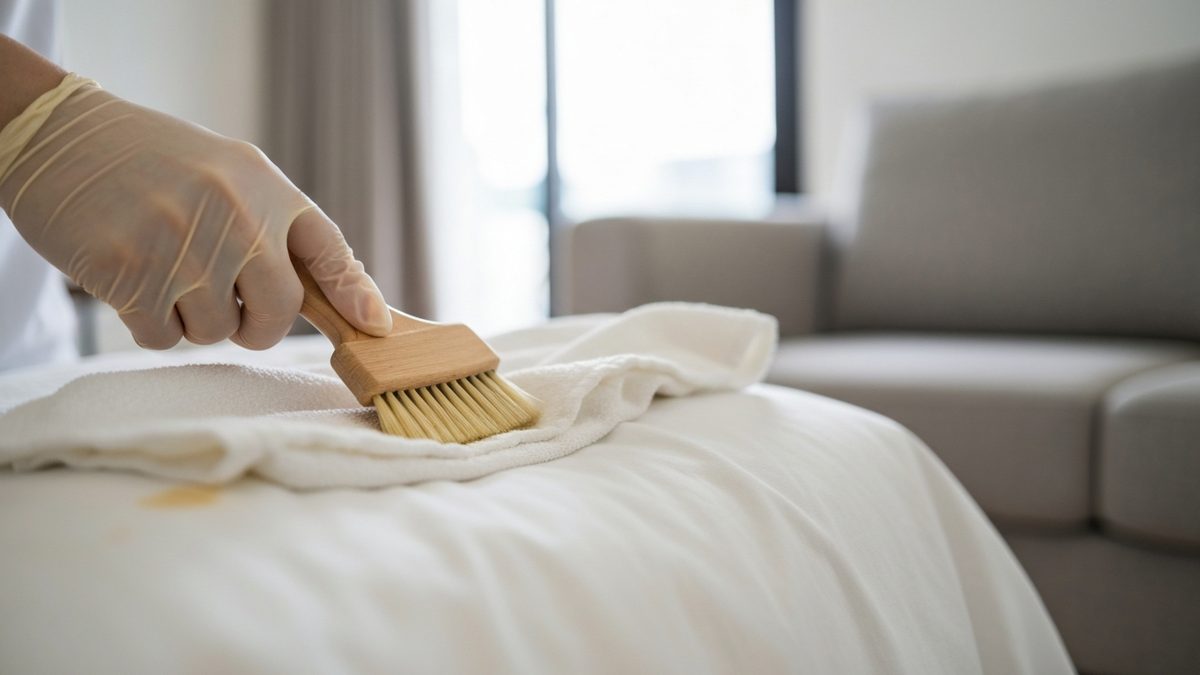
Blot up all the liquid you can with a dry white towel. Mix a cup of cool water with a teaspoon of clear dish soap and a splash of white vinegar. Dab it onto the stain with a cloth, blot, and repeat — do not soak. Finish by dabbing with plain water to rinse the soap, then blot dry and let air circulate. Skip this and a dried cha yen ring becomes a professional job.
Oil and food grease
Thai food is glorious and greasy, and oil is the stain most people get wrong because water alone will never lift it. The trick is to absorb first, then break the grease down.
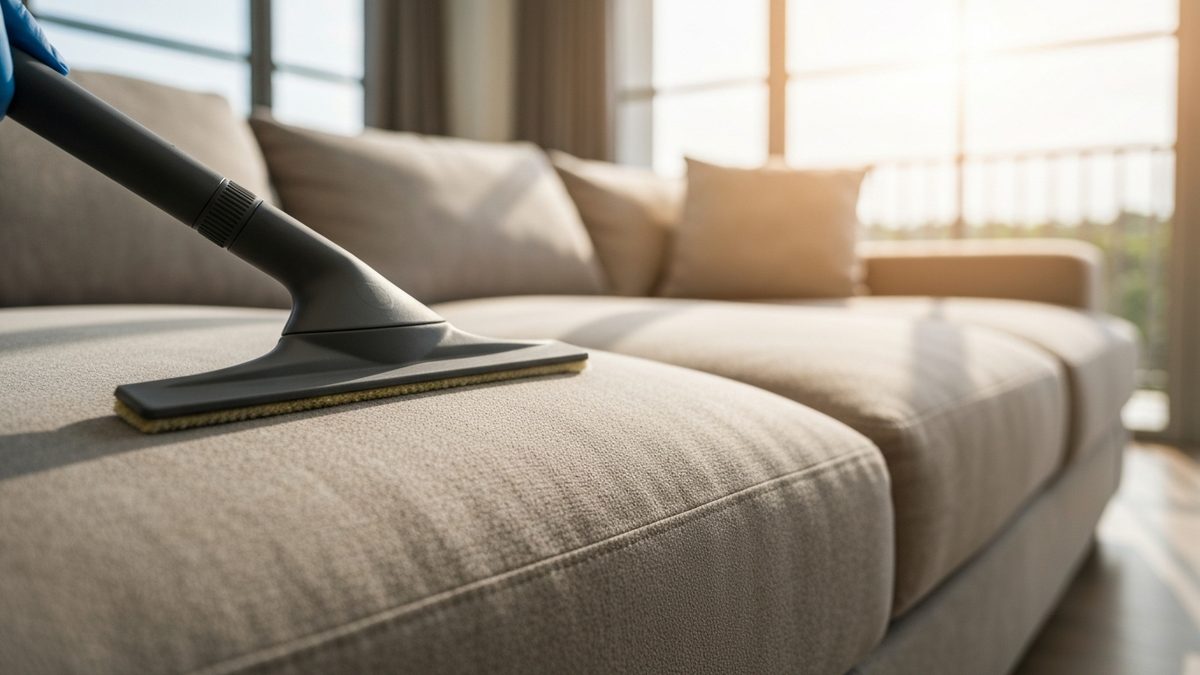
Cover a fresh oil mark generously with cornstarch, talcum powder or baking soda and leave it 15 to 30 minutes to draw the oil out. Vacuum the powder away, then treat any remaining shadow with a little dish soap solution, dabbing gently. Repeat the powder step rather than scrubbing harder. Old, set-in oil that has oxidised into a dark patch usually needs solvent-based pro treatment.
Ink, pen and marker
Ink is high-risk because the wrong move spreads it instantly. Never rub ink — you will turn a dot into a smear.
For ballpoint ink, dampen a cotton bud with isopropyl alcohol (or a plain, dye-free hand sanitiser) and dab — do not wipe — lifting colour onto the bud and turning to a clean spot each time. Work slowly from the edges. Blot with water afterwards. Permanent marker and fountain-pen ink are notoriously stubborn; if the first few dabs are not lifting it, stop before you spread it and call a pro.
Pet accidents and odour
Pet stains are two problems in one — the visible mark and the odour that soaks into the foam and invites your pet to repeat the offence. Water and soap handle the surface but never the smell, because the smell lives in dried uric salts deep in the cushion.
Blot up as much as possible immediately. Rinse lightly with cool water and blot again. The real fix is an enzyme cleaner, which digests the odour-causing proteins instead of masking them — supermarket masking sprays only make it worse. For anything that has soaked through to the foam, professional extraction is the only way to fully remove the odour and reach the padding a household cloth never can.
Mould and mildew — the Bangkok special
This is the stain unique to our climate. Leave a sofa against an outside wall, run the aircon hard, add rainy-season humidity, and mould spots bloom on the fabric — grey, green or black speckles with a musty smell. Mould is a health issue, not just a cosmetic one, so treat it with respect.
- Move the piece to a dry, ventilated spot and, if you can, into indirect sunlight
- Wearing a mask, vacuum loose spores gently — do not blast them into the air you breathe
- Wipe with a diluted vinegar solution (never bleach on coloured fabric — it strips the dye)
- Dry the piece completely with fans; residual moisture guarantees the mould returns
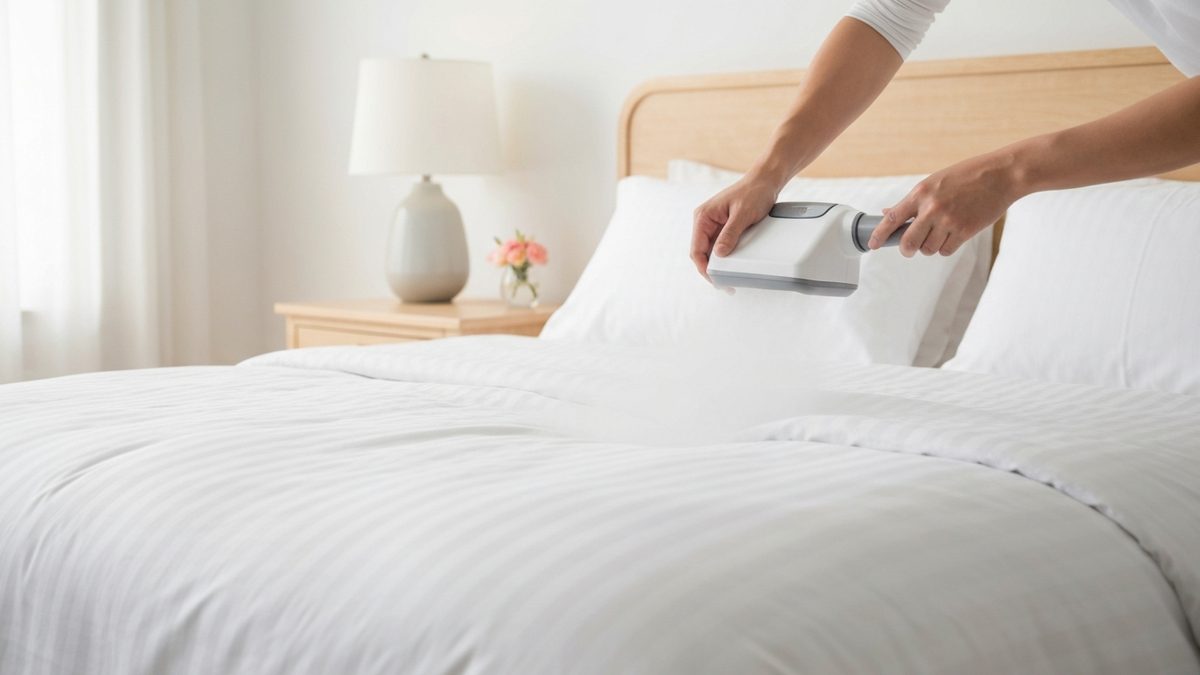
- For heavy or recurring mould, book professional steam sanitising — high heat kills spores at the root and reaches the foam
DIY vs professional extraction — knowing your limit
DIY is right for fresh, small, single spills on washable fabric. Call a professional when the stain is old and set, when it covers a large area, when it has soaked into the foam, when the fabric is delicate (silk, velvet, linen) or coded 'S' for solvent-only, or when odour and mould are involved. Professional hot-water extraction reaches depths a cloth cannot, controls moisture so nothing over-wets in the humidity, and finishes with proper drying.
Typical Bangkok pricing: a fabric sofa clean runs ฿800 to ฿2,500 depending on the number of seats, a mattress ฿800 to ฿1,500, and targeted steam sanitising ฿500 to ฿1,500. After a rescue, ฿500 to ฿1,500 of fabric protection makes the next spill far easier to wipe away. See the full breakdown on /pricing, or browse the /blog for our sofa and mattress guides.
Frequently Asked Questions
Can I use bleach or hydrogen peroxide on a stubborn stain?
Almost never on coloured or patterned upholstery — bleach strips the dye and leaves a permanent pale ring worse than the stain. Stick to mild dish soap, white vinegar or an enzyme cleaner, and always test a hidden area first. For stubborn stains, professional treatment is safer than harsh chemicals.
How soon do I need to treat a spill?
Within minutes for the best result. Fresh spills sit on the surface; once they dry and sink into the fibres and foam they become far harder to remove. Blot immediately, then treat. This single habit saves most Bangkok sofas.
Why does my sofa still smell after I cleaned the stain?
Because the odour lives deep in the foam, not on the surface you cleaned. Pet and food odours come from residue that soaked through. Only enzyme treatment plus professional extraction reaches that depth — surface cleaning and masking sprays cannot.
My fabric tag says 'S' — what does that mean?
It means solvent-only: water-based cleaning can stain or shrink it. This code is common on delicate and imported fabrics. Do not use water solutions — these pieces should go straight to professional solvent cleaning to avoid permanent damage.
Is it worth applying fabric protection after removing a stain?
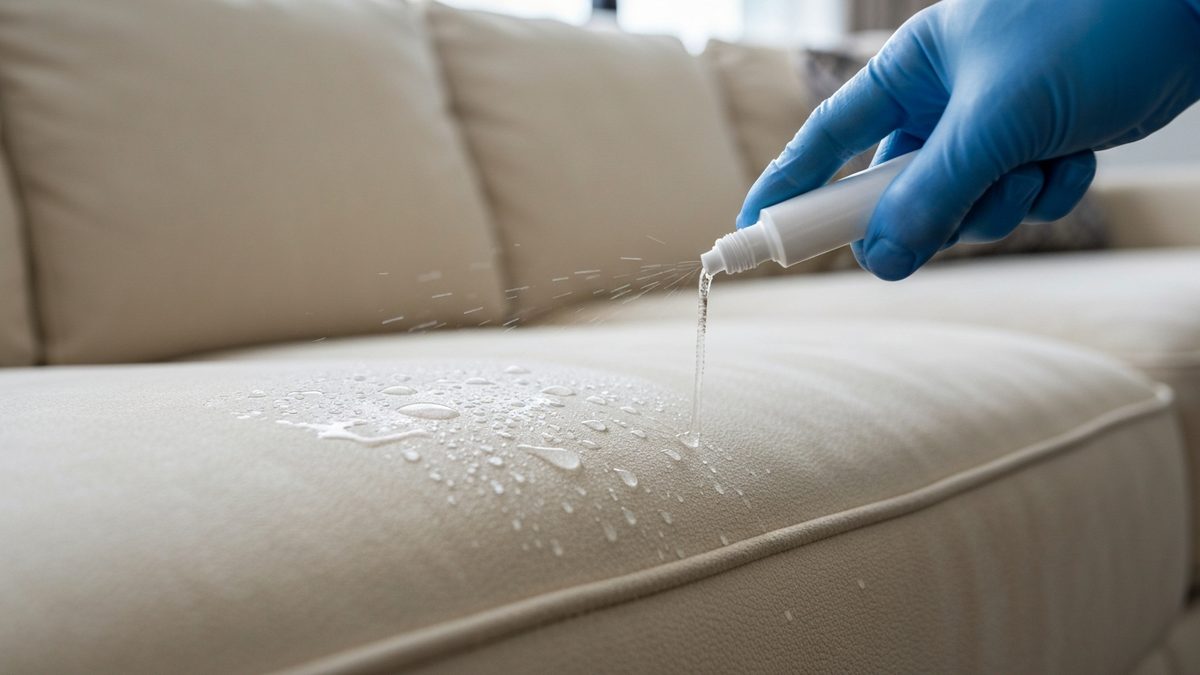
Yes, especially in humid Bangkok. A stain-guard treatment (฿500 to ฿1,500 per item) makes liquids bead up so you can blot them before they soak in — turning future disasters into easy wipe-ups. It is the cheapest insurance for a freshly cleaned sofa.
Stuck with a stain that will not budge — or worried about over-wetting your sofa in this humidity? Add CLEANROVA on LINE, send a photo of the mark and the fabric care tag, and we will tell you honestly whether it is a DIY fix or needs professional extraction, with an on-the-spot quote either way.