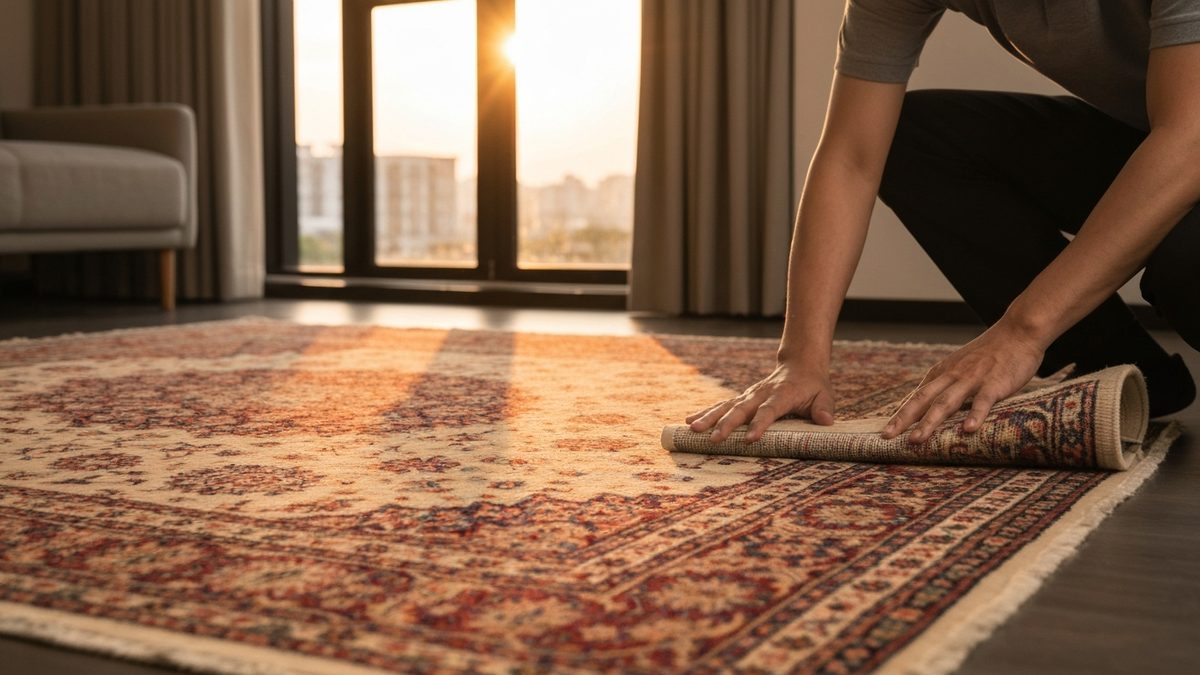
A hand-knotted Persian rug or a silk carpet is not a piece of furniture — it is an heirloom, often worth more than the sofa it sits under and frequently impossible to replace. Yet these are exactly the pieces most often ruined by well-meaning but wrong cleaning: the same machine extraction that is fine for a synthetic runner can bleed the dyes, felt the wool or rot the foundation of a fine silk rug. In Bangkok, add relentless humidity to the equation and improper drying becomes its own disaster. This guide explains how delicate rugs (ซักพรม) should really be cleaned — the slow, hand-washed way — why colour-fastness testing is non-negotiable, and what careful cleaning costs.
Why delicate rugs are not just big carpets
A modern synthetic rug is engineered to be tough and colour-stable. A hand-knotted wool or silk rug is the opposite: natural fibres coloured with dyes that can be sensitive to water, on a cotton or silk foundation that reacts to moisture. Treat one like the other and you risk permanent damage.
Wool is naturally resilient but felts and loses its lustre if scrubbed aggressively or dried in a hot tumble. Silk is exquisite and extremely delicate — its sheen comes from the fibre structure, which harsh chemicals and over-wetting destroy. Persian and other hand-knotted rugs often combine both, plus vegetable dyes that predate any colour-fast guarantee. These pieces demand a gentler hand entirely.
Colour-fastness — the test that saves your rug
The single most important step happens before any washing: testing whether the dyes will run. Older and hand-dyed rugs, and anything with strong reds or deep blues, are the usual culprits for bleeding, where one colour migrates into a lighter neighbour and leaves a stain no cleaning can undo.
- Inspect the rug's origin, age, fibre and construction to gauge the risk before touching it
- Dampen a white cloth and press it gently onto each colour, especially reds and dark tones
- Check the cloth for any dye transfer — transfer means the colours are not stable
- If dyes are unstable, switch to a controlled low-moisture or cold hand-wash method with dye-set additives
- Only proceed to a full wash once every colour has passed — never assume, always test
How proper hand-washing works
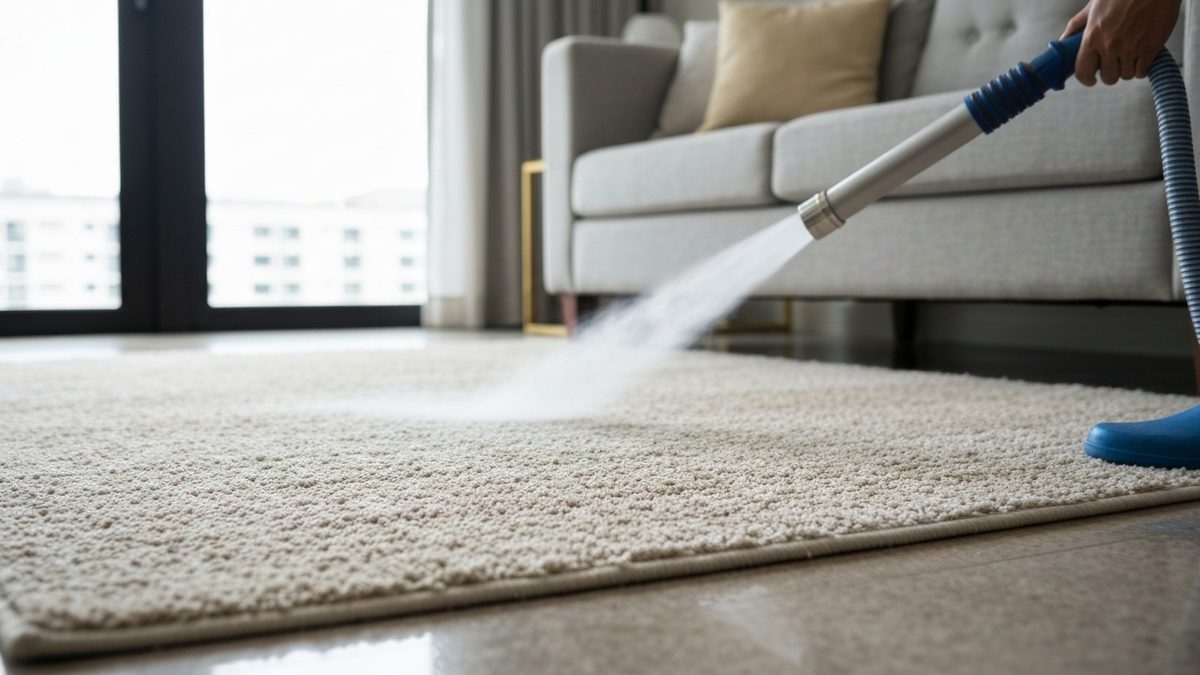
Fine rugs should be hand-washed, not blasted with a machine wand. The process is slow and deliberate, which is exactly the point — it cleans deeply without stressing the fibres or foundation.
- Dry soil removal — the rug is dusted and gently beaten or low-vibration cleaned to release years of grit trapped deep in the pile, which is what actually cuts the fibres over time
- Colour-fastness testing on every colour, as above
- Gentle hand-washing — pH-balanced, wool-safe solution is worked in by hand with soft brushes, along the grain of the pile, never scrubbed against it
- Thorough rinsing — clean water flushes out all solution and loosened soil so no residue is left to attract dirt later
- Controlled water extraction — excess water is gently squeegeed and drawn out without wringing or twisting the rug
- Flat, shaded drying — the rug dries flat with air movement, out of direct sun, until completely dry to the foundation
Drying: the step Bangkok gets wrong
Anyone can wash a rug. Drying it correctly in Bangkok's humidity is where amateurs — and careless cleaners — fail. A rug that looks dry on top can be damp in the foundation, and damp wool or cotton in this climate quickly grows mould and develops dry rot, a musty smell and weakened knots that no wash can reverse.
Proper drying means flat, elevated airflow in a controlled environment, never hung over a rail (which distorts the shape) and never left in direct Thai sun (which fades the very colours you protected). This is precisely why fine rugs are best cleaned off-site at a facility with the right drying space, rather than washed on your balcony and left to fate.
What careful rug cleaning costs in Bangkok
Delicate rug cleaning is usually priced by size and fibre, reflecting the hand labour and drying time involved. It is more than a quick synthetic-rug clean because it should be.
- Carpet and rug cleaning generally — ฿500 to ฿2,500 depending on size, fibre and soiling
- Small synthetic or machine-made rugs sit at the lower end
- Hand-knotted wool, silk and Persian rugs sit at the upper end for the specialist care required
- Heavy staining, pet odour or fringe restoration may add to the base quote
- Optional fabric protection after cleaning — ฿500 to ฿1,500 per rug to guard against future spills
Between professional cleans: caring for a fine rug
Good habits keep the years between deep cleans kind to your rug. The enemy is grit — the fine sand that works down into the pile and slices the fibres every time someone walks across it.
- Vacuum regularly but gently, without a hard beater bar that can pull knots, and never vacuum the fringe
- Rotate the rug every few months so foot traffic and any window light wear it evenly
- Use a quality rug pad underneath to reduce friction and slippage
- Blot spills immediately with a white cloth and plain water — no household chemicals on natural dyes
- Book a professional deep clean every one to three years depending on traffic; do not wait until it looks filthy
When to call a professional — and why not to DIY
For a valuable wool, silk or Persian rug, the honest advice is: do not experiment. The cost of a professional clean is a fraction of the rug's value, and a single wrong move — the wrong chemical, a colour bleed, mould from bad drying — can be permanent and uninsurable. Home carpet machines and general cleaners are built for synthetic fibres and simply are not safe here. See our /services for the full delicate-rug process, our /pricing for size-based quotes, and our /blog for more on carpet and upholstery care.
Frequently Asked Questions
Can I clean my Persian rug with a home carpet machine?
We strongly advise against it. Home machines over-wet natural fibres, can bleed unstable dyes, and cannot dry the rug properly in Bangkok's humidity — risking mould and dry rot in the foundation. Hand-knotted rugs need specialist hand-washing and controlled drying.
How do you stop the colours from running?
Every colour is colour-fastness tested before washing by pressing a damp white cloth against it. If any dye transfers, we switch to a controlled low-moisture or cold-wash method with dye-setting additives, so unstable colours never bleed into lighter areas.
How long does a delicate rug take to clean?
Because fine rugs are hand-washed and then flat-dried in controlled airflow, the full process usually takes a few days — most of that is careful drying. Rushing the drying is exactly what causes mould, so this time is essential, not optional.
Why is delicate rug cleaning more expensive than a normal carpet?
It reflects hand labour, individual colour testing, gentle wool-safe or silk-safe methods, and days of controlled drying rather than a quick machine pass. For an heirloom rug, that careful process is what protects its value.
Do you clean the fringe and repair damage?
We clean fringes gently as part of the service and can advise on fringe or minor knot restoration, which may be quoted separately. We inspect each rug first and tell you honestly what is worth doing before any work begins.
Own a wool, silk or Persian rug that deserves careful hands? Add CLEANROVA on LINE, send a photo with the rough size, and we will explain our hand-wash and controlled-drying process and give you a size-based quote — no risky home experiments required.