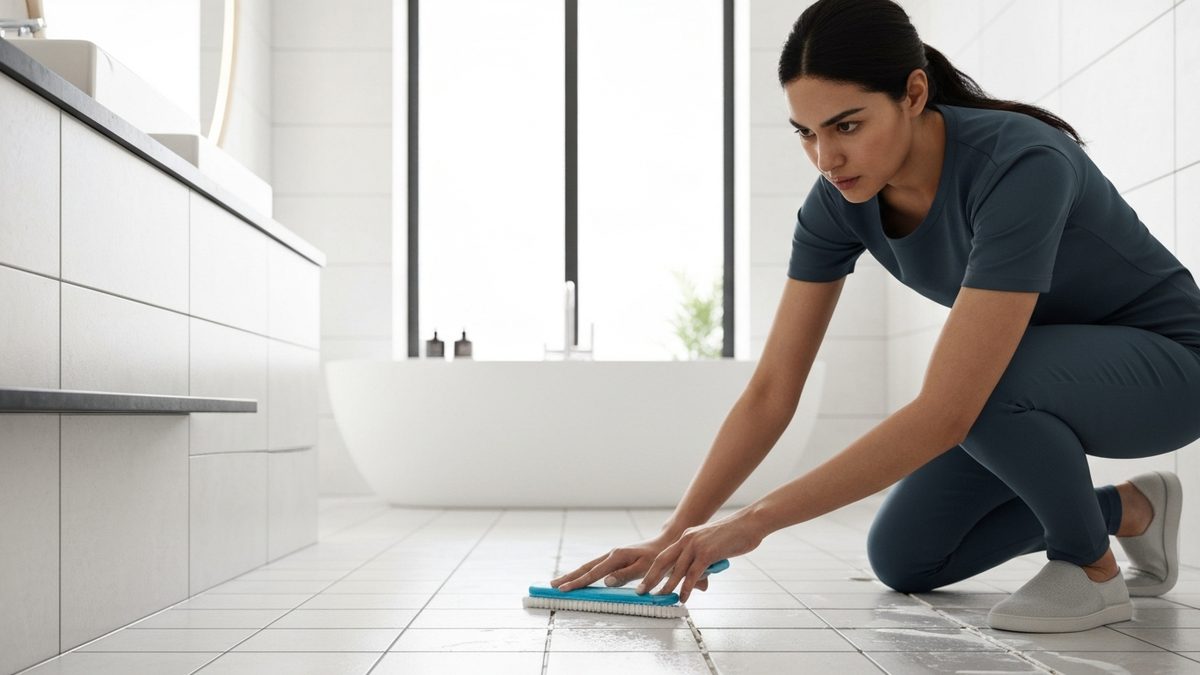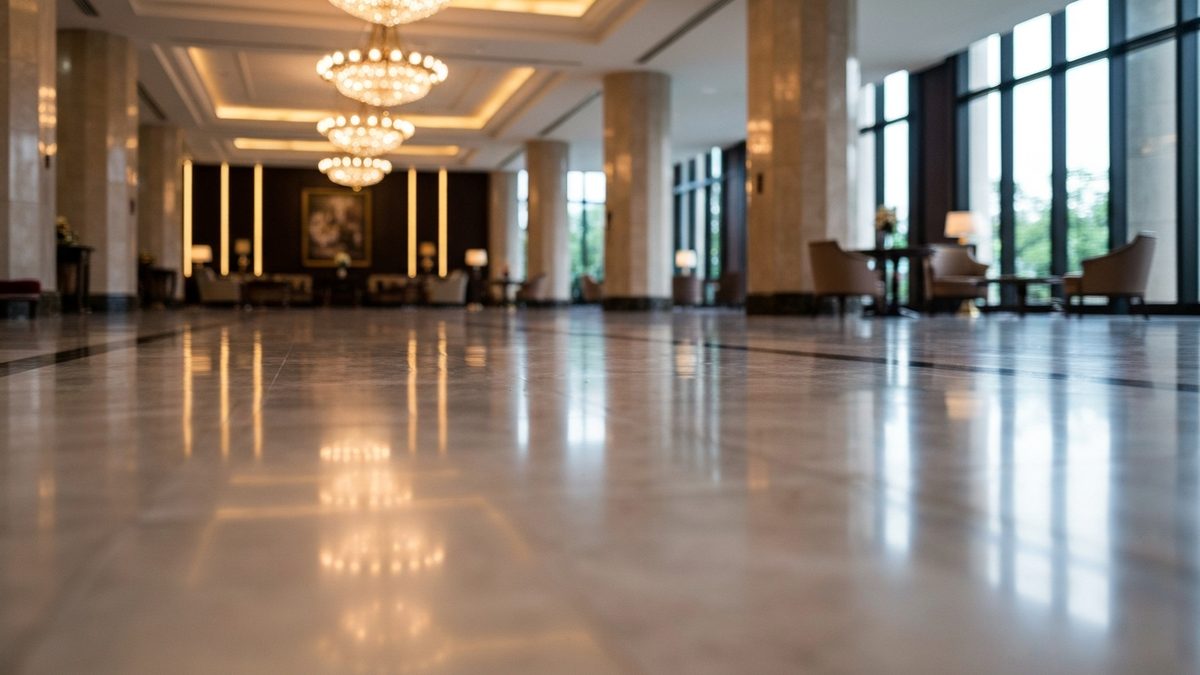
Walk into almost any mid to high-end Bangkok condo and you will find marble — in the lobby, the bathrooms, often the whole living-room floor. It is gorgeous, it signals quality, and it is quietly one of the most misunderstood surfaces in the building. Marble (หินอ่อน, hin on) is soft, porous and chemically reactive, which means the very things people use to clean it are often what dull and damage it. The dull, cloudy patches, the water rings around the kitchen, the loss of that mirror shine — none of it is normal wear, and almost all of it is fixable. This guide explains why marble and stone behave the way they do in Bangkok condos, how polishing and sealing actually restore them, and what the per-square-metre cost looks like in 2026.
Why marble is not like other floors
Marble is a calcium-based stone, and that single fact explains most of its quirks. Being calcium-based, it reacts with anything acidic — and it is soft, so it scratches and wears more easily than harder stones. It is also porous, so it drinks up spills that a glazed tile would shrug off.
This is why marble is high-maintenance in a way that surprises new condo owners. The floor that looks so solid is actually chemically delicate, and the standard bathroom cleaners and vinegar-based household products that people reach for are among the worst things you can put on it. Understanding the stone is the first step to keeping it beautiful.
Etching vs staining: two different problems
People lump every mark on marble together as a stain, but there are really two distinct problems and they need opposite treatments.
- Etching is a chemical burn. When acid — lemon, vinegar, wine, some cleaners, even fizzy drinks — touches marble, it eats a tiny bit of the surface and leaves a dull, sometimes rough mark. There is no dye to remove; the shine itself has been damaged, and it is fixed by re-polishing.
- Staining is absorption. Because marble is porous, oil, coffee, ink or rust soak into the stone and leave a colour. This is fixed by drawing the stain back out with a poultice, not by polishing.
- The two often get confused, and using a stain remover on an etch mark or polishing over a stain both fail. Correctly diagnosing which one you have is half the job.
This is also why sealing matters so much: a good seal slows down staining by keeping liquids on the surface long enough to wipe away, buying you time that bare marble simply does not give you.
How marble polishing actually works
Restoring marble is a mechanical process, not a bottle of miracle spray. It works the surface back to a fresh, flat, reflective finish using progressively finer abrasives.
- Assess the floor, identify the stone, and note etching, scratches, stains and any lippage between tiles.
- Where needed, grind and hone with diamond abrasives to remove scratches, etch marks and dullness, moving through progressively finer grits.
- Draw out any absorbed stains with poultices before the final polish, since polishing over a stain just locks it in.
- Polish to the desired finish — a high-gloss mirror or a softer honed matte — using fine polishing powders or pads.
- Clean the floor thoroughly, then apply an impregnating sealer to protect the freshly restored surface.
- Buff and inspect under raking light to make sure the finish is even across the whole floor.
The honing and diamond stages are what separate real restoration from a superficial buff. A quick machine polish over dirty, etched marble might add a temporary sheen, but it will not remove the damage — the diamond work does.
Granite, terrazzo and other stones
Marble gets the attention, but Bangkok condos use several stones and each behaves differently. Knowing what you have changes the whole approach.
Granite is much harder and more acid-resistant than marble, so it resists etching and scratching well — but it is still porous and benefits from sealing, and restoring its polish takes heavier diamond work because the stone is so hard. Terrazzo, common in older Bangkok buildings, is chips of marble and stone set in a binder; it polishes up beautifully but the binder and the chips can behave differently under the machine, so it needs an experienced hand. Engineered quartz, by contrast, is non-porous and usually should not be diamond-polished at all — it needs cleaning, not resurfacing. Matching the method to the material is everything.
Sealing: the protection people skip
A freshly polished floor that is not sealed is a missed opportunity. Sealing does not make marble bulletproof — nothing stops etching except keeping acid off the stone — but a good impregnating sealer soaks in and dramatically slows staining by keeping spills on the surface.
In a Bangkok condo, that buffer is genuinely useful: it turns a coffee spill that would have soaked in within minutes into something you can wipe away, and it makes routine cleaning far more forgiving. Sealer wears over time and needs periodic reapplication, which is why it is worth doing as part of any polishing job and refreshing every year or two depending on traffic.
What marble and stone polishing costs in Bangkok in 2026
Stone work is priced per square metre because the machinery, abrasives and time all scale with area. Realistic 2026 ranges:
- Marble and stone polishing: ฿80–250 per square metre, depending on the stone, its condition and the finish you want.
- Light maintenance polishing of a floor in decent shape sits at the lower end; heavy restoration of badly etched or scratched marble at the top.
- Granite restoration often runs higher within or above that band because the hardness demands more diamond work.
- Sealing is typically included in a polishing job or added at a modest per-sqm rate; standalone sealing is quoted separately.
- Stain-removal poultice work on specific marks is usually quoted per area rather than per sqm.
For a typical condo living area, that puts a polish-and-seal in the low-to-mid thousands of baht, with larger units or heavier restoration higher. Because condition drives price so heavily, most floors are best quoted after a quick look. See how stone care fits with our other specialty services on /services, and the ranges on /pricing.
Keeping marble beautiful between polishes
Good daily habits stretch the years between professional polishes. Wipe acidic spills immediately, use only pH-neutral stone cleaners rather than vinegar or bathroom products, put felt pads under furniture, and place mats at entrances so grit does not get ground into the surface underfoot. Dust-mop regularly, because that fine grit is what scratches marble over time. Do these and a well-sealed floor can go a good while before it needs the diamonds again — neglect them and even a beautiful polish will dull within months.
Frequently Asked Questions
Why does my marble have dull, cloudy spots?
Those are almost always etch marks — chemical burns where something acidic like lemon, vinegar, wine or a household cleaner touched the surface and dulled it. There is no stain to wipe away; the shine itself is damaged, and it is restored by re-polishing the stone.
What is the difference between etching and staining?
Etching is acid damage to the surface, fixed by polishing. Staining is a liquid absorbed into the porous stone, fixed by drawing it out with a poultice. They look similar but need opposite treatments, so diagnosing which one you have is essential before doing anything.
Can badly damaged marble really be restored?
Usually, yes. Diamond honing and polishing work the surface back to a fresh, flat, reflective finish, removing scratches, etch marks and dullness. Deep chips or structural damage are a different repair, but the everyday etching and cloudiness that plague condo marble are very fixable.
How much does marble polishing cost in Bangkok?
Roughly ฿80–250 per square metre, depending on the stone, its condition and the finish. Light maintenance polishing sits low in that range; heavy restoration of badly etched or scratched floors sits at the top. Granite runs higher because its hardness needs more diamond work.
How do I stop damaging my marble at home?
Wipe acidic spills immediately, use only pH-neutral stone cleaners rather than vinegar or bathroom products, put felt pads under furniture, use entrance mats, and dust-mop regularly to keep grit from scratching the surface. A yearly seal refresh also helps a lot.
If your condo marble has lost its shine or picked up rings and cloudy patches, it is almost certainly restorable. Send a few photos and the floor area and we will tell you whether it needs a light polish or full diamond restoration, and quote per square metre. Message CLEANROVA on LINE or book via /contact — more specialty guides are on the /blog.