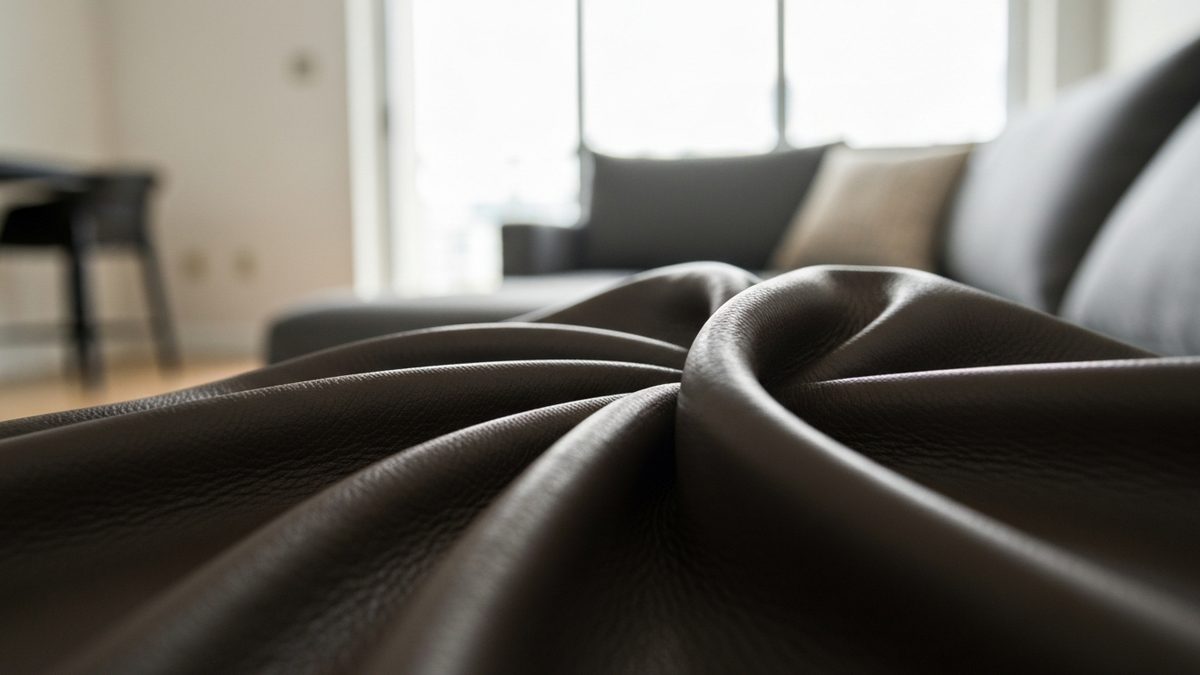
A leather sofa (โซฟาหนัง, sofa nang) is a beautiful thing to own and a demanding one to keep in Bangkok. Leather is skin, and skin does not enjoy our climate. The same humidity that grows mould on your shoes will bloom on the underside of a sofa; the same air-conditioning that makes the room comfortable dries the surface out and starts it cracking. Between the damp season and the dry blast of the aircon, leather here lives on a knife-edge, and the cheap wipe-and-forget approach quietly destroys it. This guide covers how leather sofas are properly cleaned and conditioned in Bangkok, how to stop mould and cracking before they start, and what fair pricing looks like in 2026.
Why Bangkok is hard on leather
Leather has an ideal humidity band, and Bangkok spends much of the year well outside it. In the wet season the air is saturated, and leather absorbs that moisture; where air does not circulate — the back, the base, the crevices between cushions — mould finds a home and leaves those tell-tale greenish spots.
Then the aircon does the opposite damage. Cold, dry conditioned air pulls moisture and natural oils out of the leather surface, and over time the leather loses its suppleness, stiffens, and starts to crack along the fold lines where it flexes every time someone sits. Add body oils and sweat soaking in day after day, and an untended leather sofa can look tired within a couple of years even though the frame is perfect.
Know your leather before you touch it
Not all leather is cleaned the same way, and using the wrong approach is how sofas get ruined. The main distinction that matters for cleaning is how the leather is finished.
- Pigmented or protected leather has a surface coating and is the most common and most forgiving — it tolerates gentle cleaning and conditioning well.
- Aniline and semi-aniline leather is more natural, softer and more luxurious, but it absorbs liquid readily and stains easily, so it needs a gentler, more careful hand.
- Nubuck and suede are brushed finishes that must never be treated like smooth leather — water and standard conditioners will mark them, and they need their own specialist products.
- Bonded or faux leather is not real hide at all and behaves differently again; it can peel if treated with products meant for genuine leather.
If you are not sure which you own, that is fine — identifying it correctly is the first thing any competent cleaner does, because everything after depends on it.
How a leather sofa is properly cleaned and conditioned
Conditioning is the step people skip and the one that matters most in Bangkok, because it is what keeps the leather flexible against the drying pull of the air-conditioning. Cleaning without conditioning is only half the job.
- Identify the leather type and test any cleaner on a hidden area first, so nothing unexpected happens on the visible surface.
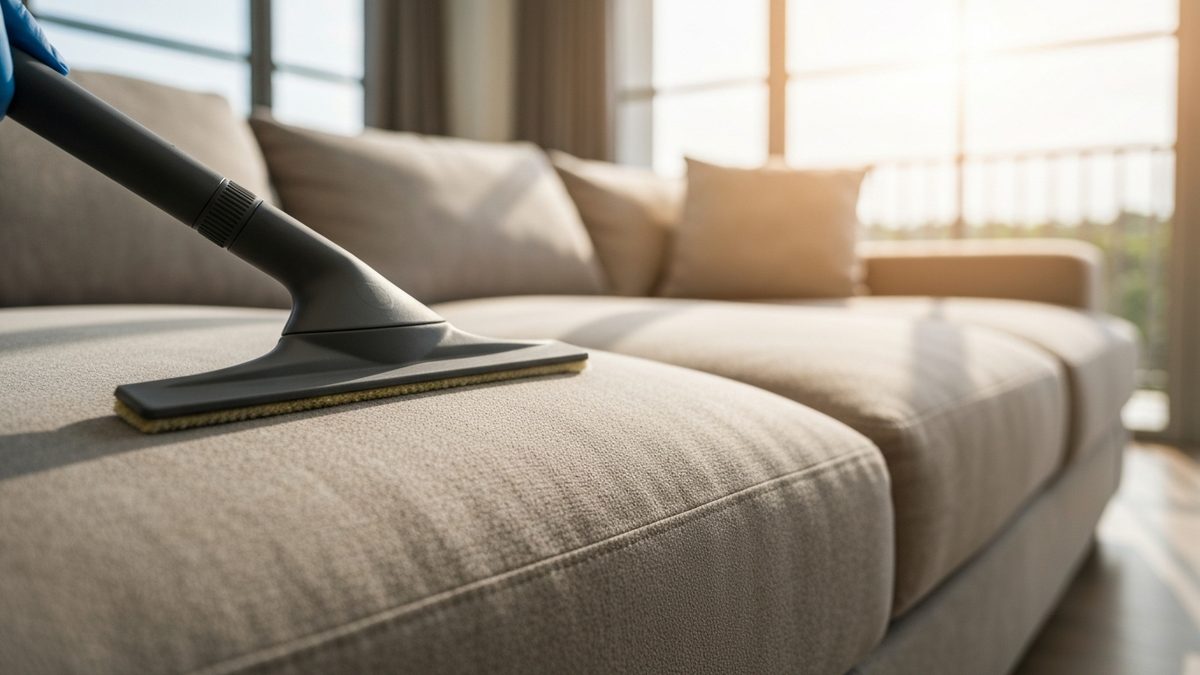
- Dry-remove loose dust and grit from every seam and crevice, because that grit is abrasive and grinds into the finish as you clean.
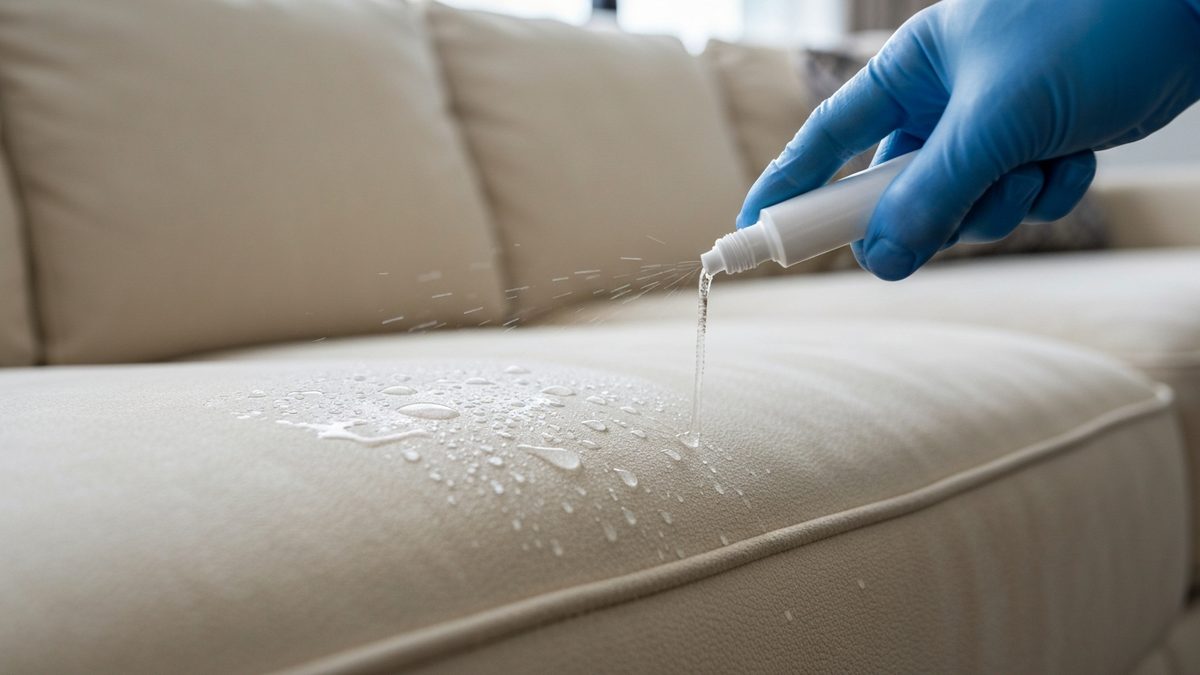
- Clean the surface with a pH-balanced leather cleaner made for the finish — never a household all-purpose spray, which strips the protective coating.
- Treat any mould spots, stains or ink separately with the right targeted approach rather than scrubbing the whole panel.
- Let the leather dry fully, then work in a quality conditioner to restore the oils the aircon and cleaning have removed.
- Buff off the excess and, where appropriate, apply a protector to slow down the next round of drying and soiling.
Stopping mould before it spreads
Mould on leather is a Bangkok classic, and it is almost always a sign of trapped moisture and poor air movement rather than a dirty sofa. Once it appears it spreads, and it can leave a permanent shadow if left, so it is worth acting quickly and, better still, preventing.
The prevention is mostly about airflow and control: keep the sofa slightly away from walls so air can move behind it, wipe up spills and sweat rather than letting them soak in, and keep the room's humidity in check during the wet months. A conditioned, protected surface also resists mould better than bare, dried-out leather, which is another reason regular care pays off.
Cracking, stickiness and other warning signs
Leather tells you when it is unhappy. Learn to read the signs and you can intervene before the damage is permanent.
- Stiffness and hairline cracks along the seating folds mean the leather has dried out and needs conditioning urgently — cracks that open up are very hard to reverse.
- A tacky or sticky surface usually means product build-up or degradation of the finish, and it needs proper cleaning rather than more product piled on top.
- Greenish or fuzzy spots, especially on the back and base, are mould — act fast.
- Fading on the side that faces a window is UV damage; conditioning helps but keeping strong direct sun off the sofa helps more.
- A darkened, shiny patch where heads and hands rest is absorbed body oil, which regular cleaning keeps from setting in permanently.
What leather sofa cleaning costs in Bangkok in 2026
Leather cleaning is priced higher than fabric because it is slower, needs specific products, and almost always includes conditioning. Realistic 2026 ranges:
- Leather sofa clean and condition: ฿1,500–3,500 depending on the number of seats, the leather type and its condition.
- Smaller two-seaters and armchairs sit at the lower end; large L-shaped sectionals at the top or beyond.
- Aniline, nubuck and suede: expect the higher end because of the specialist products and extra care.
- Mould remediation or heavy restoration: quoted on assessment, above a standard clean.
- Adding a leather protector treatment: a modest add-on that extends the time between cleans.
By comparison, a fabric sofa clean runs ฿800–2,500 by seats, so leather carries a premium — but that premium buys the conditioning that keeps the hide alive in this climate. You can see how leather sits against fabric on our /pricing page, and how it pairs with mattress and floor care on /services.
Simple habits that protect leather between cleans
A leather sofa lives or dies on the small things you do between professional visits. None of them take more than a minute, and together they add years to the sofa's life.
- Keep the sofa a few centimetres off the wall so air can move behind it and moisture cannot get trapped against the back.
- Wipe up spills and sweat straight away with a dry or barely damp cloth, before they soak in and darken the surface.
- Position it out of strong direct sunlight, or use a blind, since UV fades and dries the panel that faces the window.
- Vacuum the seams and crevices weekly to lift out the abrasive grit that grinds into the finish every time someone sits down.
- Skip the household sprays entirely — the single best habit is simply never letting an all-purpose cleaner near the leather.
How often to clean and condition
In Bangkok, aim to clean and condition a leather sofa every six to twelve months, and wipe it down lightly in between. Households with kids, pets or heavy daily use should lean toward the shorter interval. The conditioning cadence matters more here than in a temperate country, because the aircon never stops pulling oils out of the surface — think of it as moisturising skin that is exposed to a dehumidifier every single day. A sofa on this rhythm keeps its colour, its suppleness and that soft, lived-in feel for well over a decade, while a neglected one can look tired and start cracking within just a couple of years despite a perfectly good frame underneath.
Frequently Asked Questions
Why does my leather sofa get mouldy in Bangkok?
Because leather absorbs the wet-season humidity, and where air cannot circulate — the back, base and crevices — that trapped moisture grows mould. Keeping the sofa slightly off the wall, wiping up spills, controlling room humidity and conditioning the surface all help prevent it.
Can I just use a household cleaner on my leather?
Please do not. All-purpose sprays strip the protective finish and dry the leather out, which leads to cracking. Leather needs a pH-balanced cleaner matched to its finish, followed by conditioning to replace the oils. Using the wrong product is the most common way sofas get ruined.
My leather is cracking — can it be fixed?
Early stiffness and hairline cracks can often be softened and improved with proper conditioning. Deep cracks that have opened up are very hard to reverse, which is why conditioning before it reaches that stage matters so much in our drying aircon climate.
How much does leather sofa cleaning cost in Bangkok?
Around ฿1,500–3,500 for a clean and condition, depending on the number of seats, the leather type and its condition. Aniline, nubuck and suede sit higher for the specialist care, and mould or restoration work is quoted on assessment.
How often should a leather sofa be professionally cleaned?
Every six to twelve months in Bangkok, with light wiping in between, and sooner for busy households with kids or pets. The conditioning is the key part here because the air-conditioning constantly dries the leather out.
Leather is worth looking after before it cracks or blooms, not after. Tell us your sofa's size and leather type — or just send a photo — and we will quote a clean and condition that keeps the hide supple through the wet season and the aircon alike. Message CLEANROVA on LINE or book through /contact, and see more care guides on the /blog.