You have just paid to have your sofa deep-cleaned, and the technician asks if you would like fabric protection added. Is it a genuine upgrade or an upsell? In Bangkok, where humidity, food-heavy family life and daily spills gang up on your furniture, the honest answer is: for most households it is one of the best-value add-ons you can buy. Fabric protection (เคลือบผ้ากันคราบ) does not make your sofa spill-proof, but it buys you the precious minutes between a spill and a stain. This guide explains exactly how it works, what it costs per item, how long it lasts in our climate, and who should — and should not — bother.
What fabric protection actually is
Fabric protection is an invisible treatment sprayed onto clean upholstery that bonds to each fibre. You may know it by the brand name Scotchgard, but several fluoropolymer and modern non-fluorinated formulas do the same job. It does not add a plastic film or change how the fabric feels — a well-applied treatment is undetectable to the touch.
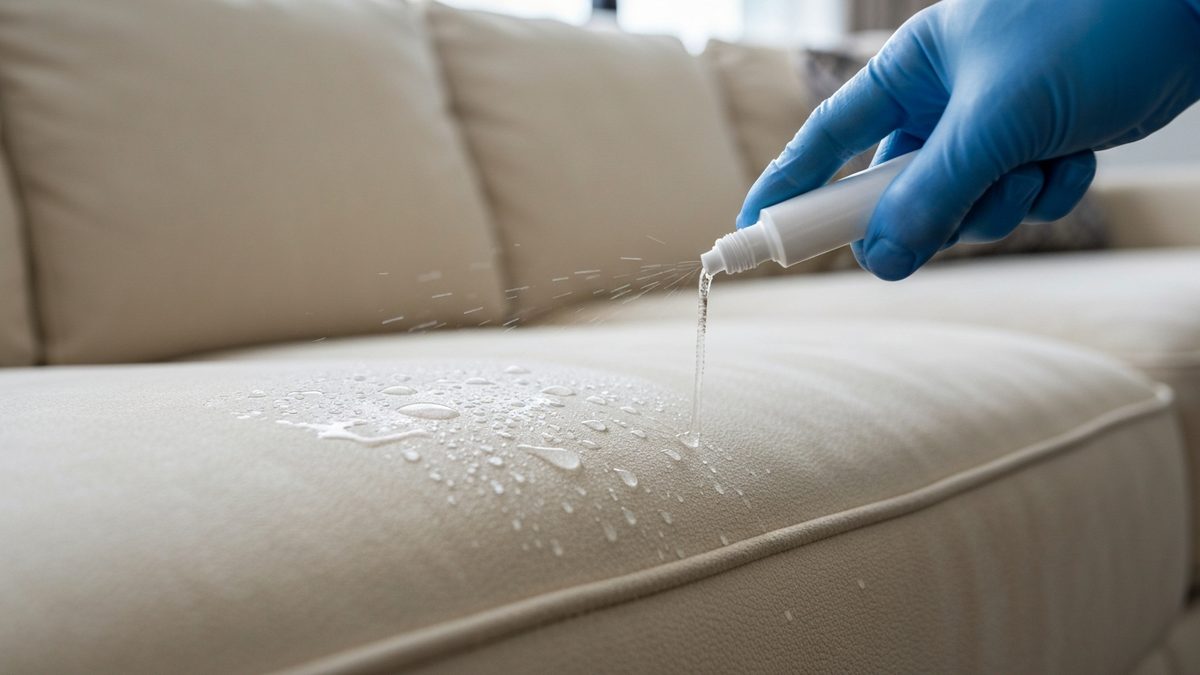
What it changes is the surface tension of the fibre. Instead of soaking in on contact, liquids bead up and sit on top, and dry soil sits loosely rather than gripping. That is the whole trick: it turns your fabric from a sponge into a raincoat.
How it works — the raincoat, not the forcefield
Set expectations correctly and you will love it; expect a miracle and you will be disappointed. Protection is not a forcefield. A spill left overnight will still eventually soak through. What the treatment gives you is time and a fighting chance.
- Liquids bead on the surface so you can blot them away before they penetrate
- Stains that would have set instantly now wipe up with a cloth if you act reasonably promptly
- Everyday dust and soil release more easily during vacuuming and future cleans
- Fibres are shielded from the abrasive grinding of trapped grit, so the fabric wears more slowly
- It does not stop odour, mould or damage from spills left to dry — speed still matters
Why it matters more in Bangkok
Fabric protection earns its keep faster here than in a dry climate. Our humidity means any liquid that soaks into foam struggles to dry, and slow-drying foam is exactly what mould and odour need. By keeping spills on the surface where you can remove them, protection indirectly reduces the deep-moisture problems that plague Bangkok upholstery.
Add in a food culture full of oils, sauces and sweet iced drinks, plus year-round open windows during cooler months that let in street dust, and the treated sofa simply stays cleaner between professional visits — which stretches the time and money you spend on deep cleans.
What it costs in Bangkok
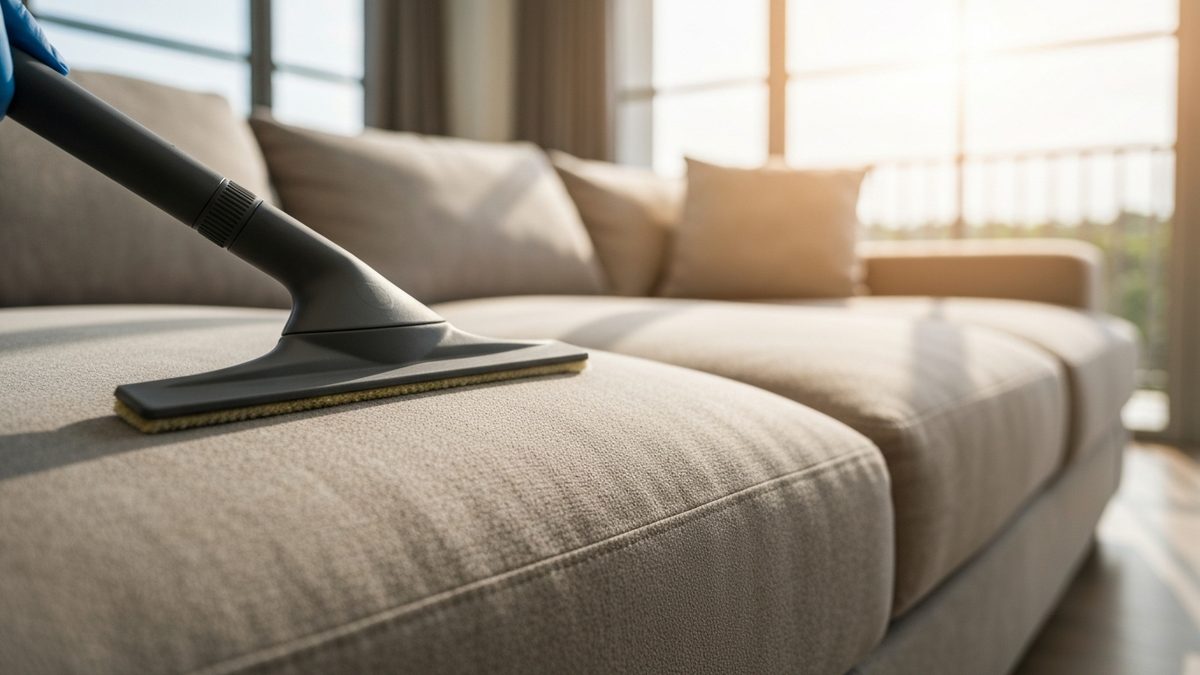
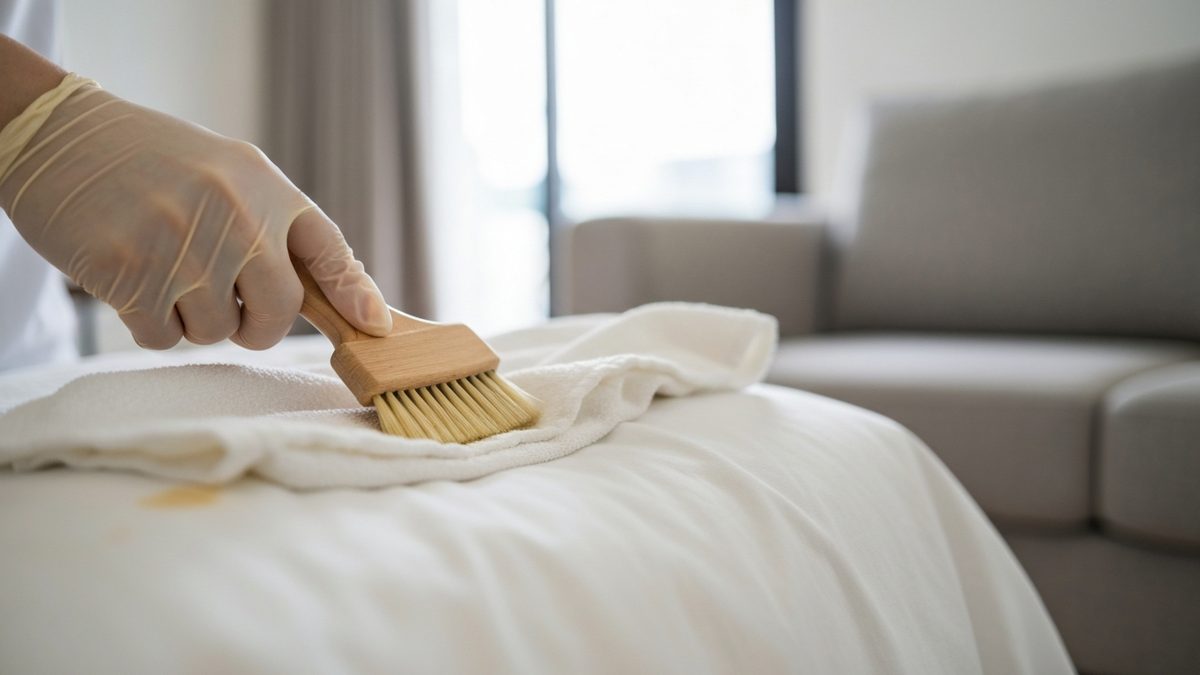
Protection is priced per item and is almost always cheaper when added at the same time as a clean, because the fabric is already prepared and dry. Applying it to a dirty sofa just seals the dirt in, so it is a finishing step, never a substitute for cleaning.
- Per treated item (sofa, mattress, chair, rug) — ฿500 to ฿1,500 depending on size and fabric
- Best value bundled with a fabric sofa clean (฿800 to ฿2,500 by seats)
- Mattress protection pairs naturally with a mattress clean (฿800 to ฿1,500)
- Dining chairs and office chairs — usually at the lower end of the range per seat
- Full itemised pricing lives on our /pricing page and can be quoted via /contact
How long it lasts and what wears it down
A quality professional application typically lasts one to two years on a normally used sofa, though high-traffic seats and frequent cleaning shorten that. Every deep clean gradually strips some protection, which is why we recommend reapplying after each major professional clean.
You can extend it by vacuuming regularly, blotting spills promptly rather than rubbing, and avoiding harsh household cleaners that break the treatment down. Think of it like sunscreen for your sofa — effective, invisible, and needing a top-up on a sensible schedule rather than a one-time forever coat.
A common mistake is assuming protection lasts forever because you cannot see it wearing off. There is no visual cue — the sofa looks identical whether the treatment is fresh or long gone. The tell-tale sign it has faded is behaviour: when a drop of water soaks straight in instead of beading, the protection is spent. That simple water-drop test on an arm or seat tells you in seconds whether it is time to reapply at your next professional clean.
Who should get it — and who can skip it
Protection is genuinely worth it for the households where spills are a question of when, not if.
- Families with young children — juice, snacks and art supplies make this a near-essential
- Pet owners — beading helps you catch accidents before they soak into the foam
- Light-coloured or expensive upholstery — the cost of protection is trivial next to reupholstering
- Anyone who eats on the sofa — Bangkok's dinner-in-front-of-the-TV crowd, which is most of us
- Airbnb and rental hosts — protected furniture survives guest turnover far better and cleans faster
The honest verdict
For a busy Bangkok home with kids, pets or a habit of eating on the sofa, fabric protection at ฿500 to ฿1,500 per item is one of the smartest small upgrades you can make — it pays for itself the first time a glass of cha yen tips over and wipes away instead of staining. For a rarely used formal sofa in a quiet adult household, you can reasonably skip it.
Run the maths and it is easy to justify. A three-seat fabric sofa costs ฿800 to ฿2,500 to deep clean when it gets stained; protection at the lower end of the range costs a fraction of that and can save you a full clean or two over its life, on top of pushing back the day you have to reupholster. On an expensive or light-coloured piece, where a single set-in red-wine or curry stain can be effectively permanent, the calculation is not even close. If in doubt, add it to your next clean; the incremental cost is low and the peace of mind is high. Browse our /services page and our /blog for more on keeping upholstery fresh between deep cleans, and see /pricing for the full itemised rates.
Frequently Asked Questions
Does fabric protection make my sofa completely spill-proof?
No, and anyone who promises that is overselling it. It makes liquids bead so you can blot them before they soak in, and it helps stains release during cleaning. Spills left to dry overnight will still penetrate — the treatment buys you time, not immunity.
Will it change how my sofa feels or looks?
A properly applied treatment is invisible and undetectable — no film, no stiffness, no change in colour. We spot-test first to confirm the fabric reacts well before treating the whole piece.
How often should I reapply it?
Roughly every one to two years, and ideally after each major professional deep clean, since cleaning gradually strips the protection. High-use family sofas may need it more often; a lightly used piece less.
Can you protect a sofa without cleaning it first?
We do not recommend it — applying protection over a dirty sofa seals the dirt in. Protection is a finishing step after cleaning, when the fabric is prepped and dry, which is also why it is cheaper bundled with a clean.
Is it safe for kids and pets?
Yes. Once cured and dry, professional-grade fabric protection is safe for households with children and animals. We let it dry fully before the furniture is returned to use.
Thinking about protecting a sofa or mattress before the next inevitable spill? Add CLEANROVA on LINE, tell us the fabric and number of seats, and we will quote fabric protection on its own or bundled with a deep clean at the best combined rate.