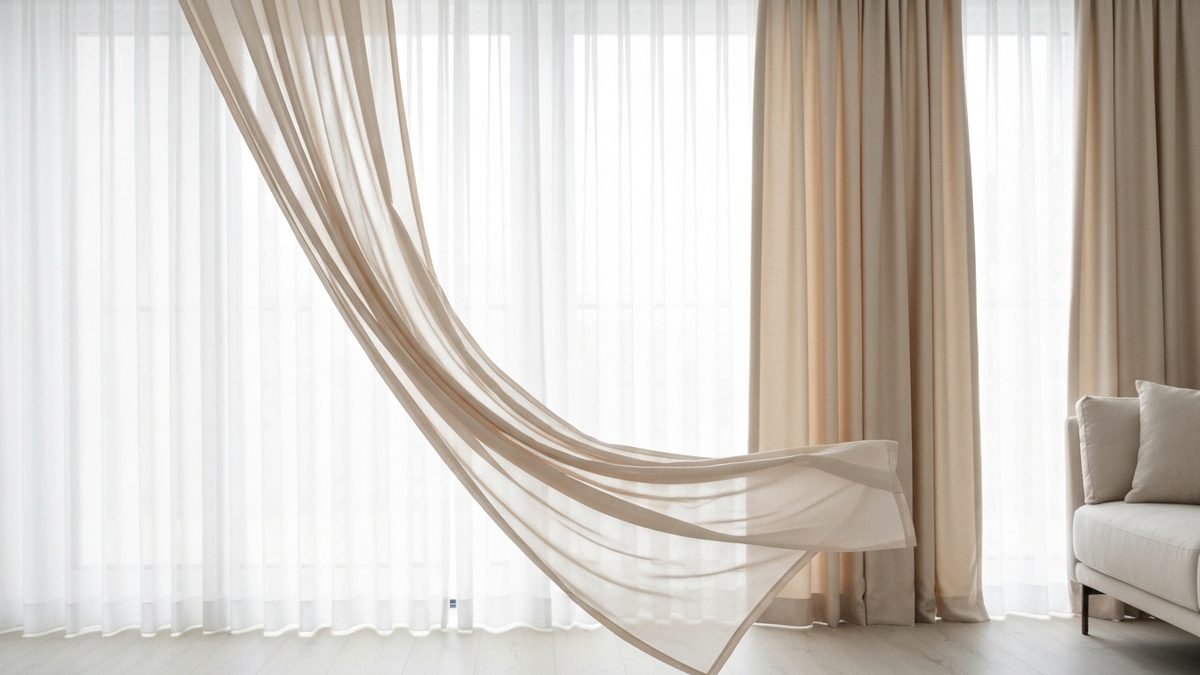
Curtains are the biggest air filter in your Bangkok home, and almost nobody cleans them. They hang from floor to ceiling right where the street dust, cooking grease and PM2.5 haze drift in through the balcony door — and because they never look obviously dirty, they get ignored for years. In a city where the air quality index turns purple for weeks every burning season, that neglected fabric quietly holds onto everything you breathe. This guide covers how curtains and drapes (ผ้าม่าน, pha man) actually get cleaned in Bangkok, when to take them down versus steam them on the rail, how to avoid the shrinkage that ruins expensive drapes, and what a fair price per panel looks like in 2026.
Why Bangkok curtains get filthy faster than you think
Every home has a few square metres of fabric hanging next to an opening to the outside world. In a temperate climate that fabric might go a decade between washes. In Bangkok it is under constant assault. Traffic soot from the soi, wok grease that travels further than you would believe, mould spores riding the humidity, and the fine PM2.5 particles that define our air for months at a time all settle into the weave.
The trap is that curtains hide dirt beautifully. A curtain can hold a startling amount of dust before it looks grey, and by then it has become a reservoir that puffs particles back into the room every time you open or close it, or every time the aircon kicks the air around. If anyone in the household has allergies, asthma or wakes up congested, the drapes are one of the first things worth cleaning.
PM2.5 and humidity: the two forces working against your fabric
Bangkok gives curtains a double problem. During the dry burning season the air is thick with fine particulate that embeds deep in fibres and is impossible to shake out by hand. During the wet season the humidity climbs so high that any dust holding moisture becomes a bed for mould and mildew, especially on the bottom hem and along the folds that never fully dry.
This is why a quick shake or a household vacuum brush is not enough here. The particles are too fine to beat out, and the humidity means a curtain that is cleaned but left damp will smell musty within a day. Proper curtain cleaning in this city has to both extract the fine dust and dry the fabric fast enough that mould never gets a foothold.
Take-down washing vs on-site steam: which is right for your curtains
The single biggest decision is whether the curtains come down to be laundered or get cleaned in place. The right answer depends entirely on the fabric and the lining.
- Take-down washing suits sturdy cotton, polyester and most sheers with no special lining — they are removed, gently washed or dry-cleaned, dried under controlled conditions and rehung. Best for deep dirt and any musty smell.
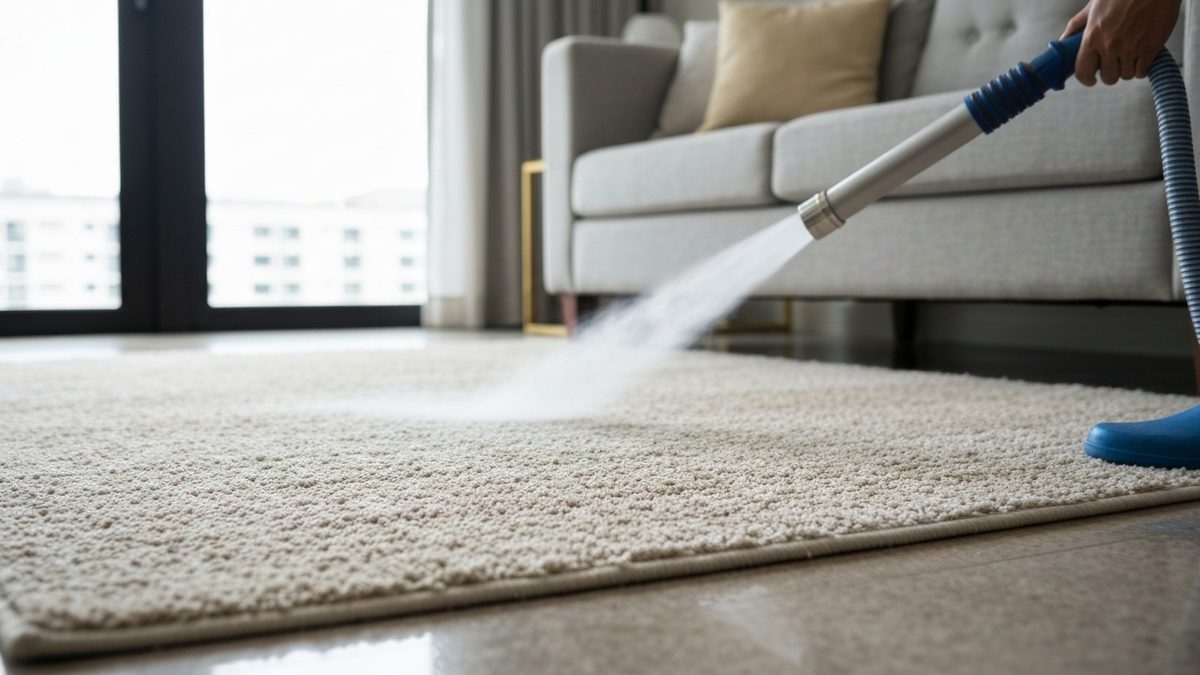
- On-site steam and extraction suits heavy blackout drapes, pinch-pleat drapes, anything with a bonded backing, and curtains that are a nightmare to unhook and rehang — the fabric stays on the rail and is steamed, brushed and vacuum-extracted in place.
- Blinds (roller, Roman, vertical, wooden) are almost always cleaned in place with steam and microfibre, because taking them apart risks the mechanism.
- Delicate silk, linen and hand-finished drapes should always be assessed first — some can only be dry-cleaned, and washing them will shrink or watermark them permanently.
The take-down process, step by step
The labelling step sounds fussy but it is the difference between a tidy job and an afternoon of guessing which panel goes where. It matters most in condos where every window is a slightly different height.
- We photograph how each curtain hangs and label every panel so it returns to the exact window it came from.
- Hooks, rings and weights are removed and bagged; measurements are recorded so we can flag any shrinkage risk before washing.
- Each panel is pre-treated for visible marks, then washed or dry-cleaned according to the fabric — cool, gentle cycles for washables, solvent for dry-clean-only.
- Panels are dried flat or line-dried in a controlled space, never wrung, so the weave keeps its shape.
- We press or steam out creases, reattach all the original hardware, and rehang each panel exactly where it belongs.
Shrinkage, watermarks and the mistakes that ruin drapes
The reason so many Bangkok residents are nervous about washing curtains is that they have been burned before — a beautiful set comes back two inches too short, or with a tide mark that will not lift. Both are avoidable.
Shrinkage happens when natural fibres or unlabelled blends meet hot water and a hot dryer. The fix is to test, wash cool, and air-dry rather than tumble on heat. Watermarks happen when a curtain is spot-cleaned with water in one area and the mineral content in the water leaves a ring as it dries. That is why full-panel cleaning beats spot-dabbing, and why any silk or linen gets solvent rather than water. If you have ever tried to sponge one stain off a curtain and made it worse, this is exactly why.
What curtain cleaning costs in Bangkok in 2026
Curtain pricing is almost always per panel, because a panel is the unit of work whether it is a small kitchen sheer or a tall living-room drape. Expect roughly the following ranges:
- Standard curtain panels: ฿100–300 per panel depending on size, fabric and take-down complexity.
- Heavy blackout or lined drapes: toward the top of that range or a little above, because they are heavier and slower to dry.
- Sheers and light voiles: usually the lower end, though very tall floor-to-ceiling sheers count as large panels.
- On-site steam sanitizing as an add-on: ฿500–1,500 depending on the number of windows and total fabric area.
- Blinds: quoted per blind, roughly in the same band as panels, with wooden and Roman blinds priced higher for the extra care.
Most homes fall between eight and sixteen panels once you count every room, so a full-home curtain refresh commonly lands in the low thousands of baht. For an itemised breakdown you can see our /pricing page, and if you want the curtains done alongside sofas and floors, the /services page shows how the specialty line bundles together.
How often should Bangkok curtains be cleaned
There is no universal answer, but the city pushes the interval shorter than most guides assume. As a working rule: living-room and balcony-facing drapes every six to twelve months, bedroom curtains once a year, and anything in a household with allergies or young children on the shorter end. If you run the aircon constantly and rarely open the windows, you can stretch it slightly — but the burning season alone is usually enough to justify an annual clean, because that is when the fine haze loads up the fabric fastest.
Frequently Asked Questions
Will washing my curtains shrink them?
Not if they are handled correctly. Shrinkage comes from hot water and hot tumble drying on the wrong fabric. We record measurements, test the fabric, wash cool and air-dry, and send silk or linen for solvent cleaning instead of water — so panels come back the same length they left.
Can you clean curtains without taking them down?
Yes, for many fabrics. Heavy blackout drapes, bonded-backing curtains and blinds are best cleaned in place with steam, brushing and vacuum extraction. Take-down washing is better for deep dirt or a musty smell, so we advise per fabric when we assess.
How much does curtain cleaning cost in Bangkok?
Roughly ฿100–300 per panel, with heavy lined drapes at the top of the range and a steam-sanitizing add-on running ฿500–1,500 for the whole home. Most homes have eight to sixteen panels once every room is counted.
Do dirty curtains really affect indoor air?
They can. Curtains hang right at the opening where PM2.5, soot and cooking grease drift in, and they hold that dust until it puffs back into the room when you move them or run the aircon. Cleaning them is a real help for anyone with allergies or asthma.
How often should I clean my curtains in Bangkok?
Balcony-facing living-room drapes every six to twelve months, bedrooms once a year, and sooner if anyone in the home has allergies. The burning season loads fabric with fine haze quickly, so an annual clean is a sensible minimum.
Not sure whether your drapes should come down or get steamed on the rail? Send us a couple of photos and we will tell you honestly, quote per panel, and book a slot that works around your day. Message CLEANROVA on LINE or reach us through /contact — and browse more specialty guides on the /blog while you decide.