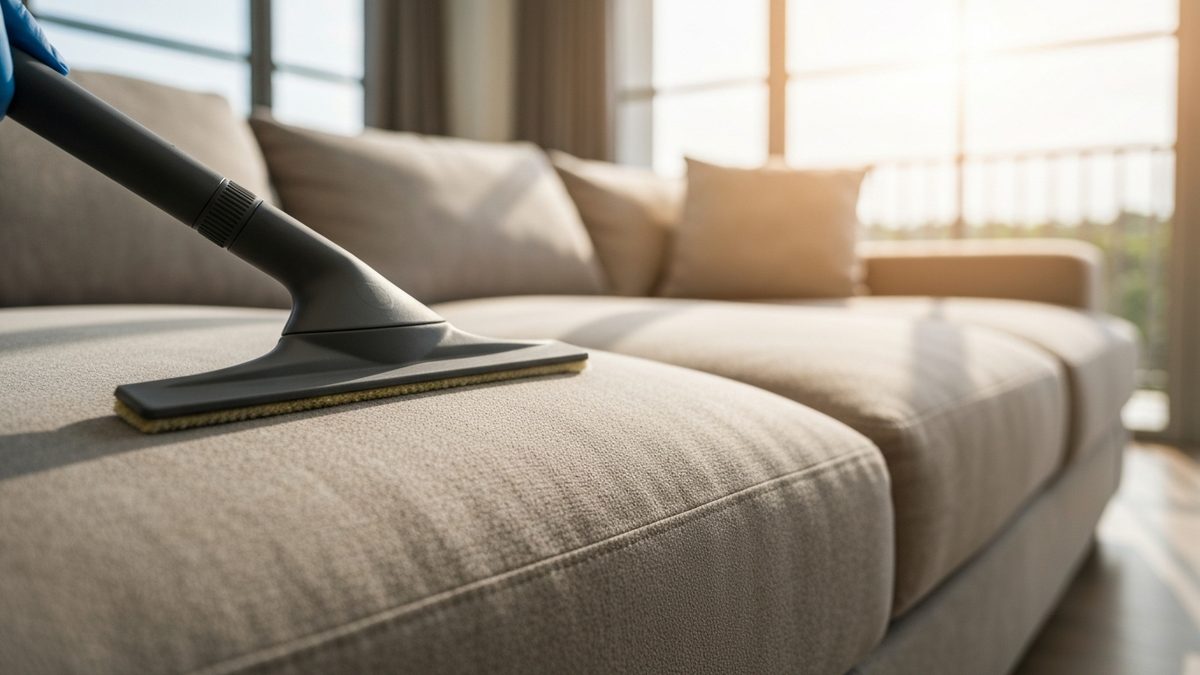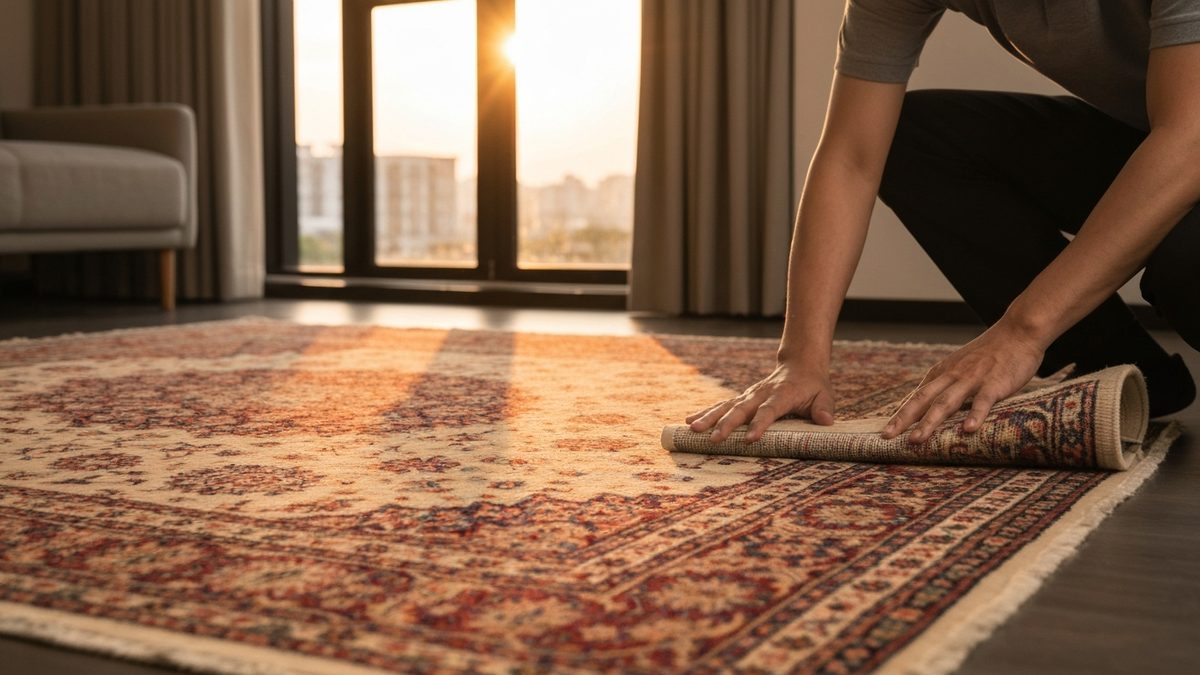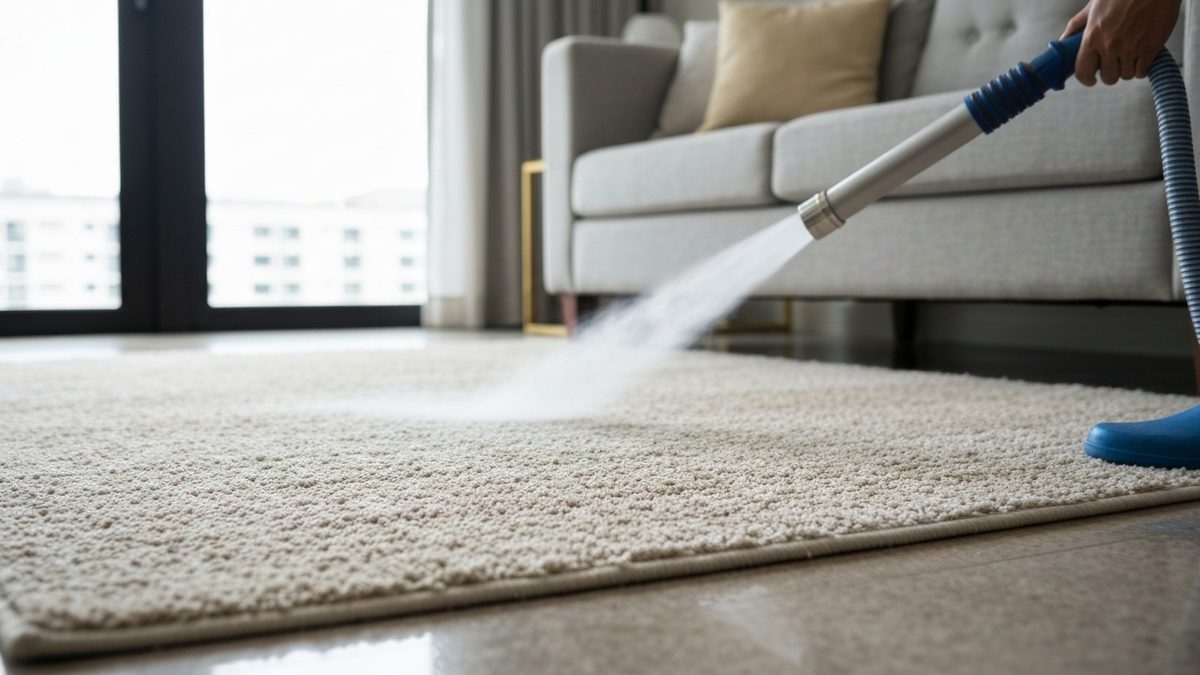
A carpet is the one thing in a Bangkok home that gets walked on every day and vacuumed on the surface only. Below the pile it collects a decade of skin cells, dust mites, tracked-in street grime and the fine particulate that hangs in our air — and in this humidity it can hide mould long before you smell it. Deep cleaning a carpet or rug (พรม, phrom) here is not the same job as it would be in a dry climate, because the real challenge is not lifting the dirt, it is getting the thing dry again before mildew sets in. This guide explains the two main cleaning methods, how stains and odours are handled, why drying is the make-or-break step in Bangkok, and what it all costs.
What lives in a Bangkok carpet
Carpet acts like a filter you stand on. Every day it traps dust, dead skin, pet dander and whatever comes in on shoes — and in this city that includes traffic soot and PM2.5 that settles indoors. Dust mites thrive in it because our humidity gives them exactly the moisture they need, and their waste is one of the most common household allergy triggers.
The reason a home vacuum never seems to be enough is that it only pulls from the top layer. The heavy, allergenic material sits down at the base of the pile and in the backing, out of reach of any upright vacuum. Deep cleaning exists to reach that layer, flush it out, and leave the fibres genuinely clean rather than surface-tidy.
Hot-water extraction vs dry compound cleaning
Two methods dominate professional carpet cleaning, and each has a clear place. The right choice depends on the fibre, how dirty the carpet is, and how fast it has to be back in use.
- Hot-water extraction (often called steam cleaning) injects hot cleaning solution deep into the pile and immediately vacuums it back out along with the loosened dirt. It gives the deepest clean and is the best choice for heavily soiled synthetic carpets — but it leaves the carpet damp, which matters a lot in Bangkok.
- Dry or low-moisture compound cleaning works a specialised compound or foam through the pile, lets it bind to the dirt, then vacuums it away. It uses very little water, so the carpet is usable again quickly — ideal for offices, wall-to-wall carpet that cannot be moved, and situations where fast drying is critical.
- Encapsulation is a low-moisture variant that crystallises dirt so it can be vacuumed off, popular for large commercial areas that need to stay in service.
For a genuinely dirty living-room carpet, extraction wins on results. For an office that reopens tomorrow morning, or a humid unit where drying is a worry, a low-moisture method is often the smarter call.
Stains, odours and the traps that make them permanent
Most carpet stains become permanent because of the first thing someone does to them, not the spill itself. Rubbing a spill spreads it and drives it into the backing; the wrong household cleaner can set a stain so no professional can lift it later.
The correct instinct is to blot, not rub, and to lift as much liquid as possible before it wicks down. Common Bangkok culprits — coffee, red curry oil, pet accidents, wine — each need a different chemistry, which is why a blanket spray-on carpet product often disappoints. Odours, especially from pets or old moisture, usually live in the backing and the pad beneath, so surface deodorising only masks them; they need extraction that reaches the base and, sometimes, a targeted enzyme treatment.
Drying in humidity: the step that makes or breaks the job
This is where Bangkok changes everything. A carpet that is cleaned beautifully but left damp for two days in our humidity does not just smell musty — it can grow mould in the backing, which is far worse than the dirt you started with. A responsible clean here is judged as much on the drying as on the cleaning.
That means controlling moisture from the start: not over-wetting, extracting as much water back out as possible, and then actively driving the drying rather than hoping the air does it.
- Choose the lowest-moisture method that will still get the carpet properly clean.
- Extract aggressively so the pile is left damp, never soaked.
- Run air movers or fans across the surface to keep air moving over the fibres.
- Close the room up and run the aircon or a dehumidifier to pull moisture out of the air rather than adding to it.
- Check the backing, not just the surface, before declaring it dry — the base holds moisture longest.
Wool, silk and Persian rugs are a different job
A machine-made synthetic rug and a hand-knotted wool or silk rug should never be cleaned the same way. Natural fibres can shrink, the dyes can bleed if flooded with water, and an antique Persian rug represents real money and often sentiment. These are cleaned by hand, with gentler solutions, controlled water, and careful colour testing first.
If you own a wool, silk or Persian piece, do not let anyone run a standard extraction wand over it without assessing it first. The value at risk is far higher than the cost of doing it properly, and it is worth treating as its own specialty within the specialty.
What carpet and rug cleaning costs in Bangkok in 2026
Carpet cleaning is priced either as a flat rate for a defined rug or by the square foot for larger areas. Realistic 2026 ranges look like this:
- Standard rugs and small carpets: ฿500–2,500 depending on size, fibre and how soiled they are.
- Larger wall-to-wall or per-area jobs: roughly ฿40–80 per square foot.
- Wool, silk and Persian rugs: above the standard rate because of the hand cleaning and extra care involved.
- Odour or enzyme treatment for pet accidents: an add-on above the base clean.
- Steam sanitizing as an add-on: ฿500–1,500 depending on total area.
What moves the price is fibre type, level of soiling, whether stains need targeted treatment, and total area. A lightly soiled synthetic rug is quick; a heavily stained wool piece with pet odour is a careful, slower job. You can see how carpets sit alongside sofas, curtains and floors on our /services page, and full ranges on /pricing.
How often should you deep clean
As a guide, deep clean living-area carpets and rugs every six to twelve months in Bangkok, sooner if you have pets, small children, or anyone with allergies. Vacuuming twice a week between deep cleans keeps the surface grit from grinding into the fibres, which is what actually wears a carpet out. High-traffic entry rugs may want cleaning more often simply because they catch the most street dirt.
Frequently Asked Questions
Which is better, hot-water extraction or dry cleaning?
Extraction gives the deepest clean for heavily soiled synthetic carpets, but it leaves the carpet damp. Low-moisture dry compound methods clean well and dry fast, which suits offices, wall-to-wall carpet and humid units. We match the method to the fibre, the soiling and how fast you need the carpet back.
How long does a carpet take to dry in Bangkok humidity?
With good extraction, air movers and the aircon or a dehumidifier running, most carpets are dry within a few hours to overnight. Without active drying, humidity can leave a carpet damp for a day or more, which risks mould — so we always drive the drying rather than leave it to the air.
Can you remove old or set-in stains?
Many, but not all. Fresh spills that were blotted rather than rubbed have the best odds. Stains set with the wrong household cleaner, or dye-based stains left for weeks, may only lighten. We test first and tell you honestly what to expect before we start.
Do you clean wool, silk and Persian rugs?
Yes, and they are treated as their own specialty — cleaned by hand with gentler solutions, controlled water and colour testing, never a standard extraction wand. The care matters because the fibres can shrink and the dyes can bleed if handled wrong.
How much does carpet cleaning cost?
Standard rugs run ฿500–2,500, larger areas roughly ฿40–80 per square foot, and wool or silk pieces cost more for the hand cleaning. Pet-odour enzyme treatment and steam sanitizing are add-ons. Fibre, soiling and area are what move the price.
If your carpet looks fine on top but you suspect the pile is telling a different story, let us take a look. Send a photo and the rough dimensions and we will quote the right method for your fibre and your humidity. Message CLEANROVA on LINE or use /contact to book — and find more specialty guides on the /blog.