If you have ever pulled clean laundry out of the machine only to catch a sour, musty smell, you are not imagining it — and you are not alone in Bangkok. The same warmth and humidity that make Thailand so green also make the inside of a washing machine a perfect home for mold and biofilm (กำจัดเชื้อรา). Cold-water washes, fabric softener residue, and a door that stays shut between loads create a damp, food-rich environment that bacteria love. Most Bangkok condos park the machine in a sealed laundry balcony or a windowless utility nook where the air barely moves, so the drum never fully dries between cycles. The good news: with one deep reset and a simple monthly habit, you can keep your machine — and your laundry (ซักรีด) — genuinely fresh, and you can do almost all of it with ฿60 of white vinegar and ten minutes a week. Here is exactly how, step by step, with the Bangkok-specific details that generic guides leave out.
Why Bangkok machines smell (and it is not the detergent)
That musty odor is biofilm — a slimy layer of bacteria, mold, and trapped detergent that builds up in the parts of the machine you never see. It thrives on the residue left by fabric softener and overdosed detergent, both of which coat the drum and hoses rather than rinsing away in cold water. Think of it as the same slick film you feel on the inside of a flower vase left with water for a week, except it is coating the back of your drum, the sump, and the inside of the drain hose.
In Thailand's climate the problem accelerates. A machine sitting in an unventilated bathroom or balcony nook rarely dries out between washes. Add 80 percent humidity and a closed door, and you have created an incubator. The smell transfers to your clothes, especially towels, which then never feel truly clean no matter how much you wash them.
There is a money angle too. Many Bangkok households respond to the smell by re-washing the same load, adding extra detergent, or buying stronger softener — all of which feed the biofilm and raise both the water bill and the LPN-style condo electricity tariff. A single re-wash of a towel load at a typical 60-litre, hour-long cycle can cost ฿8 to ฿15 in water and power; do that twice a week for a year and you have spent over ฿1,000 fighting a problem that ฿60 of vinegar would have solved.
The hot-cycle reset that kills biofilm
Most everyday laundry in Bangkok is washed cold to save energy, but cold water never gets hot enough to break down biofilm. The single most effective thing you can do is run a periodic empty hot cycle. Heat does what scrubbing cannot — it denatures the protein and fat residues the bacteria feed on and loosens the film so it can flush away.
Run this with the drum completely empty — no clothes. If your machine is a cold-fill-only model (common in budget Thai units), you can pour a kettle of just-boiled water directly into the drum at the start to raise the temperature.
- Wipe loose gunk from the rubber gasket and detergent drawer with a dry cloth first.
- Add 2 cups of white vinegar directly into the drum, or a dose of machine-cleaning powder if you prefer.
- Select the hottest, longest cycle your machine offers (90C if available).
- Run it once empty, then pause mid-cycle for 30 minutes so the hot vinegar water soaks the drum and hoses.
- Resume and finish, then run a second short rinse to flush everything out.
- Leave the door wide open for several hours to dry completely.
The gasket: where front-loader mold hides
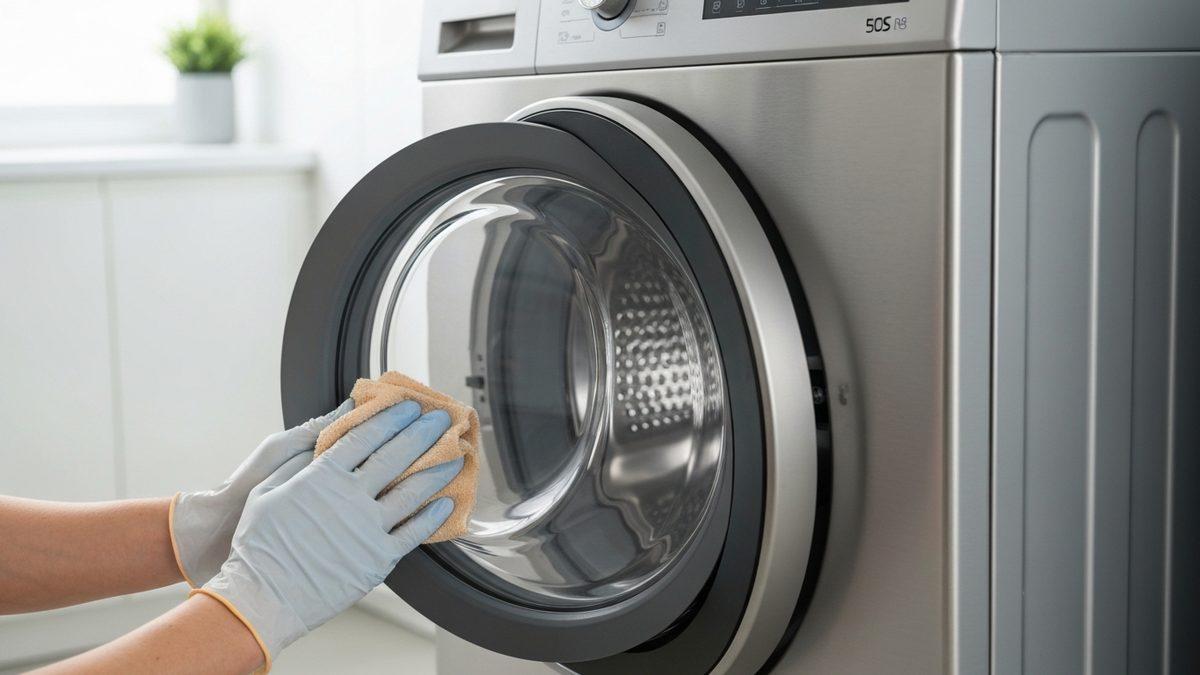
On front-loading machines, the flexible rubber gasket around the door is the number-one mold trap. Water pools in its folds, lint collects, and black spots appear within weeks if it is never wiped.
Peel the gasket back gently and look inside the fold. You will often find trapped hair, coins, and a layer of grime. Clean it with a cloth dipped in a diluted bleach solution (1 part bleach to 4 parts water) or a dedicated mold remover, wearing gloves and keeping the bathroom ventilated.
- Wipe the gasket dry after every wash — 10 seconds prevents hours of scrubbing later.
- Check the drainage holes inside the gasket fold and clear any blockage.
- Treat visible black spots with bleach solution, leave 10 minutes, then wipe.
- Never use a softener if your gasket is already prone to buildup — it feeds the biofilm.
Front load vs top load: different weak spots
Front-loaders are more water-efficient but trap moisture in the gasket and use less water to rinse, so residue lingers. They need gasket attention and the hot reset most.
Top-loaders rarely have a door gasket, but mold gathers under the agitator, around the fabric-softener dispenser, and in the lid recess. The plastic dispenser cup is a classic hidden culprit — pull it out and you may find a slimy black ring. Both types benefit from leaving the lid or door open between loads.
There is also a Thai-market quirk worth knowing: many top-loaders sold here are 'pulsator' models with a fixed plastic well at the bottom of the tub that never fully drains. Sour water sits in it for days. If your top-loader smells worst at the very start of a wash, that trapped well is usually the cause — and the hot vinegar soak above is the fix.
The detergent drawer and filter nobody cleans
Two parts get ignored until they cause problems. The detergent drawer accumulates a damp paste of softener and powder that grows mold. Pull it fully out (most release with a small lever or firm tug), scrub it in the sink with an old toothbrush, and dry it before reinserting.
Front-loaders also have a drain pump filter, usually behind a small panel at the bottom front. Lay a towel down, open it slowly to catch water, and clear out the lint, hair, and the occasional lost coin. A clogged filter holds dirty water and breeds odor.
Water hardness and detergent dosing in Bangkok
Bangkok's metropolitan tap water is moderately hard, carrying dissolved minerals that combine with soap to form a sticky scum — the same scale you see crust on a kettle. That scum clings to the drum and hoses and gives biofilm something extra to grab onto, which is part of why machines here fur up faster than in soft-water cities.
The practical answer is to dose detergent for the water and the load, not by habit. Liquid detergent rinses cleaner than powder in cold cycles, so it is the better default for Bangkok. Two cheap moves make a real difference: run a vinegar rinse periodically to dissolve the mineral scale, and resist the instinct to pour in extra detergent for a 'cleaner' wash — surplus suds simply coat the machine and never leave.
- Measure detergent to the load size — half a cap for a normal condo load, not a full cap.
- Prefer liquid over powder for cold washes; it dissolves and rinses more completely.
- Add 1 cup of white vinegar to the rinse compartment monthly to cut mineral scale.
- If clothes feel stiff or look chalky, that is mineral residue, not too little softener — descale rather than adding more product.
Your simple monthly routine
Prevention takes minutes once the deep reset is done. Build these habits and the smell will not come back.
- After every load, leave the door and detergent drawer open until the drum is dry.
- Wipe the gasket and door glass dry weekly.
- Use the correct detergent dose — overdosing leaves residue that feeds mold.
- Skip or minimize fabric softener; use white vinegar in the rinse instead.
- Run the empty hot vinegar cycle once a month.
- Clean the detergent drawer and check the pump filter monthly.
When to bring in a professional
If the smell persists after a deep reset, or if you see mold deep inside the drum holes and behind the gasket where you cannot reach, the biofilm may have spread into the internal hoses and sump. At that point a professional appliance clean — or a full unit service — is worth it. A worked example: one client in a Sukhumvit one-bedroom re-washed towels for months and replaced the softener twice before booking a sanitize; the technician found a black sump and a clogged filter, and a single hot descaling plus a filter clear ended the odor that ฿900 of softener had not touched.
CLEANROVA can fold washing-machine descaling and sanitizing into a deep clean or a recurring plan. We also handle the laundry itself (ซักรีด) so you are not fighting a smelly machine on turnover day. A standard clean runs ฿650 to ฿1,800 depending on your condo size, and a full deep clean ฿1,499 to ฿3,499; appliance sanitizing can be added on. See our full breakdown on the /pricing page, browse the full list on /services, read more guides on /blog, or tell us your setup via /contact.
Frequently Asked Questions
Can I use bleach and vinegar together to clean my machine?
No — never mix them, as the combination releases harmful chlorine gas. Use vinegar for the hot reset cycle and bleach separately for spot-treating gasket mold, with ventilation in between.
How often should I deep clean my washing machine in Bangkok?
Run an empty hot vinegar cycle monthly. The humidity here means quarterly is not enough — monthly keeps biofilm from re-establishing.
Why do my towels still smell after washing?
Towels hold biofilm and softener residue more than other fabrics. Wash them hot, skip fabric softener, dry them fully, and clean the machine itself — the smell often comes from the drum, not the towels.
Is white vinegar safe for all washing machines?
For occasional cleaning cycles, yes, it is safe for both front and top loaders. Avoid using it in every wash long-term, as constant acidity can affect rubber seals over years.
My machine is on an enclosed balcony — does location really matter?
Yes, a great deal. A sealed balcony or windowless nook keeps the drum damp between loads, which is exactly what biofilm needs. Leave the door open between washes and, if you can, crack the balcony for airflow; ventilation is half the battle against odor in Bangkok.
Tired of laundry that never smells fresh? Let CLEANROVA sanitize your machine and handle the wash. Book a deep clean or recurring plan through /contact or compare options on /pricing today.