Your sofa absorbs everything: spilled coffee, food crumbs, pet hair, body oils, and — in Bangkok — a constant load of humidity that leaves it smelling faintly musty no matter how often you wipe it. Fabric upholstery is especially absorbent, which is exactly why it gets stained and smelly faster here than in drier climates. Cleaning a sofa (ทำความสะอาดโซฟา) properly means knowing your material, treating stains the right way before they set, and recognising when DIY has reached its limit. This guide covers fabric versus leather care, humidity-driven odour, a quick-reference stain table, simple spot fixes, and when professional extraction (฿800 to ฿2,500) is the smarter call than reupholstering a sofa the climate has wrecked.
Know your material before you clean
Using the wrong method can permanently damage upholstery. Most sofas carry a cleaning code on a tag under the cushions — check it first, because a single wrong product can leave a water ring or bleach mark that no extraction will remove.
- W: water-based cleaners are safe.
- S: solvent-only — use a dry-cleaning solvent, no water.
- WS: either water-based or solvent cleaners are fine.
- X: vacuum only — no liquid at all; professional cleaning recommended.
- Leather and faux leather need dedicated leather products, never water-soaked cloths or fabric foams.
Fabric versus leather: different rules
Fabric sofas are absorbent and forgiving with water-based cleaners but hold onto smells and moisture — a real issue in Bangkok. They benefit from regular vacuuming, spot treatment, and periodic deep extraction.
Leather and faux leather are the opposite. They resist spills on the surface but crack and dry out in heat and air-conditioning. Clean leather with a damp cloth and a proper leather cleaner, then condition it a few times a year so it does not dry and split. Never let water sit on seams, and keep leather out of direct sun, which bakes and fades it within months in Bangkok.
Why Bangkok sofas smell musty
That damp, stale odour is not your imagination. Three tropical factors combine to make fabric furniture smell, and all of them trace back to moisture that never fully leaves the foam.
- High humidity keeps fabric and foam slightly damp, the perfect home for odour-causing bacteria and mould (กำจัดเชื้อรา).
- Body sweat in the heat soaks into cushions and ferments over time.
- Trapped moisture from spills that never fully dried in the humid air.
- Pets, food, and closed-up air-conditioned rooms that concentrate smells.
A quick stain-treatment guide for common spills
The single biggest factor in whether a stain comes out is how fast you act and whether you blot rather than rub. Fresh stains on a W or WS fabric usually lift with the right approach; the same stain left for days bonds to the fibres and often needs professional extraction. Always test your chosen product on a hidden patch and check the fabric code before applying anything wet.
Below is a fast reference for the spills that land on Bangkok sofas most often. In every case, blot from the outside of the stain inward so you do not spread it, and dry the area fully afterwards with a fan.
- Coffee or tea: blot up the liquid immediately, then dab with warm water and a drop of dish soap; rinse with a barely-damp cloth and dry.
- Red wine or fruit juice: blot, sprinkle a little salt or baking soda to absorb, then treat with mild soapy water — never hot water, which sets the colour.
- Grease or food oil: sprinkle baking soda or cornflour to absorb the oil for fifteen minutes, vacuum it off, then dab any residue with a touch of dish soap.
- Pet accidents: blot thoroughly, treat with a 1:1 white vinegar and water solution to neutralise odour, then dry fully so the smell does not linger in the humidity.
- Ink or makeup: dab gently with a solvent-based cleaner on S or WS fabrics only, working in from the edges, and never soak.
DIY spot cleaning, step by step
Act fast on spills — a fresh stain is far easier than a set one. Always test any product on a hidden patch first, and check your fabric code before introducing liquid.
- Blot the spill immediately with a clean dry cloth, pressing down to absorb — never rub, which spreads the stain and damages fibres.
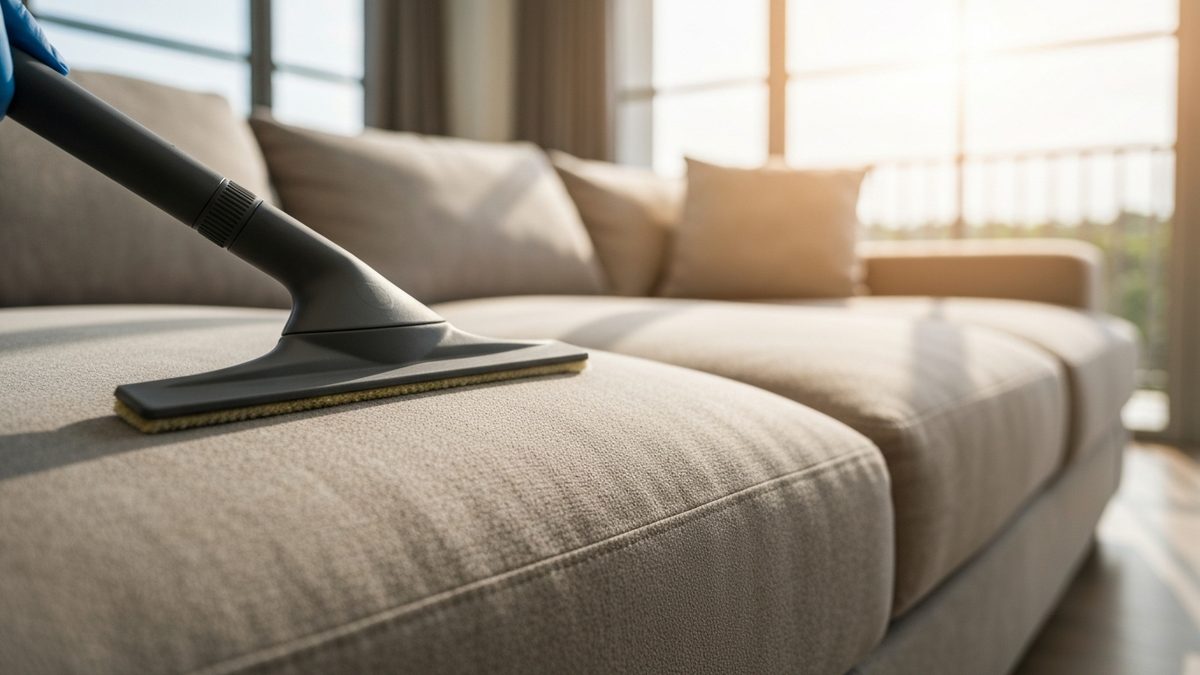
- Vacuum the whole sofa with an upholstery tool to remove crumbs, dust, and hair before introducing any liquid.
- Mix a mild solution: a little dish soap in warm water for W or WS fabrics, or a dedicated upholstery cleaner.
- Dampen (do not soak) a cloth and work the stain gently from the outside inward to avoid spreading it.
- Blot with a clean damp cloth to lift the cleaner, then blot dry with a towel.
- For odour, sprinkle baking soda across the cushions, leave it one to two hours to absorb moisture and smell, then vacuum it off.
- Dry thoroughly with a fan or open windows — never leave fabric damp in Bangkok humidity, or you trade a stain for mould.
Tackling odour and humidity damage
Baking soda handles light, surface odour, but deep musty smells live in the foam where DIY cannot reach. The key prevention is drying: run the air-conditioning or a dehumidifier to keep your living room below 60 percent humidity, and never let a spill stay damp.
If you spot fuzzy patches or a strong musty smell that returns after cleaning, mould has likely taken hold inside the cushions. That is a sign to bring in professionals before it spreads to walls and other furniture, where it becomes a far bigger and more expensive problem than a single sofa.
When to call professionals (and the cost)
DIY works for fresh spills and light maintenance. Professional cleaning is worth it for set-in stains, deep odour, allergy concerns, delicate or X-coded fabrics, and any sofa that has never been deep cleaned. Pros use hot-water extraction that injects and immediately vacuums out solution, lifting embedded dirt, dust mites, and smell from deep in the foam, then dry it properly so humidity does not undo the work.
In Bangkok, sofa and upholstery cleaning (ทำความสะอาดโซฟา) runs ฿800 to ฿2,500 depending on size, material, and condition — a two-seater sits near the lower end, while a large L-shaped sectional with stains lands toward the top. As a worked example, cleaning a stained three-seater at around ฿1,500 is a fraction of the ฿15,000-plus it can cost to reupholster the same sofa, and far less than replacing it. Browse the menu on /services, see rates on /pricing, or describe your sofa on /contact for a flat quote.
Keep your sofa fresh in the heat
Maintenance is simple: vacuum weekly, blot spills instantly, run the aircon or a dehumidifier, and use washable throws or covers on high-use seats. Book a professional extraction once a year — twice if you have pets or kids. A little routine care keeps fabric looking and smelling new in a climate that fights you on both. For more home-care guides, visit our /blog.
Frequently Asked Questions
How do I know if my sofa is safe to clean with water?
Check the cleaning code on the tag under the cushions. W means water-based cleaners are safe, S means solvent only, WS means either is fine, and X means vacuum only with no liquid. When in doubt, test on a hidden area or call a professional.
Why does my sofa smell musty in Bangkok?
High humidity keeps fabric and foam slightly damp, which breeds odour-causing bacteria and mould (กำจัดเชื้อรา). Body sweat and spills that never fully dried add to it. Keep your living room below 60 percent humidity and dry the sofa fully after any cleaning.
How much does professional sofa cleaning cost in Bangkok?
Expect ฿800 to ฿2,500 depending on size, material, and condition. A two-seater sits near the lower end and a large L-shaped sectional with stains lands toward the top. Professional hot-water extraction reaches deep odour and stains that DIY cannot.
Can I use the same method on a leather sofa?
No. Leather and faux leather need dedicated leather cleaners and conditioners, never water-soaked cloths or fabric foams. Wipe with a damp cloth, use a proper leather product, and condition a few times a year to stop drying and cracking in the heat and aircon.
How do I get a fresh coffee or wine stain out of my fabric sofa?
Blot up the liquid immediately, never rub. For coffee, dab with warm soapy water and dry. For wine, absorb with a little salt or baking soda first, then treat with mild soapy water using cool, not hot, water so the colour does not set. Dry fully with a fan.
Is professional cleaning cheaper than replacing my sofa?
Almost always. A professional extraction in Bangkok runs ฿800 to ฿2,500, while reupholstering a three-seater can exceed ฿15,000 and a new quality sofa far more. Unless the frame is damaged or mould has destroyed the foam, cleaning is the far cheaper fix.
Stains set in or a smell that will not quit? CLEANROVA's deep upholstery extraction revives your sofa from ฿800 — book on /contact today.