Bangkok's tropical climate means high humidity (ความชื้น) is a year-round fact of condo life, not just a rainy-season problem — even in the cooler December-to-February months, indoor readings often sit in the high 60s. Too much moisture in the air breeds mold, leaves clothes and cupboards smelling musty, warps wooden furniture, and corrodes electronics and camera lenses. The fix isn't expensive or complicated — it's about hitting and holding the right relative humidity. This guide explains the target range, how to size a dehumidifier (เครื่องลดความชื้น), the everyday habits that keep your condo comfortable, and how to deal with damp that has already taken hold.
The number to aim for: 45–55% RH
Relative humidity (RH) measures how much moisture the air holds compared to its maximum at that temperature. The comfort and protection sweet spot for a home is 45–55% RH. Below 40% the air feels dry and can irritate skin and sinuses; above 60% you enter mold and dust-mite territory, and above 70% — common in Bangkok — moisture actively damages your home.
You can't manage what you don't measure. A digital hygrometer (฿200–500) is the cheapest, highest-value purchase you can make. Put one in the bedroom and one in your most enclosed space, such as a wardrobe or storage room, and check them daily. Don't trust feel alone — a room can read a damaging 68% while still feeling merely 'a bit warm', because the human body is a poor humidity sensor below the point of visible condensation.
What excess humidity quietly destroys
- Walls and ceilings: black mold spots and peeling paint
- Wardrobes and clothes: musty smell, mildew stains, and ruined leather
- Wooden furniture and flooring: warping, swelling, and joint failure
- Electronics and cameras: corrosion and fungus on lenses
- Bedding and mattresses: dust mites that trigger allergies and asthma
- Documents, books, and artwork: foxing, curling, and mold
Sizing a dehumidifier for your condo
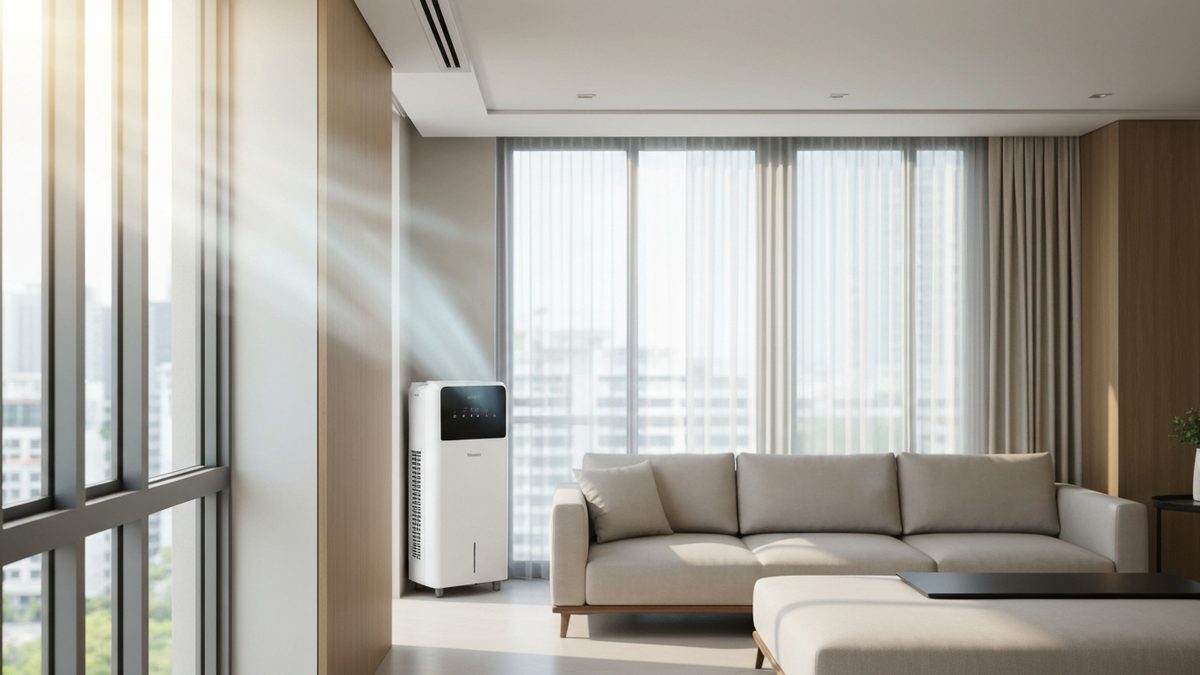
A dehumidifier is the most dependable tool for an enclosed Bangkok condo. Capacity is rated in litres of water removed per day. For a studio or one-bedroom (under ~45 sqm) a 12–20 litre/day unit (฿6,000–12,000) is ample. Larger two-bedroom units or very damp spaces benefit from 20–30 litres/day. As a worked example, a 40 sqm condo recovering from a leak might pull 8–12 litres a day in the first week, then settle to 3–5 litres once the structure dries — so a 16 L/day unit gives comfortable headroom.
Size up if the space is unusually humid, poorly ventilated, or you're recovering from a leak. Empty the tank daily, or run a continuous drain hose to a floor drain so it works unattended while you're out. Run it in the most affected rooms and close the doors so it isn't fighting the whole apartment at once — a dehumidifier with the bedroom door shut hits target far faster than one trying to dry an open-plan unit.
Free and low-cost moisture control
- Run aircon 'Dry' mode (the water-drop icon) 2–3 hours daily to pull moisture without overcooling.
- Ventilate with windows or extractor fans for 20–30 minutes during dry spells to flush humid air.
- Run the bathroom extractor fan during and after every shower.
- Keep wardrobe and cabinet doors slightly open so air circulates instead of stagnating.
- Place moisture-absorber tubs (฿40–120) in closets, shoe cabinets, and under sinks, and refill them before they overflow.
- Dry laundry outside or in a ventilated area rather than indoors, which dumps litres of moisture into the air.
- Cover pots while cooking and use the kitchen extractor — boiling releases surprising amounts of vapour.
Ventilation versus sealing — getting the balance right
There's a tension in Bangkok homes: ventilation helps in dry weather but lets humid outdoor air in during the monsoon. The rule of thumb is to ventilate when the outdoor air is drier than indoors — typically cool, breezy mornings in the December-to-February window and the dry season — and to seal up and rely on aircon or a dehumidifier when it's pouring or muggy outside.
Your hygrometer settles the debate. If opening a window pushes the indoor reading up, close it and dehumidify instead. If it brings the reading down, let the fresh air flow. Make this a five-second habit each morning: glance at the meter, open or seal accordingly, and you'll keep the room in range without guesswork.
Protecting clothes, leather, and electronics
Some possessions need targeted protection beyond a general room-level humidity routine. Leather bags, shoes, and jackets are mold magnets — store them with silica gel sachets and give them air rather than sealing them in plastic, which traps the very moisture you're trying to avoid. Cameras and lenses deserve a dedicated dry box or an electronic dry cabinet (฿2,500–6,000); fungus etched into a lens is permanent and expensive to fix.
For wardrobes, never cram clothes tightly against the back panel — leave a finger's gap so air moves, and rotate stored items every few weeks. Important documents, photos, and electronics spares belong in a sealed box with a generous helping of silica gel that you recharge in the sun or a low oven when the indicator beads change colour. These small habits cost almost nothing and save items that are impossible to replace.
Tackling existing musty smell and mold
If your condo already smells musty, that odour is a sign of microbial growth, not just damp air. Lower the humidity first, then clean affected surfaces. Wipe down wardrobe interiors, wash musty fabrics on a hot cycle, and treat any visible mold with a dedicated cleaner. Air the space out thoroughly once the humidity is back under control.
When mold has taken hold on walls, grout, or behind furniture, a professional deep clean with mold treatment is the lasting fix — surface wiping alone rarely reaches a colony that has rooted into porous material. A targeted mold and mildew add-on runs ฿800–2,500, and a full deep clean with mold removal is ฿1,499–3,499 depending on condo size and severity. See the full scope on /services.
Keep it under control year-round
Humidity control is a habit, not a one-time fix. A daily glance at the hygrometer, a couple of hours of dry-mode aircon, and well-placed moisture absorbers keep most condos comfortably in the 45–55% band. Dust — mold's food source — adds up over time, so a recurring standard clean (฿650–1,800) is a smart complement to your moisture routine.
Think of it as a seasonal rhythm. December to February is your best window for ventilation on cool mornings; March and April bring rising heat and the year's deepest dust; and May to October is when sealing and dehumidifying matter most. Adjusting your routine to the season — rather than running the same approach year-round — keeps the condo in range for far less effort and electricity.
If you're fighting a stubborn musty smell or recurring mold, book a CLEANROVA assessment via /contact, compare cleaning plans on /pricing, or read more seasonal guides on /blog.
Frequently Asked Questions
What is the ideal humidity for a Bangkok condo?
Aim for 45–55% relative humidity. Above 60% encourages mold and dust mites; above 70% — common in Bangkok — actively damages furniture, fabrics, and electronics.
What size dehumidifier do I need?
For a studio or one-bedroom under about 45 sqm, a 12–20 litre/day unit (฿6,000–12,000) is usually enough. Larger or very damp spaces benefit from a 20–30 litre/day model.
Should I open windows or keep them closed in Bangkok?
Ventilate when the outdoor air is drier than indoors — usually cool mornings and the dry season. Seal up and dehumidify during the monsoon or muggy days. Let your hygrometer decide.
How do I get rid of a musty smell in my closet?
The smell signals microbial growth. Lower the humidity, wipe down the closet interior, wash musty fabrics, and treat any visible mold. Recurring mold needs professional treatment from ฿800–2,500.
How do I protect cameras and leather from humidity?
Store cameras and lenses in a dry box or an electronic dry cabinet (฿2,500–6,000), since lens fungus is permanent. Keep leather goods with silica gel and give them air rather than sealing them in plastic, which traps moisture.
Tired of musty closets and creeping mold? Get your humidity (ความชื้น) under control with a CLEANROVA deep clean and mold treatment — book your assessment today via /contact.