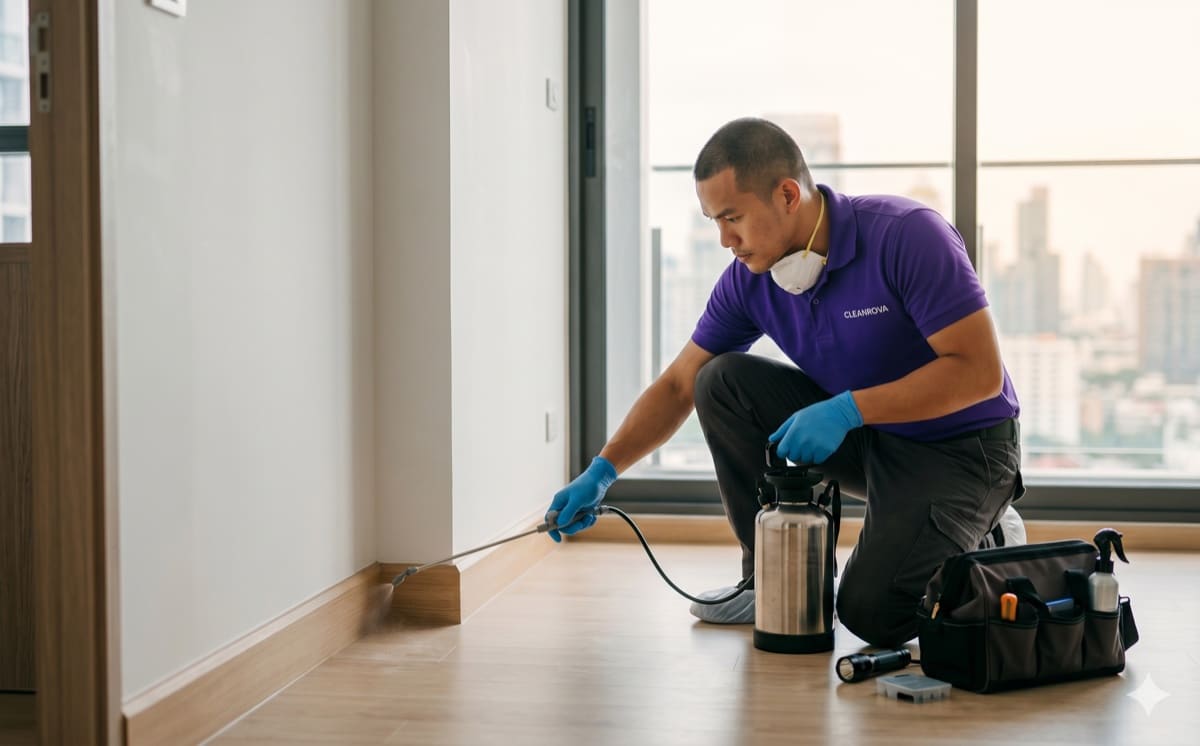
Most cockroach advice tells you how to kill the roaches you already have. This guide is different: it is about making sure you never get the infestation in the first place. In a Bangkok condo, cockroaches are rarely a one-time problem you can spray away — they are a constant, year-round pressure from drains, shared pipes, the rubbish room, and neighbouring units, and the city's heat and humidity let them breed without pause. Spraying when you see one is reactive, satisfying, and almost entirely temporary. A year-round prevention strategy is what actually keeps a condo roach-free, and because it heads off infestations before they establish, it works out cheaper and far less stressful than dealing with a full-blown outbreak and the contaminated items and replacements that come with it. Here is how to build a lasting defence, room by room, and how professional cockroach prevention (กำจัดแมลงสาบ) fits into a recurring plan.
Why your condo is under constant pressure
Unlike a standalone house, a condo unit shares its plumbing, walls, waste stacks, and rubbish systems with dozens or hundreds of neighbours. German cockroaches — the small, fast, indoor breeders that hide in kitchens and bathrooms — and the larger American cockroaches that come up from drains and the building's waste system do not respect unit boundaries. They travel freely through the shared infrastructure of the building, which means even a meticulously clean unit can be invaded by roaches originating two floors away, or thriving in a neglected neighbouring unit whose owner never cleans.
This is the central insight behind prevention: in a condo, you are not just keeping your own home clean, you are defending your unit against a building-wide population that is always probing for a way in. That is why a one-off spray fails so reliably — it deals with the roaches that already crossed the threshold while doing nothing about the steady supply behind them — and why a sustained, layered defence is the only thing that works long term.
Lower floors, units near the rubbish chute or bin room, and ground-floor units near the loading area face the heaviest pressure, but no floor is immune because the plumbing risers connect every level. The German cockroach in particular is a relentless indoor breeder: a few hitchhikers in a grocery delivery or a cardboard box can become an infestation within weeks if conditions allow.
Seal the drains and pipes — your first line of defence
The most common entry route into a Bangkok condo is the plumbing. Floor drains in bathrooms and the kitchen, the gaps around pipes under sinks, and unused or rarely-used drain openings are all highways for roaches travelling up from the building's waste system, especially the larger American cockroaches. Sealing and managing these is the single highest-impact prevention step you can take, and most people never do it.
Build your drain defences in order of priority, starting with the routes roaches use most:
- Fit drain covers or fine strainers on every floor drain in the bathroom and kitchen, and keep them closed or covered when the drain is not in use.
- Pour a cup of water down rarely-used floor drains weekly to keep the U-bend trap full — a dry trap is a wide-open door straight from the sewer into your unit, and spare bathrooms are the classic culprit.
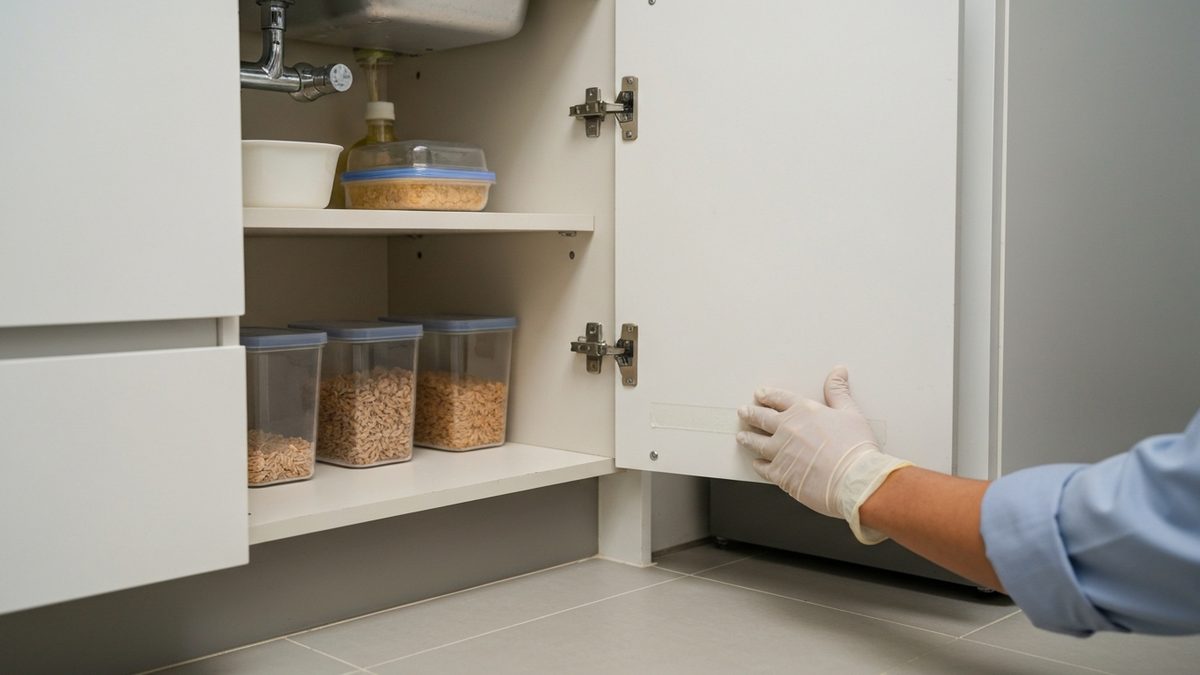
- Seal the gaps where pipes pass through the cabinet panels and walls under the kitchen and bathroom sinks, which are major hidden entry points behind cupboard doors.
- Check and reseal worn or split silicone around the sink, bath, shower tray, and backsplash, where roaches both travel and shelter in the damp.
- Cap or seal any genuinely disused drain or pipe stub permanently rather than leaving it as a convenient entrance.
Gel baiting: prevention that lasts, not a one-day spray
For ongoing prevention, gel bait outperforms spray decisively, and understanding why is key to getting results. Spray kills on contact and then evaporates within hours or days, leaving no lasting protection — and worse, it scatters German cockroaches, driving the survivors deeper into wall voids and adjacent rooms where they continue breeding out of sight. You feel like you won; the population simply relocated.
Gel bait works with the roaches' biology instead of against it. Placed in the cracks, corners, and hinge gaps roaches actually travel through, it keeps working for weeks: roaches feed on it, return to their harbourage, and the active ingredient spreads through the population by secondary transfer — roaches that never touched the bait directly are killed through contact with those that did. Strategically placed gel bait, refreshed periodically, is the quiet backbone of any real prevention programme, keeping numbers suppressed between visits rather than reacting to an outbreak after it has already exploded.
There is one rule that ruins more gel-bait jobs than anything else: do not spray over or near the bait. The repellent in most sprays drives roaches away from the bait, so they never feed, and you lose the benefit of both products at once.
- Use gel bait for ongoing prevention; reserve any spraying for specific situations a professional explicitly advises.
- Place bait in cracks, hinge gaps, behind appliances, and in corners — where roaches travel, not out in the open where it dries out and goes ignored.
- Refresh bait on a schedule so protection never lapses and the gel does not dry out and lose appeal.
- Never spray insecticide over or beside baited areas, because the repellent stops roaches feeding on the bait.
Sanitation habits that starve them out
Prevention is as much about daily routine as it is about products. Cockroaches need three things — food, water, and shelter — and if you deny those consistently, your unit becomes an unattractive place to settle even when roaches do get in from the building.
Make these habits automatic rather than occasional: wipe counters and sweep crumbs every night before bed, never leave dirty dishes or food residue in the sink overnight, store food and pet food in sealed containers rather than open packets, empty the kitchen bin daily and keep it lidded, and fix any drips under sinks or behind the toilet so there is no standing water, which roaches need as much as food. Reduce cardboard and paper clutter, because roaches love to harbour and lay their egg cases in the warm, dark layers of stacked boxes and stored paper — flatten and recycle delivery boxes promptly rather than letting them pile up. None of this is dramatic, but done consistently it removes the foundation an infestation needs to establish.
Spot the early warning signs before an infestation
Prevention also means catching the first hints of a problem before it becomes an outbreak, because a single gravid female German cockroach can found a population. Knowing what to look for turns you into your own early-warning system between professional visits.
During routine cleaning, watch for the tell-tale signs in the warm, hidden places roaches favour. Catching any of these early lets a quick bait refresh or a single targeted visit stop a problem that would otherwise take a full treatment to resolve.
- Small dark specks like ground pepper or coffee grounds in drawers, cabinet corners, and behind the fridge — these are roach droppings.
- Tiny brown, capsule-shaped egg cases (oothecae) tucked into cracks, hinge gaps, and the undersides of shelves.
- A faint musty, oily odour in cabinets or behind appliances, which grows stronger as numbers rise.
- Seeing a roach in daylight — roaches are nocturnal, so a daytime sighting usually means the population is large enough that they are being crowded out of their hiding spots.
It is a building-wide problem — coordinate with the juristic office
Because condo cockroaches travel through shared infrastructure, even the most determined individual effort can be quietly undone by an untreated source elsewhere in the building. If you keep seeing roaches despite a clean, well-sealed unit, the population is almost certainly being sustained in common areas — the rubbish room, the shared plumbing risers, the basement, the bin chute, or a neglected neighbouring unit whose owner does nothing.
Raise it with your building's juristic person or management office (the niti bukkhon). Many of the best, most durable long-term outcomes come from building-wide treatment of common areas and shared risers, which a single owner cannot arrange or fund alone. A professional service can document where roaches are entering your unit and where the building-side pressure is coming from, giving you concrete evidence to push management to act rather than a complaint they can dismiss. Coordinated prevention across the building protects every resident and is far more effective than each unit fighting the same shared population in isolation. If several neighbours report roaches at once, that collective evidence is your strongest lever — point them to /contact so the building takes it seriously.
The recurring plan: pricing and why it pays off
Prevention works best as a standing arrangement rather than a series of emergency call-outs. For reference, a one-time cockroach gel and spray treatment in a Bangkok condo runs roughly ฿800–2,000 — genuinely useful for knocking down an existing problem, but it offers no ongoing protection at all once the technician leaves and the bait runs out.
A recurring cockroach prevention plan (กำจัดแมลงสาบ) is the smarter model for condo living, where the pressure never stops. Quarterly plans typically run around ฿2,500–4,500 per year, while a monthly arrangement for higher-pressure units — lower floors, units near the bin room, or buildings with known issues — might sit around ฿500–1,000 per visit. Each visit refreshes the gel bait before it loses potency, inspects the drains and entry points, and catches early signs before they become an infestation — which is almost always far cheaper than the full-blown treatment, the replacement of contaminated food and items, and the stress that an established outbreak brings. Consider it the same kind of small, predictable cost as aircon servicing: a modest sum that prevents an expensive, miserable problem. Compare plans on /pricing, see what is included on /services, read more pest guides on /blog, or get a tailored recommendation via /contact.
Frequently Asked Questions
I keep my condo spotless — why do I still see cockroaches?
In a condo, roaches travel through shared drains, plumbing risers, and wall voids from other units and common areas, so they reach even immaculate homes. A clean unit reduces their incentive to stay and breed, but cleanliness alone cannot stop them entering through the building's shared infrastructure — which is exactly why drain defences, sealed entry points, and ongoing prevention matter so much in condo living specifically.
Is gel bait really better than spraying?
For prevention, decisively yes. Spray kills on contact then evaporates with no lasting protection, and it scatters German cockroaches deeper into wall voids where they keep breeding. Gel bait keeps working for weeks and spreads through the population by secondary transfer, killing roaches that never touched it directly. The one critical rule is never to spray over or near bait, because the repellent stops roaches feeding and ruins both products.
How often should a prevention visit happen?
For most condos a quarterly visit maintains protection well, refreshing bait before it dries out and checking entry points each time. Units under heavier pressure — lower floors, those near the rubbish room, or buildings with known roach issues — may benefit from monthly visits. The right interval depends on your specific pressure level, which a technician can assess on a first visit and adjust over time.
What if the cockroaches are coming from the building, not my unit?
Then individual treatment will only ever be partial, because you are fighting a shared population that keeps being resupplied from common areas. Raise it with your juristic office and push for treatment of the rubbish room, shared risers, and any neglected source units. We can document the entry points and the building-side source pressure so you have solid evidence to bring to building management and rally your neighbours behind a coordinated fix.
Are cockroaches in my condo a health risk or just unpleasant?
They are a genuine health concern, not merely unpleasant. Cockroaches walk across drains, waste, and food surfaces, spreading bacteria such as Salmonella, and their droppings and shed skins are a well-documented trigger for asthma and allergies, which matters especially in homes with children or anyone with respiratory conditions. That health dimension is another reason prevention is worth the modest recurring cost rather than tolerating the occasional sighting.
Tired of reacting to roaches one at a time? Switch to prevention. CLEANROVA offers recurring cockroach-prevention plans that keep your Bangkok condo protected year-round — gel baiting, drain defence, and early-warning inspections. Set one up via /contact or compare plans on /pricing.