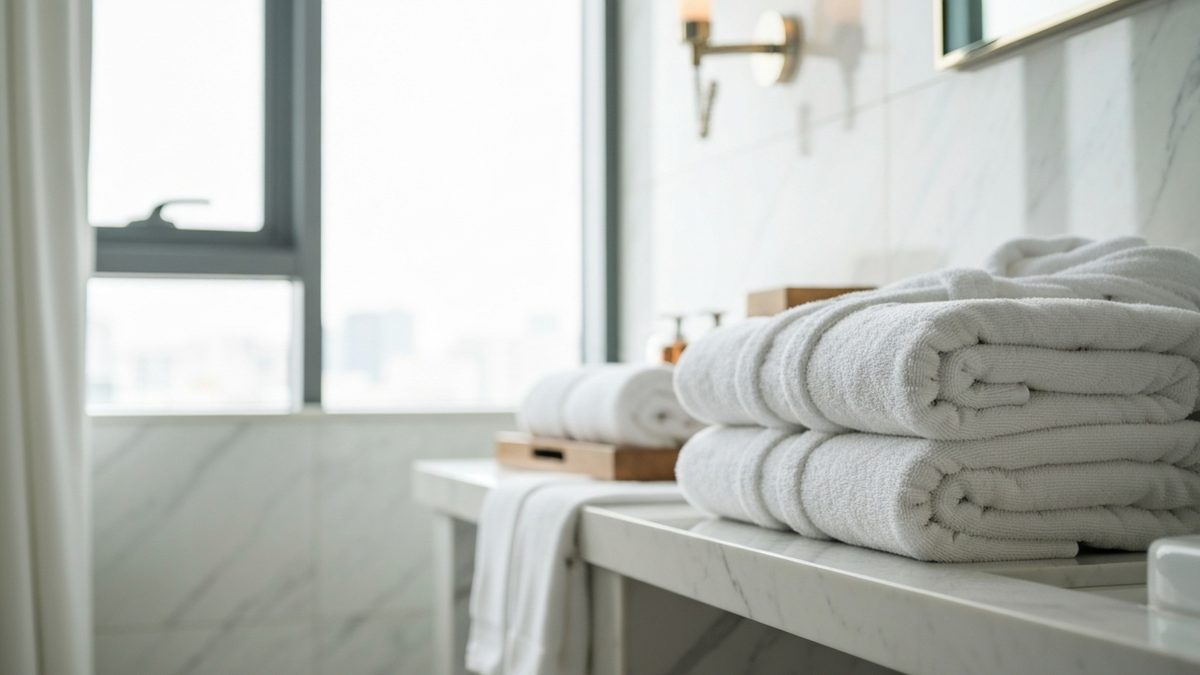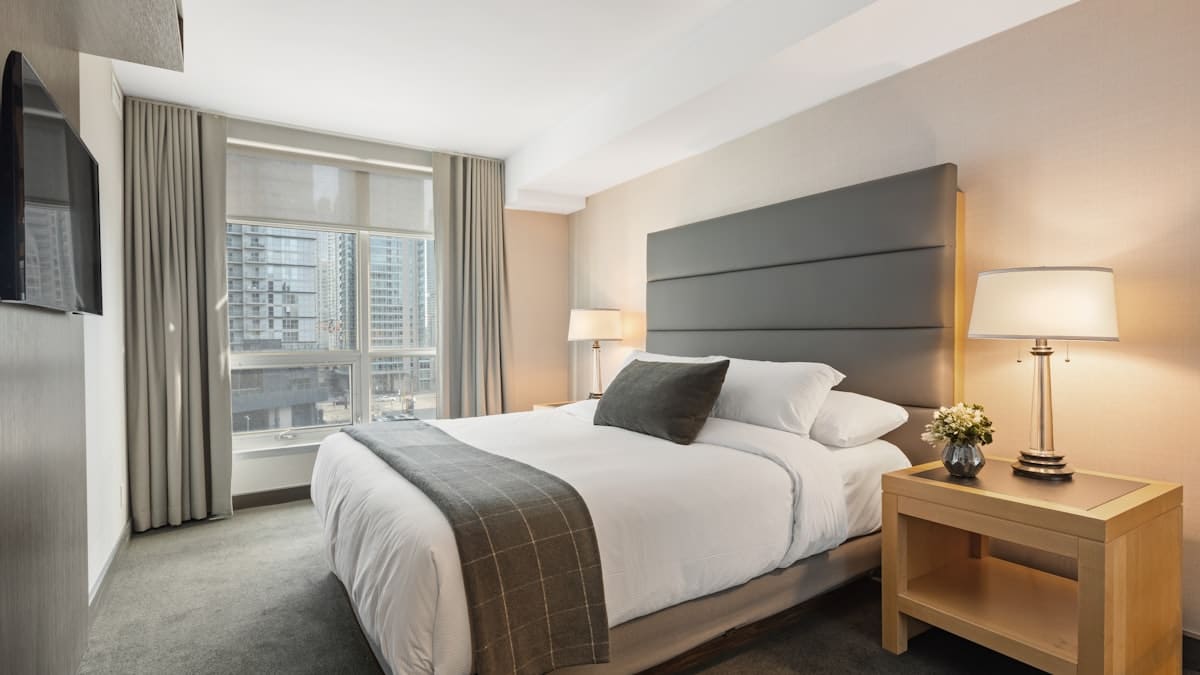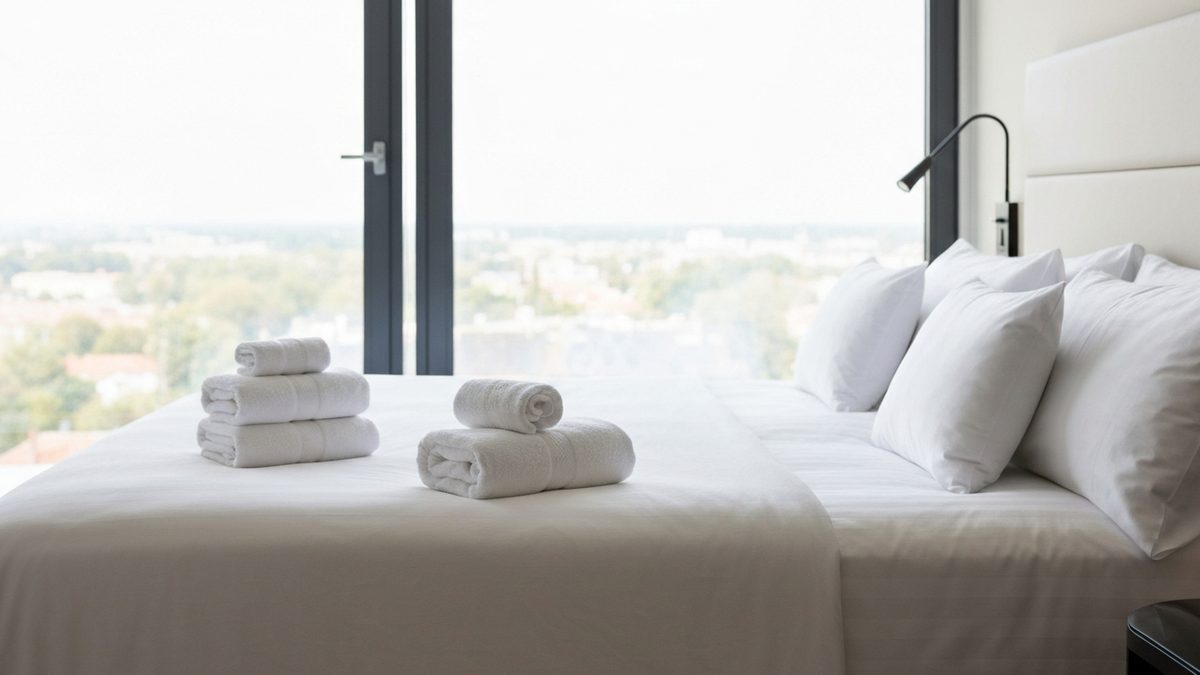
Crisp white sheets and fluffy towels are the single biggest driver of the 'this felt like a hotel' review — and grey, thinning, stained linen is the fastest way to look cheap no matter how spotless the rest of the unit is. For Bangkok Airbnb hosts, laundry (ซักรีด) is the operational engine behind that first impression. Get your bed linen (ผ้าปูที่นอน) and towels onto a proper par-stock system and you'll never delay a turnover waiting for sheets to dry in 80 percent humidity. Get it wrong and you'll either block check-ins or hand guests damp, musty towels that read as neglect. This guide covers the 3-par system, the real baht cost of in-house versus outsourced laundry, how to keep everything hotel-white for as long as possible, and how a turnover partner can own the whole loop so you never think about it again.
Why linen is your highest-impact, highest-risk asset
Guests touch your linen more than any other part of the unit — they sleep in it for eight hours and dry their face with it. That intimacy means quality is noticed instantly, far more than a slightly scuffed skirting board ever would be, and so are flaws. A single yellowed pillowcase or a towel with a grey edge undermines an otherwise immaculate clean and plants the word 'dirty' in a guest's mind before they've even unpacked.
Linen is also a pure logistics risk. Sheets and towels need washing, drying and folding between every stay, and in Bangkok's humidity, line-drying is slow and air-dried cotton can come back smelling musty rather than fresh. Without a buffer of spare sets, a delayed or rained-out wash means a delayed check-in, an apology, and possibly a refund. Par stock is the single discipline that removes this risk entirely.
The 3-par system explained
Par stock means owning multiple full sets of linen per bed and bathroom so the laundry cycle never blocks a turnover. The hotel standard is three par — three complete sets in rotation at all times — and it is the reason a hotel never tells you your room isn't ready because the sheets are still wet.
Here is where each of the three sets lives on any given day. The system works because at no point does the unit depend on a wash finishing in time.
- 1 par means a delayed wash delays check-in — never enough for back-to-back bookings
- 2 par works for slow calendars but leaves no margin for a stain, a loss, or a rained-out dry
- 3 par is the safe minimum for any unit with frequent turnovers, and the standard we recommend
- Par 1: on the bed and in the bathroom, in use by the current guest
- Par 2: clean, folded, in the unit cupboard, ready to deploy the instant a turnover starts
- Par 3: in the wash, drying, or in transit to and from the laundry
What a full set includes
Standardise exactly what one 'set' contains so any cleaner can make up a bed identically and you can count stock at a glance during a turnover. Mismatched or improvised sets — a fitted sheet from one set, pillowcases from another, a towel borrowed from the next unit — are how portfolios start looking tired without anyone deciding they should.
Write the set down and laminate it inside the linen cupboard. Anyone, including a last-minute replacement cleaner, should be able to assemble a correct set without asking you a question.
- Bed: fitted sheet, flat sheet or duvet cover, 2–4 pillowcases per bed
- Bathroom: 2 bath towels, 2 hand towels, 1 bath mat per pair of guests
- Extras: a spare blanket and pillow protectors that get swapped the moment they stain
- Keep all linen identical white and the same brand so any piece can replace any other
In-house versus outsourced laundry: the cost
You have two models. In-house means washing on the unit's own machine — cheap per load in electricity and detergent, but slow in Bangkok humidity, dependent on a working machine, and it ties up the cleaner's time waiting or returning. Outsourced means a laundry service collects, washes, presses and returns hotel-folded linen, typically charged per kilo or per set.
For most hosts running frequent turnovers, outsourced wins decisively on speed and finish. Expect to pay ฿150–300 per turnover for laundry depending on volume and whether pressing is included. Work it through: if in-house 'saves' you ฿200 of laundry cost but adds an hour of cleaner time you pay for, plus the risk of a damp-towel review, the saving evaporates. Outsourcing also pairs perfectly with the 3-par system, because Par 3 simply becomes 'at the laundry' — a known, reliable leg of the cycle rather than a gamble on the weather.
- In-house wash: lowest cash cost but 4–6+ hours of drying in humidity, plus the cleaner's tied-up time
- Outsourced per turnover: ฿150–300 for a one-bed set, collected and returned pressed
- Pressing and ironing add the crisp hotel finish guests photograph and mention in reviews
- Outsourcing pairs perfectly with 3-par: Par 3 is simply 'at the laundry' — a known, scheduled leg
Keeping linen hotel-white
White linen looks premium but greys and yellows fast under Bangkok conditions — hard water, sweat, sunscreen, make-up and humidity all conspire against it, and the city's water leaves a dulling mineral residue over time. Disciplined handling extends its life by months and protects the look that earns five stars.
The single biggest lever is treating stains the moment they appear, before a hot wash bakes them permanently into the fibres. The steps below are the routine a good turnover service follows without being asked.
- Treat stains immediately on turnover — don't let them set through a wash that fixes them forever
- Wash whites separately and on a hot cycle wherever the fabric care label allows
- Avoid over-bleaching, which weakens fibres and paradoxically yellows cotton faster over time
- Retire any piece that has greyed or thinned — one tired towel ages the whole unit's image
- Rotate stock evenly so no single set wears out first and the whole inventory ages together
Stain and aging control as a budget line
Treat linen as a consumable that depreciates, not a one-time purchase you make once and forget. Towels and sheets have a useful life of perhaps 12–24 months under heavy Airbnb use, faster for towels than sheets because towels take more friction and more washing. Budgeting for steady replacement keeps the unit looking new instead of letting it slowly, invisibly fade until a guest's photo reminds you.
A practical approach is to replace a fixed portion of stock on a schedule — say a quarter of your towels every six months — and pull anything stained or thinned immediately rather than waiting for the scheduled refresh. A one-bed running three par might budget ฿2,000–4,000 a year for linen replacement, a rounding error against revenue but the difference between 'fresh' and 'tired' in every review. Hotel-white is a standard you maintain continuously, not a state you achieve once on opening day.
How a cleaning partner handles it end to end
A turnover service can own the entire linen loop so you never think about it: strip used linen, fit a fresh par set from the cupboard, send the dirty load out to laundry, and restock the cupboard when clean stock returns. The 3-par buffer means the cycle is always one step ahead of the calendar, and you are never the person checking whether the sheets dried in time.
This is exactly how we run linen for managed units — strip, restock from par, dispatch to laundry, photograph the made bed as proof. The host sees a hotel-made bed in their phone and nothing else to manage. See the full turnover scope on /services, compare turnover pricing on /pricing, or read more host operations guides on /blog.
Frequently Asked Questions
How many sets of linen do I need for an Airbnb?
Three full sets per bed and bathroom — the 3-par standard. One set is in use, one is clean and ready in the cupboard, and one is in the wash or at the laundry. This buffer means a slow dry in Bangkok humidity, a rained-out line, or a stain never delays your next check-in. One or two par leaves you gambling on the weather.
How much does Airbnb laundry cost in Bangkok?
Outsourced laundry typically runs ฿150–300 per turnover for a one-bedroom set, collected and returned pressed. In-house washing is cheaper in cash but ties up the unit's machine for hours of slow humid drying and uses the cleaner's time, which you ultimately pay for. Once you count the damp-towel review risk, outsourcing usually wins for frequent turnovers.
Should I use white linen or coloured?
White. It reads as premium and hotel-like, and because every piece is identical, any towel or sheet can replace any other without breaking the look. The trade-off is that white greys and yellows faster in Bangkok's hard water and humidity, so you need disciplined immediate stain treatment and a steady replacement budget to keep it crisp.
How often should I replace towels and sheets?
Plan for roughly every 12–24 months under heavy Airbnb use — faster for towels than sheets — and pull any individual piece immediately once it greys, thins or stains. A one-bed on three par might budget ฿2,000–4,000 a year for replacement. One tired towel can age the look of an entire otherwise-spotless unit in a guest's photo.
Why does air-dried linen sometimes smell musty in Bangkok?
High humidity means cotton can take many hours to dry fully, and linen that is folded or stored while still slightly damp develops a musty smell that guests read as 'not fresh'. This is the strongest argument for outsourced laundry or proper machine drying, and for a 3-par buffer so you never rush a half-dry set onto a bed.
Want your linen run like a hotel? CLEANROVA manages the full strip-restock-launder cycle on a 3-par system so your beds are always hotel-white. See turnover pricing on /pricing or get in touch via /contact.