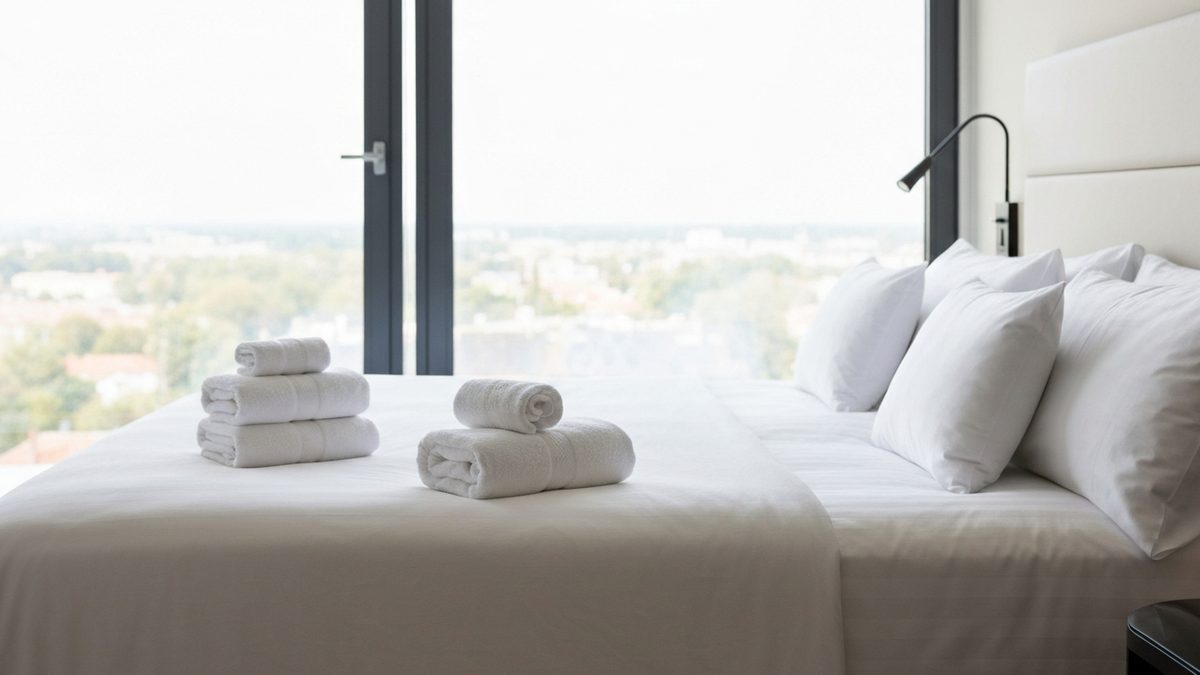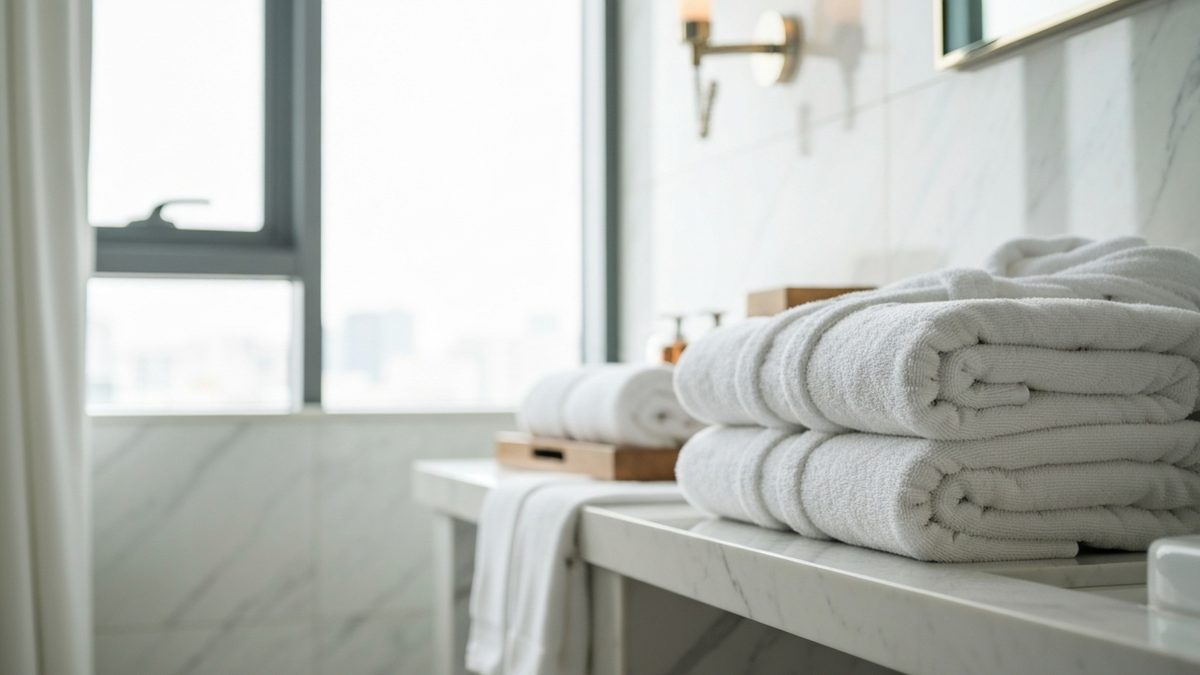
Nothing tanks a five-star review faster than a guest reaching for toilet paper that isn't there at 11pm. For Bangkok Airbnb hosts, consumables — the small, unglamorous supplies guests burn through every stay — are where reliability is quietly won or lost. A French couple arriving from a 12-hour flight into Sukhumvit will forgive a slightly dated sofa, but they will not forgive an empty soap dispenser and a single half-used roll of paper. The good news is that running out is a solved problem. With a par-level system (ระดับสต๊อก) tied to every turnover clean, you can guarantee a fully stocked unit for ฿100–300 per stay, without ever physically visiting the property or fielding a single midnight message. This guide shows you exactly how to set par levels, automate restocking, work out the per-stay cost on real Bangkok numbers, and meet the near-hotel expectations international guests now arrive with.
What counts as a consumable (and what doesn't)
Consumables are the items that leave with the guest or get used up: they need replacing every turnover or every few stays. Confusing them with reusable amenities is the first mistake new hosts make. A hairdryer is an amenity; the toilet paper next to it is a consumable. A coffee machine is an amenity; the sachets that go in it are consumables.
Getting this distinction right matters because consumables are the line item you budget per stay, while amenities are a one-time capital cost you depreciate over years. Mixing the two together is how hosts end up with a vague 'supplies' figure that quietly bleeds margin. Below is the standard kit Bangkok guests now expect as a baseline — anything less and you are competing on price alone.
- Bathroom: toilet paper (2 spare rolls minimum), hand soap, body wash, shampoo, conditioner
- Kitchen: dish soap, sponge, paper towels, bin liners, sachets of coffee, tea, sugar, drinking water
- Laundry and cleaning: a small bottle of multi-surface spray, spare bin liners stored under the bin
- Welcome touches: 2–4 bottles of water, salt and pepper, a small bottle of cooking oil for longer stays
Par levels: the hotel trick that ends shortages
A par level is the minimum quantity of each item that must be present at the end of every clean. Hotels run on par stock; you should too. The cleaner's job is not to 'check if there's enough' — a subjective judgement that fails the moment a tired cleaner glances at a near-empty roll and decides it'll do. It is to top every item back up to its par number, every single time, mechanically.
Set par levels slightly above one stay's usage so a back-to-back booking or a longer guest never depletes the unit. The principle is simple: the next guest should never be able to tell how long the previous guest stayed, because the unit always presents identically full. For a one-bedroom condo, a sensible par looks like the numbers below.
- Toilet paper: 4 rolls present (1 on the holder, 3 spare in view)
- Hand and body wash: bottles at least half full, swapped for a fresh bottle if below the halfway mark
- Coffee and tea sachets: 4 of each
- Bin liners: 1 in each bin plus 3 spare folded underneath the liner
- Drinking water: 4 bottles chilled in the fridge
Restock-on-turnover: the workflow
The magic happens when restocking is welded to the cleaning visit. Your cleaner already enters between every guest — that is the moment to bring stock up to par. No separate trip, no host involvement, no 11pm message from a guest asking where the toilet paper is, no emergency Grab order of ฿40 of supplies that costs you ฿120 in delivery and stress.
A reliable provider runs the loop below on autopilot. At CLEANROVA we treat consumables as part of the turnover, not an afterthought — the cleaner who makes the bed is the same person who counts the rolls, so nothing falls between two parties. See how it fits the wider service on our /services page, and how it is priced on /pricing.
- Cleaner arrives for turnover and counts each consumable against the par sheet
- Items below par are topped up from the in-unit supply cupboard
- Cupboard stock is logged; when it drops to its reorder point, a resupply run is triggered automatically
- A photo of the stocked bathroom and kitchen is sent to the host as proof
- Monthly, the host receives a simple consumables usage and cost summary so spend is never a mystery
What it costs per stay: a worked example
Consumables are cheap insurance. For a standard one- or two-night turnover in a Bangkok condo, expect ฿100–300 per stay depending on the kit you offer and guest count. A bare-minimum bathroom-and-kitchen refill sits near ฿100–150; a fuller welcome kit with coffee, water and toiletries lands closer to ฿250–300.
Work it through on a real example. Say you run a one-bed in Asok at an average ฿2,200 per night with 20 turnovers a month. A standard ฿200 kit costs you ฿4,000 a month, or roughly 3 percent of gross revenue on a full calendar. Now weigh that against the cost of a single one-star review mentioning 'no toilet paper, had to go to 7-Eleven at midnight' — which can suppress your nightly rate by ฿200–400 for the weeks it sits near the top of your reviews. One avoided bad review pays for months of consumables. The maths is not close.
- Bare refill (paper, soap, bin liners): ฿100–150 per stay
- Standard kit (adds coffee, tea, water, body wash): ฿180–250 per stay
- Premium kit (adds local snacks, extra toiletries): ฿250–300 per stay
- Bulk buying via your cleaning partner typically cuts 15–25 percent off 7-Eleven retail prices
Buying in bulk and storing in-unit
The cheapest consumables are bought in bulk from Makro, Lotus's or online and stored in a locked supply cupboard inside the unit. A 24-pack of toilet rolls from Makro can land below ฿8 a roll against ฿18–20 at a convenience store; multiply that across 240 rolls a year and the saving funds the welcome snacks. Bulk buying also removes the per-trip delivery cost and means your cleaner never arrives empty-handed.
Keep a sealed bin or lockable drawer guests can't access — under-sink cabinets with a child lock, or a labelled plastic crate inside a wardrobe, both work. Stock it to cover roughly four to six turnovers, so a resupply run is only needed every week or two even on a busy calendar. For multi-unit hosts, a central store at one base unit plus per-unit par cupboards is the most efficient pattern, letting one resupply run service several properties.
What Bangkok guests actually expect in 2026
Guest expectations have crept up to near-hotel level, pushed by serviced apartments and condo-hotels that set the local benchmark. International travellers arriving from a long flight expect to shower with provided shampoo, make a coffee, and find drinking water — and critically, Bangkok tap water is not potable, so bottled or filtered drinking water is non-negotiable, not a luxury. A guest who drinks from the tap and feels unwell will blame the unit, fairly or not.
Meet the baseline and you avoid complaints; exceed it slightly — a few sachets of local Cha Yen, a printed note on the nearest good street food — and you earn the 'felt like a hotel' line in reviews that lifts your search ranking. The gap between a complaint and a compliment is often ฿50 of extra stock.
- Drinking water — always, every stay (tap water is not safe to drink in Bangkok)
- Working, stocked toiletries in the shower, not travel-size sachets that run out mid-shower
- Enough toilet paper that nobody has to ration or count days
- Coffee and tea for the morning, with a working kettle or machine
- A spare set of everything so a 3-night guest isn't left short on night two
Common mistakes that cause stockouts
Most stockouts trace back to one of a handful of avoidable errors. Knowing them lets you design them out of your system from day one rather than learning each one through a bad review.
The through-line is that every mistake below comes from treating consumables as an occasional chore instead of a fixed step in a repeatable process.
- Relying on the guest to report shortages instead of restocking to par before they ever notice
- Keeping no spare stock in-unit, forcing a special supply trip on a tight turnover day
- Buying retail single-packs at convenience-store prices instead of bulk
- Not photographing the stocked unit, so disputes become your word against the guest's
- Treating consumables as the host's job rather than building them into the clean itself
Frequently Asked Questions
How much should I budget for Airbnb consumables per stay in Bangkok?
Plan for ฿100–300 per turnover. A basic refill of paper, soap and bin liners runs ฿100–150, while a fuller welcome kit with coffee, tea, water and toiletries lands around ฿250–300. On a one-bed doing 20 turnovers a month, a ฿200 standard kit is roughly 3 percent of gross revenue. Bulk buying through your cleaning partner usually shaves 15–25 percent off retail prices.
Do I need to provide drinking water?
Yes. Bangkok tap water is not safe to drink, so guests expect bottled or filtered drinking water every stay. Two to four bottles per turnover is standard and is one of the most-noticed touches in reviews. A guest who feels unwell after drinking tap water will blame your unit regardless of fault.
Can my cleaner handle restocking without me being involved?
Absolutely — that is the point of a par-level system. The cleaner tops every item back to its par number during the turnover and sends a photo as proof. You never have to visit the unit or field last-minute guest messages. With CLEANROVA the same person who cleans also restocks, so nothing falls between two separate parties.
What is a par level?
A par level is the minimum quantity of each consumable that must be present at the end of every clean. The cleaner restocks each item back up to its par number every visit, which guarantees the next guest always arrives to a fully stocked unit, no matter how much the previous guest used. It removes subjective judgement from the process.
Where should I store spare supplies in a small condo?
Use a lockable under-sink cabinet, a labelled crate inside a wardrobe, or a sealed bin guests cannot access. Stock enough for four to six turnovers so resupply runs are only needed every week or two. Multi-unit hosts often hold a central store at one base unit plus a small par cupboard in each property.
Want consumables handled on autopilot? CLEANROVA builds par-level restocking into every turnover clean so your Bangkok Airbnb never runs dry. Get a quote on /pricing or talk to our team via /contact.