Your tiles can look spotless while the grout lines between them turn grey, then brown, then nearly black. In a Bangkok condo (ทำความสะอาดคอนโด) this happens faster than almost anywhere — humidity, foot traffic from outdoor dust, and the wrong mopping habits push grime deep into the porous grout where a quick mop never reaches. The result is a floor that always looks slightly dirty no matter how often you clean it, and a nagging sense that the unit is older or grubbier than it really is. The frustrating truth is that most people make it worse with every clean, because the tools and water they use grind dirt into the lines rather than lifting it out. This guide explains why grout discolors in Bangkok specifically, the mopping technique that actually keeps it light, how to deep-clean lines by hand, when sealing is worth it, and what it costs in ฿ to have grout professionally restored.
Why grout goes grey faster in Bangkok
Grout is porous, like a sponge made of cement. Every time dirty mop water passes over it, the grout absorbs the dirt rather than releasing it. Over months that absorbed grime builds into a permanent-looking stain.
Bangkok adds three accelerants: fine outdoor dust and PM2.5 tracked in on shoes, high humidity that keeps grout damp enough for mildew to grow in the lines, and hard mineral residue from tap water. Bathroom and kitchen grout darkens fastest because it stays wet longest.
There is a Thai-home factor too. Most households here observe a shoes-off rule, which helps — but the entry mat and the first metre of hallway take the brunt of street dust, and balcony thresholds funnel rain-washed grime inside during the monsoon. Those high-load zones go grey months before the rest of the floor, which is why a room can look unevenly aged even when it is cleaned on the same schedule throughout.
The mopping mistake making it worse
The biggest cause of grey grout is mopping with water that is already dirty. A traditional single-bucket mop spreads grime around and pushes it into the grout lines. Each pass deposits a thin layer of dirt exactly where you do not want it.
The fix is a two-bucket system and the right tools.
- Use two buckets — one with clean cleaning solution, one for rinsing the mop — so you never reload with dirty water.
- Sweep or vacuum thoroughly first; mopping over grit just grinds it into the grout.
- Use a flat microfiber mop, not a stringy cotton one that drags dirt along the lines.
- Change the rinse water the moment it looks cloudy.
- Use a pH-neutral cleaner; harsh acids erode grout and bleach can lighten coloured tile.
Deep cleaning grout lines by hand
Mopping maintains, but to actually lift years of grime out of the lines you need to work the grout directly. This is a weekend job for a room, not a daily task. Set aside an afternoon, open the windows, and treat it like a one-time reset rather than something you will repeat weekly — done right with sealing afterwards, you should not need to do it again for a year or more.
- Mix a paste of baking soda and a little water, or use an oxygen-based grout cleaner.
- Apply it along the grout lines and let it sit for 10 to 15 minutes.
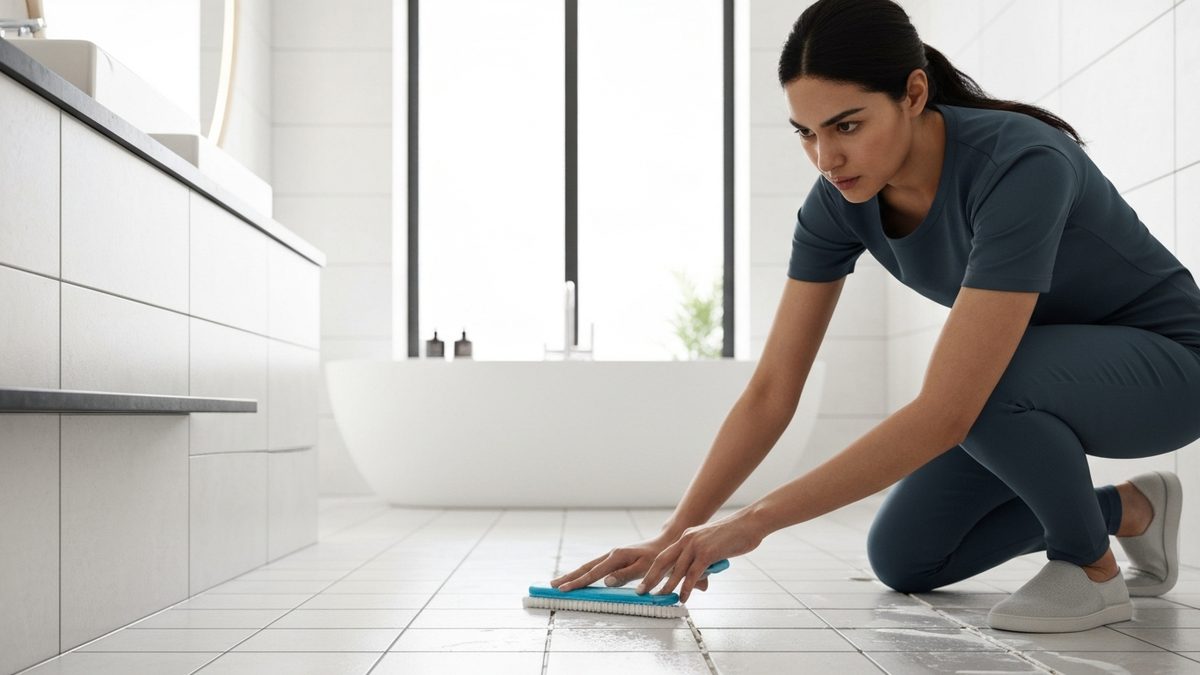
- Scrub each line with a stiff grout brush or an old toothbrush, working in short strokes.
- For mildew in wet areas, spot-treat with a diluted bleach solution and rinse well.
- Wipe the residue away with clean water and a microfiber cloth.
- Dry the floor and inspect — repeat on any lines still dark.
Sealing: the step that keeps it clean
Once grout is clean and fully dry, sealing it is what makes the result last. A grout sealer fills the porous surface so dirt and moisture sit on top instead of soaking in, meaning the next mop actually lifts grime away rather than burying it.
Apply a penetrating sealer with a small brush or applicator bottle along each line, wipe excess off the tile face before it dries, and let it cure as the product directs. In Bangkok's humidity, plan to reseal high-traffic and bathroom grout every 12 to 18 months. Sealed grout is the single biggest reason some condos stay bright while others go grey.
A practical note on cost and timing: a bottle of penetrating sealer runs roughly ฿300 to ฿600 at a Thai hardware store and covers a typical condo bathroom and kitchen with some to spare. The catch is curing time — grout must be bone dry before you seal, which in the rainy season can mean running a fan or the air-con overnight first. Sealing damp grout traps moisture inside and can actually encourage mildew, so patience here pays off.
When DIY will not bring it back
Sometimes grout is too far gone — deeply stained, crumbling, or discoloured unevenly so it never looks clean again. At that point professional grout restoration is the realistic option.
Professionals use high-pressure steam or rotary scrubbers to extract grime DIY cannot reach, and can apply a grout colorant that re-pigments the lines to a uniform shade, effectively making old grout look new. It is dramatically cheaper than re-tiling — re-tiling a single Bangkok bathroom commonly runs ฿15,000 and up once you count labour, materials, and waterproofing, while colorant and seal restores the same floor for a fraction of that.
What professional grout cleaning costs in Bangkok
Pricing depends on area, tile type, and condition. As a guide for Bangkok condos:
- Grout deep clean and steam as part of a deep clean: deep cleans run ฿1,499 to ฿3,499 depending on unit size, with grout work folded in.
- A standard recurring clean (฿650 to ฿1,800) keeps maintained grout light but will not restore stained lines.
- Full grout restoration with colorant and sealing is quoted by area — share your floor size and photos via /contact for an exact figure.
- Sealing as a standalone add-on is the most cost-effective insurance against future discoloration.
Natural stone needs different care
Plenty of mid-range and high-end Bangkok condos use marble, travertine, or granite in lobbies, bathrooms, and feature walls — and these stones break the usual grout rules. They are calcium-based and acid-sensitive, so vinegar, lemon, and many bathroom cleaners will etch a dull mark into the surface that no amount of polishing easily removes. Even some 'natural' descalers are off-limits.
On stone floors, stick to a pH-neutral stone cleaner and a soft mop, blot spills immediately rather than letting them sit, and seal both the stone and its grout with a product rated for natural stone. If your unit has polished marble that has gone hazy or ringed from the wrong cleaner, that is a job for professional stone honing rather than DIY scrubbing — using the wrong chemistry once can cost far more to fix than it saved.
Keep it light with a simple rhythm
Restored grout only stays bright with the right routine: sweep before mopping, use the two-bucket method, keep wet rooms ventilated to stop mildew, and reseal on schedule. Do that and your floors will keep looking like the day they were cleaned.
CLEANROVA handles everything from weekly maintenance mopping to full grout restoration and sealing. Browse plans on /pricing, see the full list on /services, read more home-care guides on /blog, or get a tailored quote through /contact.
Frequently Asked Questions
Why does my grout get dirty so quickly after cleaning?
Because unsealed grout is porous and absorbs dirt from mop water. Without a sealer, every mop pushes grime back into the lines. Clean, dry, then seal to break the cycle.
Can I use bleach on coloured or natural-stone tile grout?
Be careful — bleach can lighten coloured grout and damage natural stone like marble or travertine. Use a pH-neutral or oxygen-based cleaner on those surfaces instead.
How often should grout be sealed in Bangkok?
Every 12 to 18 months for high-traffic and bathroom areas, given the humidity and dust. Lower-traffic rooms can go longer.
Is grout colorant the same as sealing?
No. A sealer protects clean grout, while a colorant re-pigments stained grout to a uniform shade. Professionals often apply colorant first, then seal over it.
Does a steam mop clean grout on its own?
Steam helps loosen surface grime and is great for maintenance, but it does not reach deep into stained, unsealed lines the way a stiff brush and oxygen cleaner do. Use steam to keep clean grout fresh, not to rescue lines that are already dark — and always seal afterwards so the result lasts.
Grey grout dragging your floors down? CLEANROVA can deep clean, restore, and seal so your tiles stay bright. Book through /contact or compare cleaning plans on /pricing.