From May to October, Bangkok's monsoon pushes outdoor humidity past 80% for weeks at a time, and condos pay the price. Mold (เชื้อรา) blooms on closet walls, behind sofas, along bathroom grout, and inside aircon units almost overnight. A single damp weekend in July — when the city can see rain on 20 of 31 days — is enough to seed a colony that you'll be scrubbing in August. The good news is that rainy-season mold is preventable with a consistent humidity (ความชื้น) routine that costs far less than the repairs and replacements it avoids. This playbook walks you through the science, a room-by-room defence plan, a realistic monthly budget, and exactly when to call in a professional mold removal (กำจัดเชื้อรา) team.
Why Bangkok condos grow mold in monsoon season
Mold spores are always present in the air. They only become a visible, smelly problem when three conditions line up: moisture, warmth, and a food source such as dust, drywall, fabric, or wood. Bangkok's rainy season delivers all three at once. Relative humidity (ความชื้น) indoors routinely climbs above 70% when windows stay shut against the rain and aircon runs only intermittently, and the city's year-round 28–34°C warmth means spores never go dormant the way they might in a temperate winter.
High-rise condos are especially vulnerable. Sealed concrete shells trap moisture, north-facing walls stay cool enough to condense water on the inside surface, and stacked floor plans mean a leak two units above can quietly soak your ceiling cavity for days before you notice a stain. Once a colony establishes, it releases more spores and spreads to adjacent surfaces fast — what starts as a few black dots in a grout line can cover half a wall within two weeks of monsoon weather.
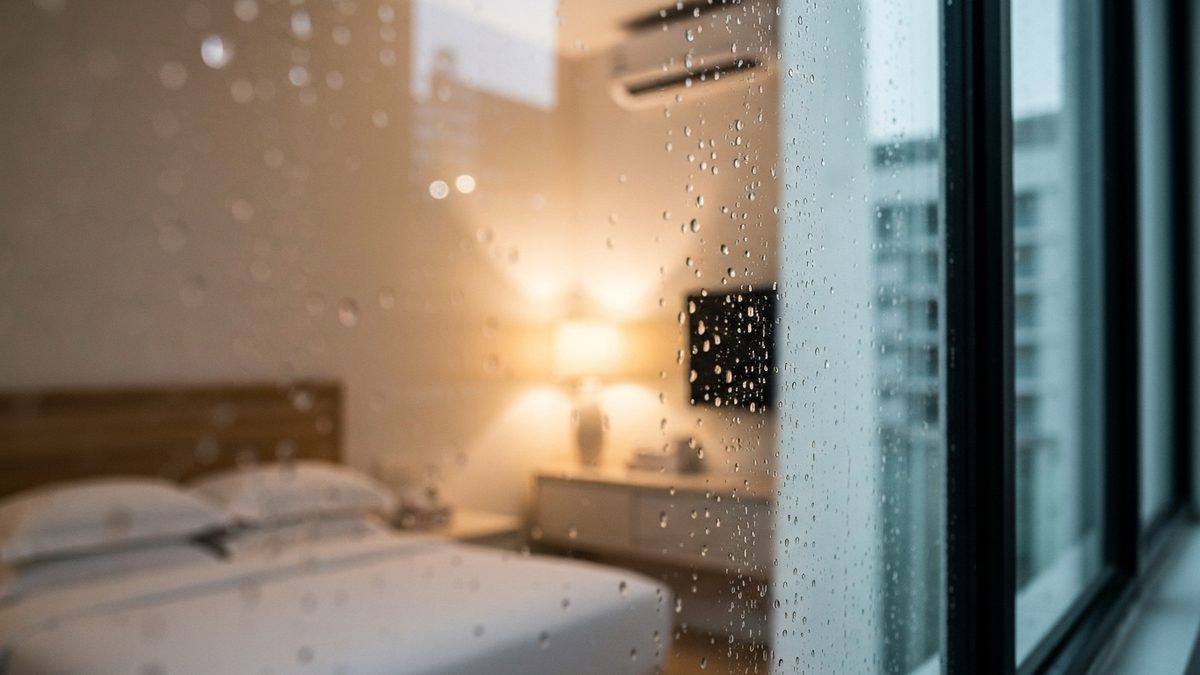
There's also a behavioural trap. During the rains, people close everything up, dry laundry indoors, and run aircon in cooling mode set to a comfortable 25°C. Cooling mode lowers temperature but does relatively little to remove moisture, so the air stays muggy while damp clothes add several more litres of water vapour to a sealed room every day. The result is a condo that feels cool but is quietly soaking.
Target the number that matters: relative humidity
The single most useful tool you can buy is a ฿200–500 digital hygrometer. Mold growth slows dramatically below 60% relative humidity and largely stalls between 45% and 55%. That band is your target all season, and a cheap meter turns an invisible problem into a number you can act on.
Place one hygrometer in the bedroom and one near the most enclosed space — usually a walk-in closet or the area behind the wardrobe. If readings sit above 65% for more than a day or two, you are in the danger zone and need to act. As a worked example: a 35 sqm one-bedroom that reads 74% on a rainy Sunday morning will typically drop to around 55% after three hours of aircon dry mode and an hour with the bathroom extractor running — proof that small, consistent interventions move the needle without a big electricity bill.
Log the readings for the first two weeks of the season. You'll quickly learn your condo's pattern: which rooms spike, how fast they recover, and whether overnight is your weak point. That knowledge lets you aim effort where it counts instead of dehumidifying the whole apartment blindly.
Your daily anti-mold routine
- Run aircon in 'Dry' mode (the water-drop icon) for 2–3 hours daily — it removes moisture without overcooling the room.
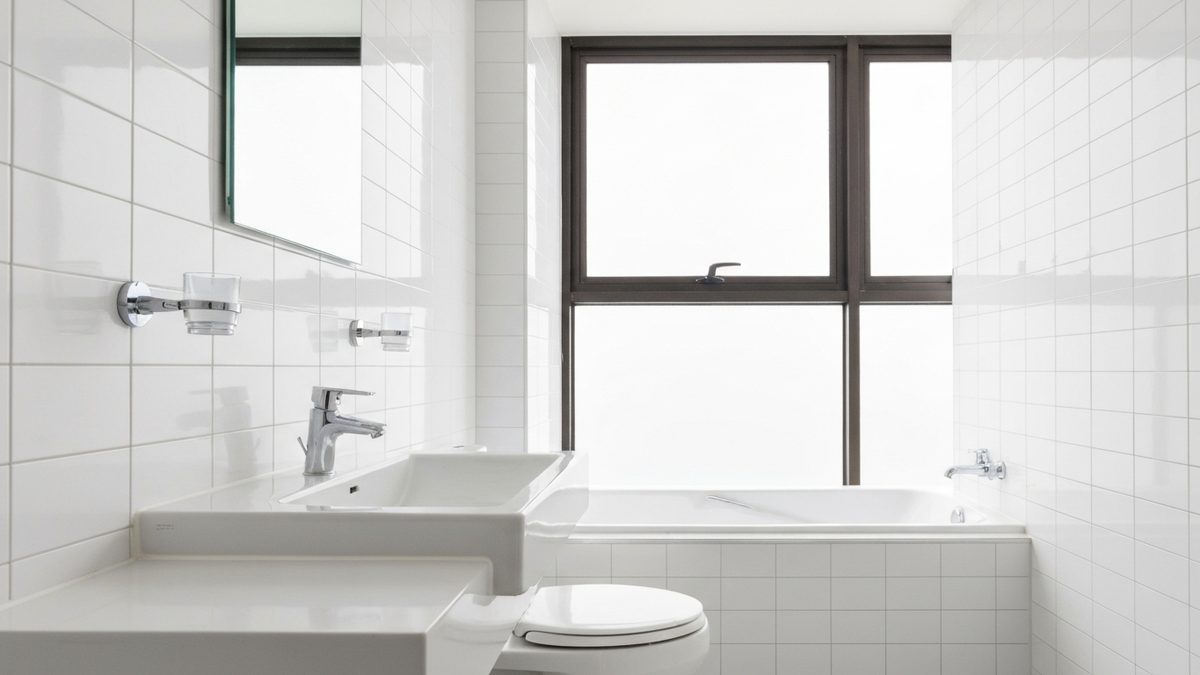
- Wipe down bathroom walls and the shower screen after use, and leave the extractor fan running for 15 minutes.
- Open windows for 20–30 minutes during any dry spell to flush humid, stale air.
- Keep wardrobe and cabinet doors slightly ajar so air circulates instead of stagnating.
- Empty and refill moisture-absorber tubs (silica or calcium chloride) before they overflow.
- Dry laundry on the balcony or in a ventilated bathroom with the fan on, never on a rack in a closed bedroom.
- Check the hygrometer once a day and adjust your dehumidifier or aircon accordingly.
Equipment that actually works
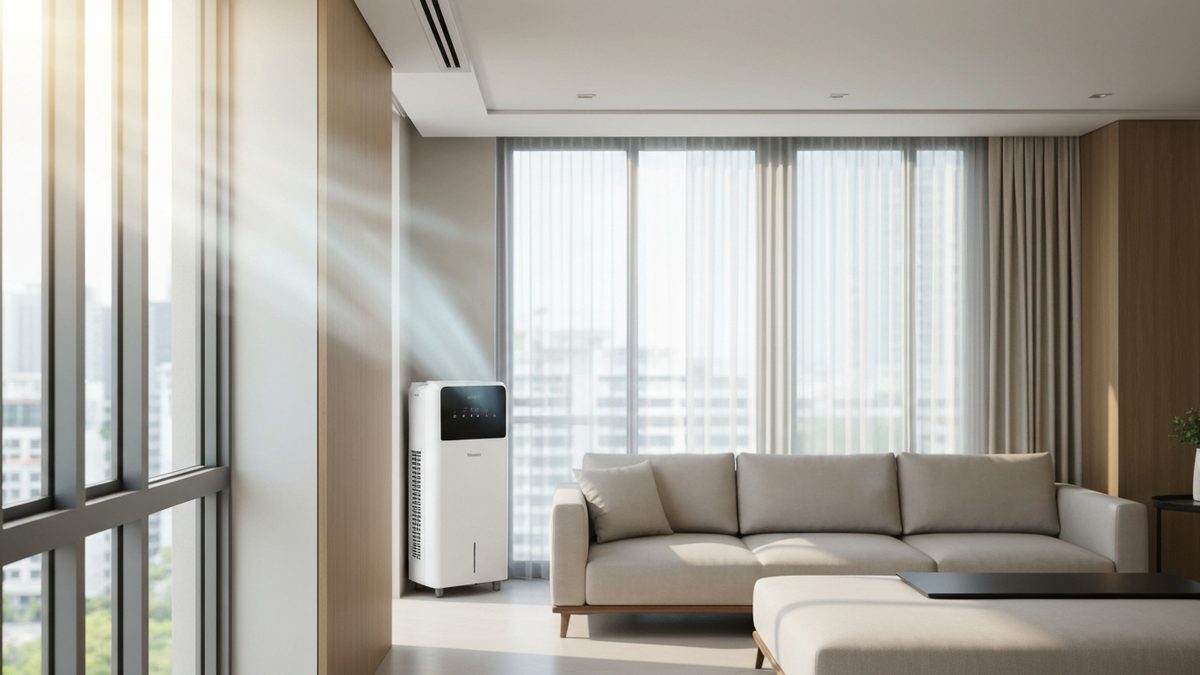
A dedicated dehumidifier is the most reliable defence for an enclosed condo. For a typical 30–45 sqm one-bedroom, a 12–20 litre/day unit (around ฿6,000–12,000) holds a comfortable 50% even on the wettest weeks. Empty the tank daily or route the hose to a floor drain so it runs unattended while you're at work. A unit that pulls 10 litres a day from the air is 10 litres that is no longer condensing on your walls and clothes.
Aircon 'Dry' mode is a strong free supplement, but it is not a substitute on the most humid days because it cycles off once the temperature target is met. Disposable moisture absorbers (฿40–120 each) are cheap insurance for closets, shoe cabinets, and under-sink areas. The smartest setups layer all three: a dehumidifier for the main living space, dry-mode aircon in the bedroom, and absorber tubs in every enclosed cupboard.
- Dehumidifier 12–20 L/day: ฿6,000–12,000 — best all-round protection
- Hygrometer: ฿200–500 — measure before you treat
- Moisture-absorber tubs: ฿40–120 each — closets and cabinets
- Aircon servicing / coil clean (ล้างแอร์): from ฿800 per unit — stops mold inside the machine
- Replacement silica refill packs: ฿80–200 — cheaper than buying new tubs each month
A realistic monsoon prevention budget
Prevention is far cheaper than cure, and it helps to see the numbers side by side. A one-time kit of a hygrometer (฿350), a mid-range dehumidifier (฿8,000), and four absorber tubs (฿320) comes to roughly ฿8,670, most of which lasts for years. Running costs through the six-month season are modest: dehumidifier electricity at a few hundred baht a month, plus absorber refills of around ฿150 monthly.
Compare that to the cost of cure. A full deep clean with mold treatment runs ฿1,499–3,499 each time, and a colony that returns can mean two or three visits a season. Add ruined items — a leather bag (฿3,000+), a warped wooden side table, mildew-stained bedding — and a single bad monsoon can easily cost more than the entire prevention kit. The math almost always favours getting ahead of the problem.
If buying a dehumidifier outright isn't practical, prioritise the ฿350 hygrometer and disciplined dry-mode use first. Measurement plus free aircon dry cycles will keep many smaller, well-sealed condos in safe territory on their own.
Closets, walls, and the spots you forget
Mold loves places that never see airflow. Pull furniture 5–10cm away from external walls so air can move behind it. Store leather goods, cameras, and documents in a sealed box with silica gel. Never pack clothes tightly against the back of a wardrobe — a crammed closet is a mold factory because no air reaches the rear panel.
Check the rubber door seal of your washing machine and run a hot maintenance cycle monthly — front-loaders are a classic hidden mold source in humid Thailand. Inspect aircon filters and the drip tray, because a clogged unit blows mold spores straight into the room every time it runs. Don't overlook under-sink cabinets, the gap behind the refrigerator, and the inside of rarely opened drawers; these dead-air zones are where the first musty smell usually starts.
How to clean mold safely (and when not to)
For small surface mold on tile or painted concrete (under about half a square metre), you can treat it yourself. Ventilate, wear a mask and gloves, and apply a diluted bleach solution or a dedicated mold cleaner. Let it dwell, scrub, rinse, and dry the area completely — leftover moisture invites regrowth.
Stop and call a professional if mold covers a large area, has penetrated drywall or wood, keeps returning after cleaning, or if anyone in the home has asthma or allergies. Porous materials often need replacement, not just wiping, and disturbing a heavy colony without containment spreads spores across the unit. A common mistake is dry-brushing or wiping heavy mold with a dry cloth, which aerosolises millions of spores — always work wet.
When to call CLEANROVA
A professional mold removal and deep clean (ทำความสะอาดใหญ่) includes containment, HEPA vacuuming, antimicrobial treatment, and drying — so the problem does not simply come back next week. Pricing depends on severity: a targeted mold and mildew add-on typically runs ฿800–2,500, while a full deep clean with mold treatment ranges from ฿1,499 to ฿3,499 depending on condo size and how far the growth has spread.
If you would rather prevent than cure, a recurring standard clean (฿650–1,800) keeps dust — mold's main food source — under control through the worst months. See full options on our /services page, compare plans on /pricing, browse more seasonal guides on /blog, or get a tailored quote via /contact.
Frequently Asked Questions
What humidity level prevents mold in a Bangkok condo?
Aim for 45–55% relative humidity, and never let it sit above 60% for long. A ฿200–500 hygrometer lets you monitor it room by room and act before mold appears.
Does aircon dry mode really stop mold?
It helps a lot by pulling moisture from the air without overcooling, but on the wettest monsoon days it cycles off once the room hits temperature. A dehumidifier is more reliable for fully enclosed spaces.
Can I remove condo mold myself?
Small surface mold under half a square metre on tile or paint is DIY-friendly with a mask, gloves, and a mold cleaner. Large areas, drywall penetration, or recurring mold need professional treatment.
How much does professional mold removal cost in Bangkok?
A targeted mold add-on usually runs ฿800–2,500, while a full deep clean with mold treatment is ฿1,499–3,499 depending on condo size and severity.
Is drying laundry indoors really a problem during the monsoon?
Yes — a single load of wet washing can release several litres of water vapour into a closed room as it dries, pushing humidity well past the mold threshold. Dry clothes on the balcony or in a ventilated bathroom with the extractor fan running instead.
Spotted mold creeping along your closet or bathroom grout? Don't wait for it to spread. Book a CLEANROVA deep clean with mold treatment today via /contact and walk into a fresh, dry home.