Black speckles in the silicone, a fuzzy grey patch in the ceiling corner, dark lines along the grout — if your Bangkok bathroom keeps growing mold no matter how often you scrub, the problem is not your scrubbing. It is the environment. A warm, poorly ventilated, constantly damp bathroom is exactly what mold and mildew need, and Thailand's climate provides all three in abundance. During the May-to-October rainy season the ambient humidity outdoors can sit above 90 percent for days, so even a well-kept bathroom struggles to dry out between uses. This guide covers how to remove mold safely, why ventilation is the real battle, the exact prevention routine that keeps it from coming back, and when the job is big enough to call in help. Cleaning the bathroom (ทำความสะอาดห้องน้ำ) and killing mold (กำจัดเชื้อรา) go hand in hand here — you cannot win at one without the other.
Mold vs mildew, and why it matters
Mildew is the flat, powdery, grey-to-white growth you find on tile and grout surfaces — it wipes away relatively easily. Mold is the raised, fuzzy, often black or green growth that digs into silicone, drywall, and ceiling paint, and it is harder to remove because it sends roots into porous material.
Both release spores into the air, and in an enclosed Bangkok bathroom those spores can aggravate allergies and breathing for sensitive people. Treating it is about health, not just appearance.
Knowing which you are dealing with changes your approach. Mildew on a glazed tile is a five-minute wipe. Black mold rooted into a strip of shower silicone is effectively impossible to fully bleach back to white, because the staining has penetrated the material — at that point removal and re-sealing, covered below, is the only lasting fix rather than endless scrubbing.
Ventilation: the root cause you have to fix
You can scrub mold off every day, but if the bathroom never dries, it always comes back. Moisture is the fuel, and ventilation is how you starve it. Most Bangkok bathrooms either lack a working exhaust fan or have a small high window that rarely gets opened.
Before you treat anything, improve airflow.
- Run the exhaust fan during and for 20 to 30 minutes after every shower; clean its grille so it actually moves air.
- Squeegee or wipe shower walls and glass down after use — removing standing water removes the food source.
- Leave the bathroom door open between uses to let humidity escape.
- Open the window daily where possible, even briefly, to exchange damp air.
- Consider a small dehumidifier for windowless bathrooms in the rainy season.
Safe products that actually work
You do not need industrial chemicals, and you should never mix them. The two reliable household options work on different surfaces.
For non-porous surfaces like tile and glass, a diluted bleach solution (1 part bleach to 4 parts water) kills surface mold fast. For porous surfaces and where you want to avoid fumes, white vinegar sprayed neat, left an hour, then scrubbed, penetrates better and is safer to breathe. Whichever you use, ventilate the room and wear gloves. Never combine bleach with vinegar, ammonia, or any other cleaner — the gases are dangerous.
All three of these — bleach, white vinegar, and baking soda — are cheap and easy to find at any Tops, Big C, or 7-Eleven in Bangkok, usually under ฿60 each. There is no need for imported specialty mold products for routine spots; save those for large or recurring infestations where a pro is the better call anyway.
Removing silicone and grout mold
The black spots embedded in shower silicone and grout are the most stubborn because the growth has rooted into the material. Surface wiping will not reach it.
- Ventilate the room and put on gloves before you start.
- Soak strips of tissue or cotton wool in bleach solution and press them directly onto the mouldy silicone or grout.
- Leave the soaked strips in place for several hours — overnight for deep stains.
- Remove the strips, scrub the lines with a stiff brush, and rinse thoroughly.
- If silicone is badly rooted and stays black, the lasting fix is to cut it out and re-seal with fresh, mould-resistant silicone.
- Dry the area completely and keep it ventilated to stop regrowth.
Those ceiling corner spots
Mold high in ceiling corners is a classic sign of trapped humid air with nowhere to go. Treat the spots by spraying vinegar or wiping with bleach solution on a cloth over an extendable handle, working carefully so nothing drips into your eyes.
But ceiling mold almost always means a ventilation problem, not just a cleaning one. If it keeps returning in the same corner, the real solution is better airflow — a stronger exhaust fan or keeping the door open — rather than repeated scrubbing. Persistent ceiling mold can also signal a hidden leak above, worth checking.
Soft furnishings and the smell that lingers
Bathroom mold rarely stays in the bathroom. In a compact Bangkok condo the bath mat, the laundry hamper, towels left damp on a hook, and even a fabric shower curtain all become secondary mold reservoirs that keep re-seeding the room. A bathroom can look freshly scrubbed and still smell musty because the source is the mat you never wash or the towel that never fully dried.
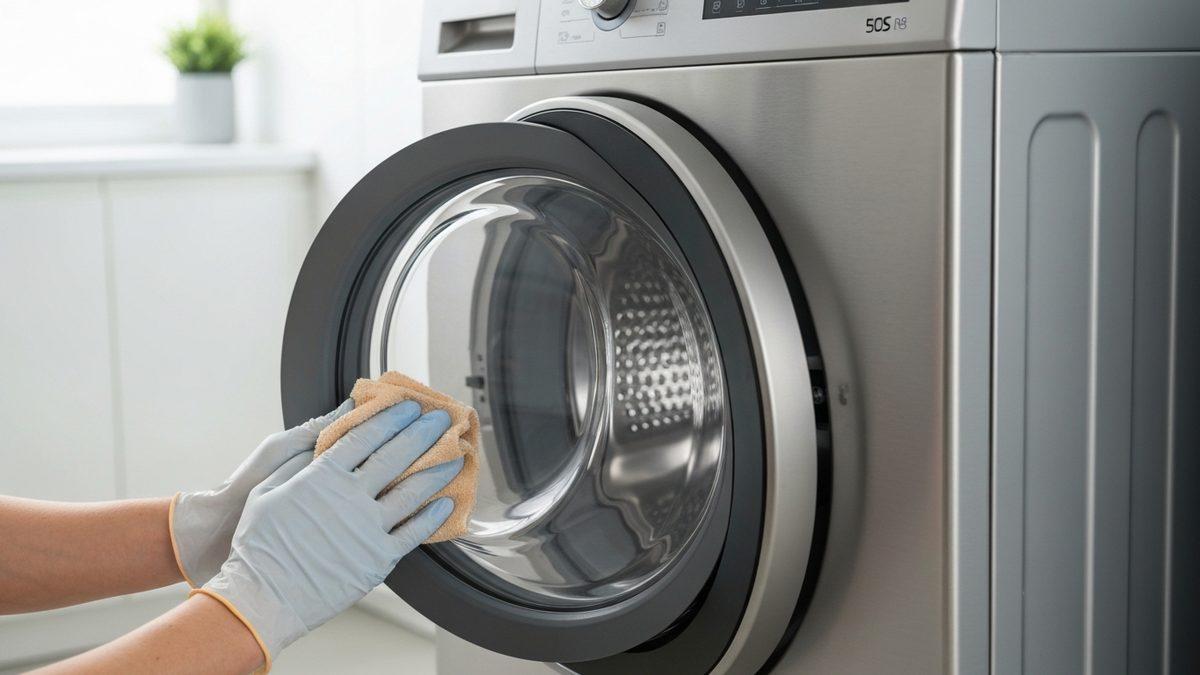
Tackle these alongside the hard surfaces: machine-wash bath mats and curtains weekly on a hot cycle, hang towels spread out rather than bunched so they dry fully, and do not let a damp laundry pile sit in the bathroom corner for days. If a fabric curtain or mat is already speckled black, replacing a ฿150 item is far cheaper and more effective than trying to salvage it.
- Wash bath mats and fabric shower curtains weekly on the hottest safe cycle.
- Hang towels fully spread out; bunched towels stay damp and breed odor.
- Keep the laundry hamper out of the bathroom, or empty it every couple of days.
- Replace cheap fabric items once they are visibly mouldy rather than re-treating them.
The prevention routine that keeps it gone
Removal is temporary without prevention. The bathrooms that stay mold-free in Bangkok all follow the same simple habits.
- Run the fan or open the window during and after every shower.
- Squeegee walls and glass and wipe the corners dry daily.
- Keep the door open between uses to release humidity.
- Wipe down silicone and grout lines weekly before mold can establish.
- Do a monthly deep treatment on any high-risk spots with vinegar or bleach solution.
- Re-seal aged or failing silicone before it becomes a mold reservoir.
When to call in help
If mold keeps returning despite good habits, covers a large area, has spread into walls or ceilings, or the smell lingers, it is time for professional treatment. A deep bathroom clean reaches the silicone, grout, fan housing, and corners thoroughly and resets the room so your maintenance routine can keep it clean.
CLEANROVA includes mold and mildew treatment in our deep cleans (฿1,499 to ฿3,499 by size) and can add bathroom mold treatment to a standard clean (฿650 to ฿1,800). For recurring humidity control we can build it into a weekly or bi-weekly plan. See options on /pricing and /services, read related guides on /blog, or describe your bathroom via /contact.
Frequently Asked Questions
Is bathroom mold dangerous to my health?
Mold spores can aggravate allergies, asthma, and breathing problems, especially in an enclosed bathroom. It is worth removing promptly and improving ventilation, not just for looks but for air quality.
Why does mold keep coming back after I clean it?
Because the moisture source is still there. Without better ventilation and drying after showers, mold regrows on the same spots. Fix airflow and the cleaning lasts.
Can I just paint over ceiling mold?
No — painting over it traps the mold and it grows back through the paint. Kill and remove it first, fix the ventilation, then repaint if needed.
Bleach or vinegar — which is better for mold?
Bleach works fast on non-porous tile and glass; vinegar penetrates porous grout and silicone better and is safer to breathe. Never mix them. Choose based on the surface and ventilate well.
Is mold worse in the rainy season in Bangkok?
Yes. From May to October outdoor humidity often sits above 90 percent, so bathrooms dry out much more slowly and mold establishes faster. Lean harder on ventilation and drying during these months, and consider a small dehumidifier for windowless bathrooms.
Fighting the same mold spots over and over? CLEANROVA can deep clean, treat, and set up a routine that keeps your bathroom fresh. Book via /contact or compare plans on /pricing.