You spend roughly a third of your life on your mattress (ที่นอน), and in Bangkok's warm, humid air it quietly becomes an ecosystem. Dust mites thrive in the heat and moisture, feeding on shed skin and multiplying in numbers no one wants to picture — a single used mattress can host hundreds of thousands of them. Their waste is one of the most common indoor allergy triggers, behind morning sneezing, itchy eyes, and stuffy noses that many expats blame on the city air. The encouraging news is that a mattress is very treatable. This practical guide explains why Bangkok mattresses get so dusty, how to clean yours with simple DIY tools, how to choose the right protector, and when professional deep extraction (฿800 to ฿2,500) is worth booking.
Why Bangkok is a dust-mite paradise
Dust mites need three things: warmth, humidity, and a food supply. Bangkok bedrooms hand them all three on a plate, which is why allergy symptoms here so often centre on the bed rather than the street.
- Humidity above 70 percent is ideal for mites; they absorb moisture straight from the air and thrive year round.
- Warm temperatures speed their life cycle so populations grow faster than in temperate climates.
- Shed skin cells in bedding are an endless food source.
- Sweat in the heat means a damper mattress, which mites love and which also encourages mould (กำจัดเชื้อรา) in the deeper layers.
Signs your mattress is the problem
Allergies in Bangkok often get blamed on outdoor pollution, but a dusty mattress is a common hidden cause. Watch for these patterns — the timing of symptoms is the biggest clue.
- Sneezing, a runny or blocked nose, and itchy eyes that are worst in the morning or in bed.
- Symptoms that ease when you travel and return when you sleep at home.
- A musty smell from the mattress, especially in the rainy season.
- Visible staining, yellowing, or damp patches.
- Worsening eczema or asthma at night.
DIY mattress cleaning, step by step
You can dramatically reduce mites and allergens with tools you already own. Do this on a dry, sunny day so the mattress can air out fully — humidity is your main obstacle, so timing matters as much as technique.
- Strip all bedding and wash sheets, pillowcases, and protectors at 60 degrees Celsius — heat is what actually kills mites, not detergent alone.
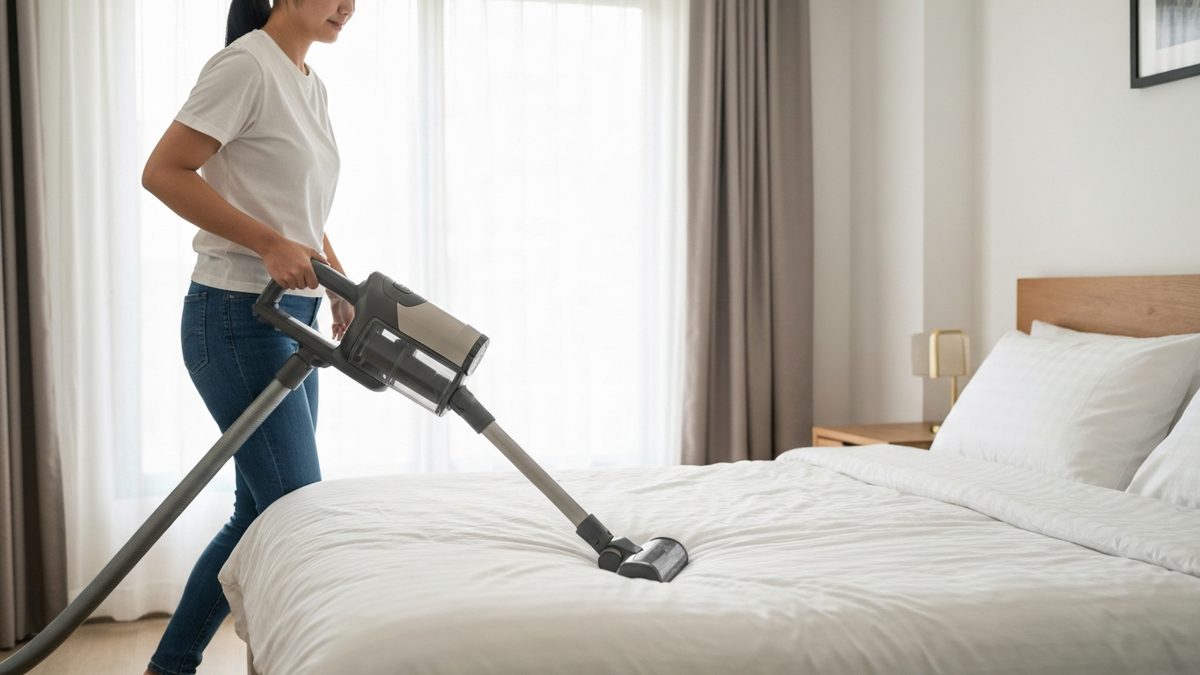
- Vacuum the entire mattress surface, including seams and sides, using an upholstery attachment to lift dust, skin, and mite debris.
- Sprinkle a generous, even layer of baking soda across the whole surface to absorb moisture and odour.
- Leave the baking soda for at least one to two hours — longer is better in humid weather — so it can draw out dampness.
- Vacuum the baking soda off thoroughly, going slowly to capture the fine powder.
- Spot-treat stains with a cloth dampened in cool water and a little mild detergent or diluted vinegar; blot, never soak, and never rub the stain wider.
- Air the mattress: open windows, run a fan, or stand it up if possible so all moisture evaporates before you re-dress the bed.
Stains, sweat, and odour in the tropics
Bangkok heat means more night sweat, which leaves yellow marks and a stale smell deep in the foam. For sweat odour, baking soda is your best friend — its drying and deodorising action targets exactly the moisture mites depend on.
Avoid soaking the mattress. Excess water cannot evaporate quickly in high humidity and can cause mould inside the foam, which is far worse than the stain you started with. Blot, treat lightly, and dry aggressively with airflow. If you must use any liquid, finish by pointing a fan directly at the spot for several hours.
Choosing the right mattress protector
The single most cost-effective thing you can do for a Bangkok mattress is fit a good protector, because it stops the cycle rather than cleaning up after it. A zippered, fully encasing, allergen-proof protector seals the entire mattress so mites inside cannot feed on your skin cells and new ones cannot get in. After two to three months sealed away, an existing mite population starves out. These run roughly ฿800 to ฿2,500 in Bangkok depending on size and quality — less than a single professional extraction.
Look for a protector with a pore size small enough to block mite allergens, usually marketed as anti-allergy or dust-mite proof, and ideally with a breathable membrane so it does not trap sweat and make you hotter. A cheap waterproof-only cover blocks spills but not allergens and often sleeps clammy in the heat, so check the label carefully. Wash the protector itself at 60 degrees alongside your bedding.
- Choose a zippered, fully-encasing design rather than a fitted-sheet style that leaves the underside exposed.
- Confirm it is rated anti-allergy or dust-mite proof, not just waterproof.
- Pick a breathable membrane so it does not trap sweat in the Bangkok heat.
- Wash it at 60 degrees Celsius with your bedding every week or two.
When DIY is not enough: professional extraction
DIY cleaning handles surface dust and light odour, but it cannot reach deep into the mattress core or fully sanitise it. For heavy staining, persistent allergies, a musty rainy-season smell, or simply a mattress that has never been deep cleaned, professional hot-water extraction is the answer.
Pros use machines that inject and immediately vacuum out hot solution, lifting embedded allergens and dust-mite matter, often paired with UV or steam sanitising and powerful drying. In Bangkok, mattress cleaning (ที่นอน) runs ฿800 to ฿2,500 depending on size and condition — a single often sits near the lower end and a king with stains toward the top. It is a worthwhile reset for allergy sufferers and far cheaper than replacing the mattress.
Keeping mites away long term
A clean mattress will not stay clean in this climate without a little maintenance. These habits keep dust mites and allergens from rebuilding, and together they cost almost nothing once the protector is in place.
- Use a zippered, washable, allergen-proof mattress protector — this is the single most effective barrier.
- Wash all bedding weekly at 60 degrees Celsius.
- Run the aircon or a dehumidifier to keep bedroom humidity below 50 percent where mites struggle to survive.
- Vacuum the mattress monthly and re-treat with baking soda each season.
- Air the room daily and avoid making the bed immediately so trapped moisture can escape.
The bottom line for Bangkok sleepers
If you wake up congested in this city, do not assume it is only the outdoor air. A monthly vacuum, weekly hot wash of bedding, a good encasing protector, and a yearly professional extraction can transform how you sleep — and breathe. The combined cost of all of that over a year is a fraction of a new mattress, and the payoff is measured in clearer mornings. Browse upholstery and mattress options on /services, see typical rates on /pricing, or tell us your mattress size on /contact for a flat quote. For more sleep and home-care guides, visit our /blog.
Frequently Asked Questions
How often should I clean my mattress in Bangkok?
Vacuum monthly and re-treat with baking soda each season, while washing bedding weekly at 60 degrees Celsius. Book a professional deep extraction once a year, or more often if you have allergies, asthma, or visible staining, because Bangkok's humidity accelerates dust-mite growth.
Does baking soda really kill dust mites?
Baking soda does not kill mites directly, but it absorbs the moisture they depend on and deodorises the mattress. The heat from washing bedding at 60 degrees and from professional steam or hot-water extraction is what actually kills mites and their eggs.
How much does professional mattress cleaning cost in Bangkok?
Expect ฿800 to ฿2,500 depending on size and condition. A single mattress sits near the lower end, while a stained king runs toward the top. Pros use hot-water extraction and sanitising that DIY methods cannot match.
Can dust mites in my mattress really cause my allergies?
Yes. Dust-mite waste is one of the most common indoor allergy triggers, causing morning sneezing, congestion, and itchy eyes. If symptoms ease when you travel and return at home, your mattress and bedding are likely culprits.
What kind of mattress protector is best for dust mites?
A zippered, fully-encasing protector rated anti-allergy or dust-mite proof, ideally with a breathable membrane so it does not trap sweat in the heat. It seals the whole mattress so trapped mites starve and new ones cannot enter. Wash it at 60 degrees with your bedding.
Can I clean my mattress with water in Bangkok's humidity?
Only sparingly. Excess water cannot evaporate quickly in high humidity and can cause mould inside the foam. Blot stains rather than soaking, use minimal liquid, and dry the spot aggressively with a fan or open windows before re-dressing the bed.
Waking up congested? CLEANROVA's deep mattress extraction lifts years of dust mites and allergens in one visit — book on /contact and sleep easier.