Few pests cause as much panic as bed bugs, and few are as misunderstood. They are not a sign of a dirty home — a spotless luxury condo on Sathorn is just as vulnerable as a budget guesthouse in Khao San, because bed bugs hitchhike in on luggage, secondhand furniture, clothing, and even a bag set down on an infested cinema seat. In Bangkok, one of the world's busiest travel hubs, that means anyone can pick them up, and the dense, traveller-heavy accommodation market gives them constant opportunity to spread. The real question once you have them is not whether to treat, but how: heat or chemical. This guide breaks down both methods honestly — cost, effectiveness, preparation, and follow-up — explains how to confirm you actually have bed bugs before spending a baht, and lays out why hosts running short-term rentals face the highest stakes of all. Effective bed bug control (กำจัดตัวเรือด) starts with choosing the right method for your situation.
First, confirm it is actually bed bugs
Before paying for any treatment, confirm the diagnosis. Bed bugs leave a recognisable signature, and mistaking another pest — fleas, mosquitoes, a skin reaction, or even carpet beetles — for them wastes money and time on the wrong treatment. People often panic at the first itchy bite and book an expensive heat treatment for a problem that turns out to be mosquitoes coming through a balcony door.
Look for these signs around the seams of the mattress, the headboard, the joints of the bed frame, behind the headboard wall, and along the skirting nearest the bed:
- Small rusty or dark brown spots on sheets and mattress seams — these are digested-blood faecal staining and are one of the most reliable indicators.
- Tiny pale eggs (about 1mm) and translucent shed skins clustered in crevices as nymphs grow and moult.
- Live bugs the size and colour of an apple seed — flattened, reddish-brown, hiding in seams, screw holes, and the joints of wooden frames.
- Rows or clusters of itchy bites, often on skin exposed during sleep such as arms, shoulders, and back — though reactions vary widely and some people show no marks at all, which is why physical evidence matters more than bites.
- A faint sweet, musty odour in heavy infestations, sometimes described as overripe raspberries.
How heat treatment works
Heat treatment raises the temperature of the entire room to roughly 50–60°C and holds it there for several hours. Bed bugs and their eggs cannot survive sustained heat at that level — the lethal threshold is around 45°C maintained long enough to penetrate hiding spots — so a properly executed heat treatment kills every life stage, adults, nymphs, and eggs, in a single session.
Specialised electric heaters and high-volume fans circulate the hot air into mattresses, upholstered furniture, skirting boards, wall cracks, and the deep seams where bugs shelter. Technicians monitor temperature with multiple probes placed in the coldest likely harbourage points, because a single surviving egg cluster in a cold spot — the centre of a thick mattress, a shaded void behind a built-in wardrobe — can restart the entire infestation. The skill of heat treatment is not generating heat; it is ensuring there are no cold spots anywhere in the room.
Because heat leaves no chemical residue, the room can be reoccupied the same evening once it cools. That speed is heat's defining advantage.
How chemical treatment works
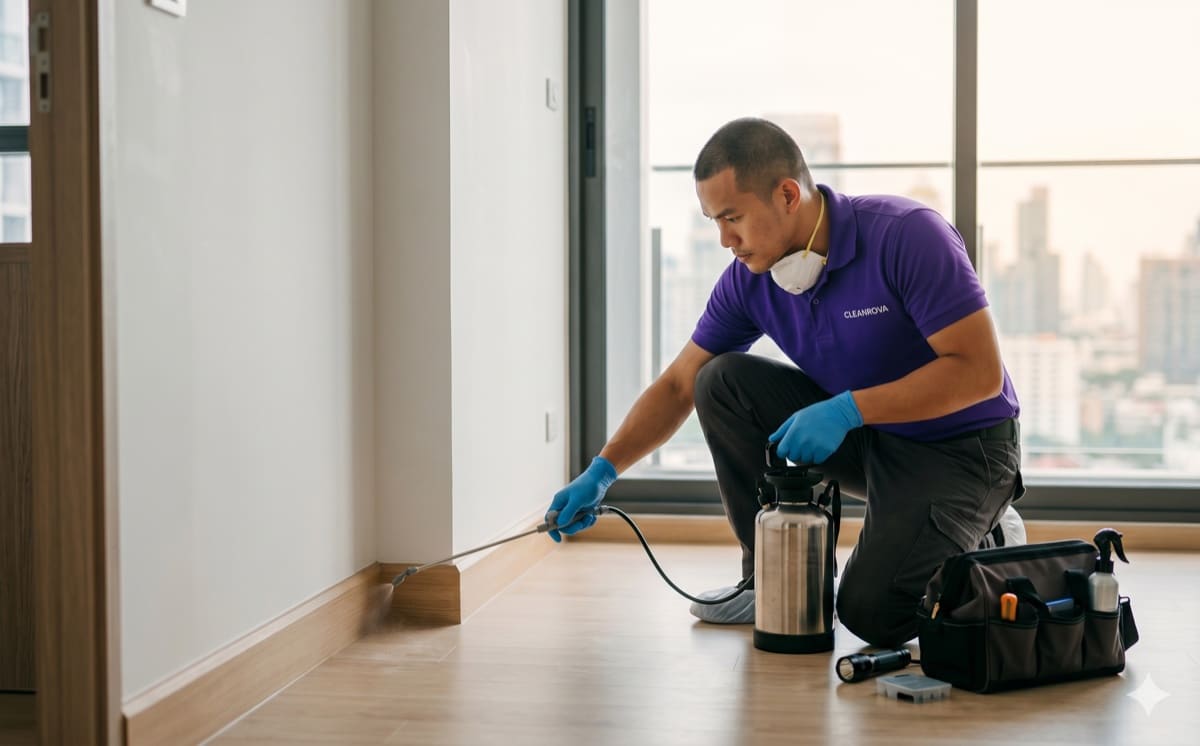
Chemical treatment uses targeted insecticides — typically a combination of residual liquid sprays, insecticidal dusts pushed into cracks and voids, and sometimes insect growth regulators that disrupt the bugs' development — applied directly to harbourage points. It is slower than heat and almost always requires two or three visits spaced roughly two weeks apart, because most products do not kill eggs reliably. The follow-up visits exist specifically to catch newly hatched nymphs before they mature and breed, which is why skipping a follow-up is the fastest way to a failed treatment.
Chemical treatment is well-proven, widely available, and more affordable upfront, but its success depends heavily on thorough application by the technician and on the resident's preparation and cooperation between visits. The resident usually needs to keep sleeping in the treated room so the bugs are drawn out of hiding toward their blood source and across the treated surfaces — counterintuitive, but essential.
A practical note for Bangkok: some local bed bug populations have developed resistance to certain pyrethroid insecticides, which is why a competent technician rotates active ingredients and combines spray with dust and growth regulators rather than relying on a single product.
Heat vs chemical: the honest comparison
Neither method is universally 'best' — the right choice depends on your budget, timeline, the severity of the infestation, and whether the room must be back in service quickly.
- Speed: heat usually finishes in one day and the room is reusable that night; chemical needs two to three visits over four to six weeks.
- Egg kill: heat destroys eggs in the same session; chemical typically does not, which is why follow-ups are mandatory rather than optional.
- Disruption: heat requires you to vacate for the day and remove heat-sensitive items; chemical lets you stay but requires you to keep the room in use and follow strict between-visit rules.
- Cost: chemical is generally cheaper upfront; heat costs more but compresses the timeline into a single day, which is decisive when a rental room is losing income every night it sits empty.
- Chemical resistance: some Bangkok bed bug populations tolerate certain insecticides, whereas none survive correct heat — a clear point in heat's favour for stubborn or repeat infestations.
- Reach into contents: heat penetrates books, electronics cleared by the technician, and dense furniture that sprays struggle to reach; chemical is only as good as where it is applied.
Realistic Bangkok pricing
Bed bug treatment is more involved than spraying for ants or cockroaches, and the price reflects the labour, equipment, and follow-ups involved. For a standard Bangkok condo bedroom or hotel room, expect bed bug treatment (กำจัดตัวเรือด) to fall in the range of ฿3,000–12,000 depending on method and severity.
Chemical multi-visit programmes for a single bedroom typically sit around ฿3,000–6,000 across the required two to three visits — that figure should include the follow-ups, so be wary of a quote that prices only the first visit. Heat treatment, because of the specialised equipment and single-session intensity, usually runs ฿6,000–12,000 per room and rises for larger areas, whole-unit jobs, or apartments where several rooms must be done together. Severe infestations spread across multiple rooms naturally cost more, and a combined approach — heat to kill everything present, plus a residual chemical barrier to catch any reintroduction — is sometimes recommended for the toughest cases or for rentals where reinfestation risk is high. Always get an inspection-based quote rather than a phone estimate, because severity is hard to judge sight-unseen. See /pricing for current options, /services for what each method includes, or contact us via /contact for an inspection.
Preparation makes or breaks the result
Whichever method you choose, preparation determines whether it works. Skipping prep is the single most common reason a treatment fails, and no reputable company can guarantee a result if the room was not prepared.
For both methods: launder all bedding, clothing, and soft items on the hottest safe setting and seal them in bags so treated bugs cannot recolonise clean laundry. Declutter the room so technicians can physically reach every harbourage point — bed bugs hide in clutter, and a floor covered in bags and boxes is a floor that cannot be treated. For heat, remove heat-sensitive items: candles, aerosols, pressurised cans, sensitive electronics flagged by the technician, vinyl records, medications, and anything that could melt or warp. For chemical, follow the technician's instructions on what to move and when it is safe to re-enter, and do not vacuum or wash away the residual product between visits — that residue is doing the work.
Stopping reinfestation after treatment
Clearing a room is only half the job; keeping bed bugs out is the other half, and it is where travellers and hosts most often slip up. Bed bugs do not breed back from nothing — a successful treatment that fails weeks later almost always means new bugs were carried back in, not that the treatment did not work.
Adopt a few habits to protect the cleared room. Encase the mattress and box spring in a certified bed-bug-proof cover, which traps any survivor and makes future inspection trivial. Inspect luggage after every trip and never set bags on the bed before checking them. Be cautious with secondhand furniture, a notorious vector in Bangkok's lively secondhand market — inspect every seam and joint before bringing a piece indoors. After staying in unfamiliar accommodation, run clothing through a hot dryer before it touches your bedroom. A monitoring interceptor placed under each bed leg catches any reintroduction early, while a problem is still cheap to solve.
Why hotels and Airbnb hosts cannot afford to wait
For a homeowner, bed bugs are a miserable nuisance. For a hotel or Airbnb host, they are a direct business threat. A single guest who spots a bug — or, worse, posts a photo in a review — can sink your rating and trigger cancellations across future bookings, and platform algorithms punish a damaged score for months. Bed bugs also spread room to room through shared walls and on cleaning carts, so one untreated unit can infect an entire floor or a whole portfolio of apartments before you realise.
Hosts should act immediately at the first credible sign, block the affected unit from new bookings rather than risk a complaint, and choose the fastest reliable method — often heat — to get the room back in service the same day. Building a relationship with a pest-control provider before you have an outbreak means you can respond within hours, not days, and many providers offer priority response to contracted clients. If you manage several short-term rentals, treat bed bug readiness as part of your turnover operations alongside cleaning and linen handling: train cleaners to spot faecal staining during changeovers, keep mattress encasements on every bed, and know exactly who to call. The cost of a treatment is trivial next to the cost of a public review describing bugs.
Frequently Asked Questions
Does a bed bug infestation mean my place is dirty?
No. Bed bugs feed on blood, not crumbs, and infest spotless luxury homes as readily as budget rooms. They arrive by hitchhiking on luggage, clothing, and secondhand furniture, which is why Bangkok's heavy tourist traffic makes them so common across every price bracket. Cleanliness helps you spot them earlier, but it does not prevent them from arriving.
Can I just throw out the mattress and be done?
Rarely, and it can make things worse. By the time you see bugs they have usually spread to the frame, skirting boards, and wall cracks, so discarding the mattress alone leaves the infestation behind — and dragging an infested mattress through corridors and lifts risks spreading it through the building. Treat the room first, then decide whether the mattress is worth keeping or replacing.
Is one heat treatment really enough?
A correctly executed heat treatment that reaches and holds lethal temperature in every harbourage point, including the eggs in cold spots, can clear an infestation in one session because it kills all life stages at once. The risk is never the method but cold spots, so we monitor with multiple probes and still recommend a follow-up inspection to confirm there is no resurgence from a reintroduction.
How fast can a treatment be done for an Airbnb between guests?
Heat treatment can often clear and cool a room within a single day, making it the practical choice when you need to relist quickly, because there is no multi-week chemical follow-up cycle and no residue to keep the room out of service. Contact us via /contact as soon as you suspect bed bugs so we can schedule before your next booking and protect your review score.
How did bed bugs even get into my condo on a high floor?
Height is no barrier — bed bugs do not fly or jump, they hitchhike. They ride in on luggage after a trip, on clothing from an infested cinema or office chair, on secondhand furniture, or occasionally migrate along shared walls and wiring voids from a neighbouring unit. A high floor in a Bangkok condo is just as reachable as a ground-floor guesthouse because the vector is human movement, not the building.
Suspect bed bugs in your home or rental? Do not wait for them to spread. Book a CLEANROVA inspection and we will recommend heat or chemical treatment based on your situation and timeline. Reach us at /contact or compare treatment packages on /pricing.